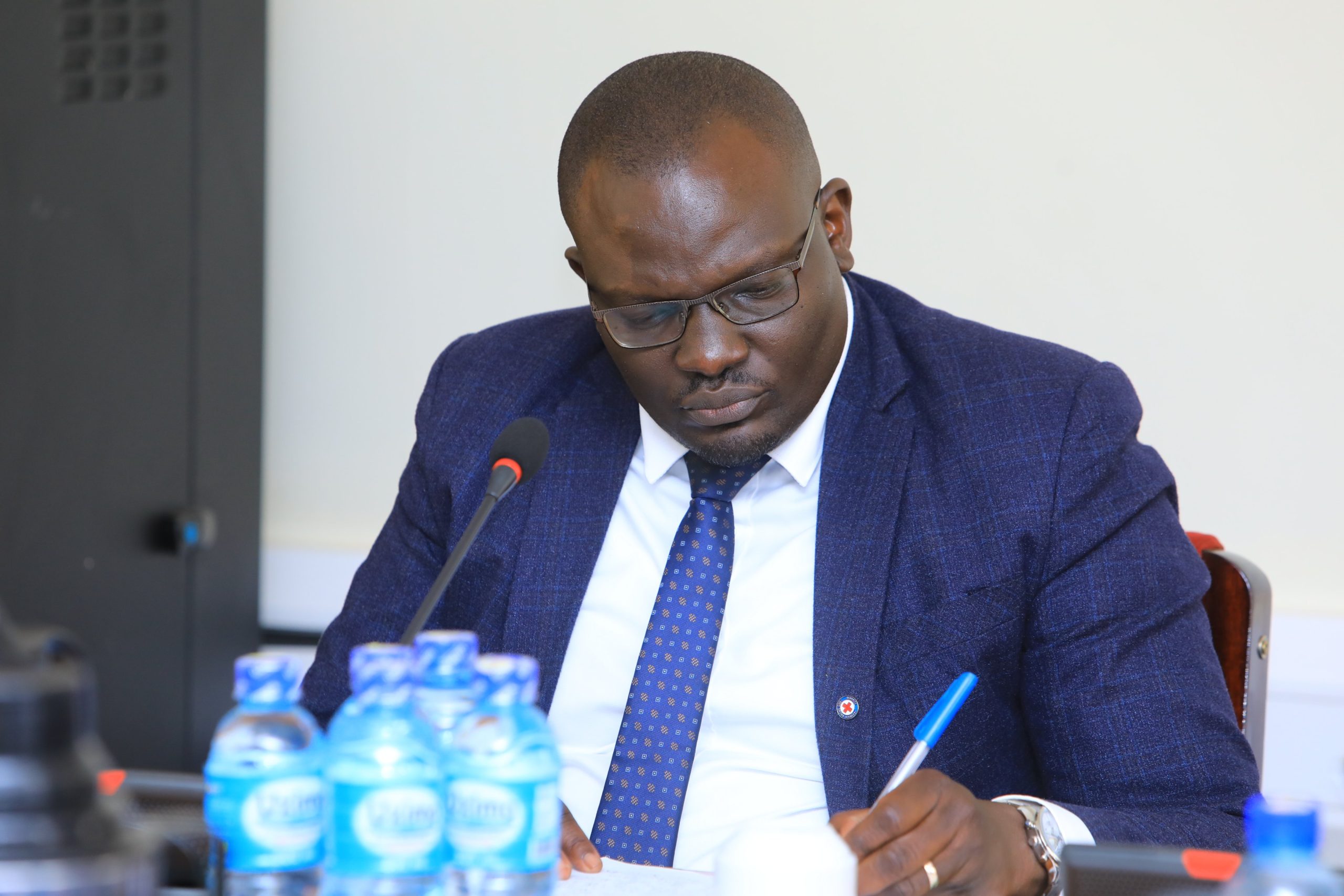
I have a strong warning that tackling deep-seated corruption in Uganda’s roads sector will require drastic measures, not superficial gestures.
In a detailed statement, I underscored the need for unwavering political will to confront what he describes as systemic graft threatening the country’s infrastructure development.
The new Minister for Works, Hon. Fred Byamukama, began his tenure on a commendable and high-profile note, landing several decisive jabs at corrupt government officials.
During my inspection of the Mityana-Mubende road project—awarded to Serbian firm Energo Projekt—the Minister publicly accused officials of defrauding the company at the contract-signing stage, alleging they siphoned off 6% from the shs395 billion deal. I further suggested that this kickback scheme was a deliberate tactic to delay the road’s completion.
As a Member of Parliament, I noted that one of his cardinal responsibilities is to exercise oversight over government expenditure. He argues that the rot in the roads sector is glaringly evident from the outset, particularly in the exorbitant cost per kilometre for upgrading gravel roads to paved tarmac.
To substantiate these claims, I conducted a comparative analysis. He cited data from the Uganda National Roads Authority (UNRA) showing that in 2023, out of 12 roads under construction or recently completed, the total length was 881.3 km, with a combined contract cost of shs3.583 trillion. This translates to an average cost of shs4.1 billion per kilometre.
In stark contrast, I examined 19 roads under construction in Kenya through the Kenya National Highways Authority. Their total length was 1,737 km, with a contract cost of shs2.887 trillion, averaging just shs1.66 billion per kilometre.
Similarly, from the Tanzania Roads Authority, he sampled 27 roads with a combined length of 1,453 km, and a total contract cost of shs3.153 trillion, averaging shs2.17 billion per kilometre.
The data reveals a troubling discrepancy: Uganda’s cost per kilometre (Shs4.1 billion) is nearly double that of Tanzania (shs2.17 billion) and roughly two-and-a-half times that of Kenya (shs1.66 billion). I have acknowledged that various technical arguments have been raised by engineers to explain these differences.
Some point to land compensation costs, yet those were not included in Uganda’s cited figures. Others mention high interest and borrowing costs, but again, these were excluded from the data.
Most tellingly, there is a direct comparison involving the Kapchorwa-Suam road (73 km on the Ugandan side) and the Kitale-Suam road (45 km on the Kenyan side)—both financed by the same funder and constructed by the same contractor.
Despite these identical conditions, Uganda’s section cost shs3.7 billion per km, while Kenya’s cost only shs2.5 billion per km. “How can a road built by the same contractor, with the same financier, be substantially more expensive simply because of a border line?”
On the matter of material costs, my argument is that all three countries import bitumen for paving, so price differences should be negligible.
Additionally, base and sub-base materials like murram and stone are sourced locally, with Uganda often having these quarries closer to project sites—a factor that should actually lower costs.
I also would like to dismiss terrain as a justification, noting that Kenya’s more mountainous landscape did not inflate its costs, whereas Uganda and Tanzania share similar plateau topography.
As an MP, allow me to further refute the argument that roads designed for heavy oil transport bear higher costs, and point to Kenya’s Lokichar-Loichangamatak oil road, which costs just shs1.85 billion per km, far cheaper than Uganda’s Masindi Park Junction–Buliisa road, which costs a staggering shs5.14 billion per km.
Based on this comprehensive analysis, I conclude that the most plausible explanation for Uganda’s inflated road costs is systematic inflation of contract figures. In the Financial Year 2026/27, the Ministry of Works and Transport is poised to receive one of the largest budgets—shs8.79 trillion for roads, bridges, and railways—far exceeding the budgets for Education (shs6.66 trillion) and Health (shs5.23 trillion).
If the cost of road construction were brought under control, Uganda could save half that amount to fund other critical sectors or build nearly an additional 1,000 km of tarmac roads.
While the Fourth National Development Plan (NDP IV) has set a target to reduce the cost of paved roads to shs3.1 billion per kilometre, achieving this goal demands more than good intentions.
“This will not require a wooden stick, but an iron fist!” he declared. “Over to you, Hon. Minister!”
The author is the Member of Parliament for Kole North County.
Discover more from tndNews, Uganda
Subscribe to get the latest posts sent to your email.