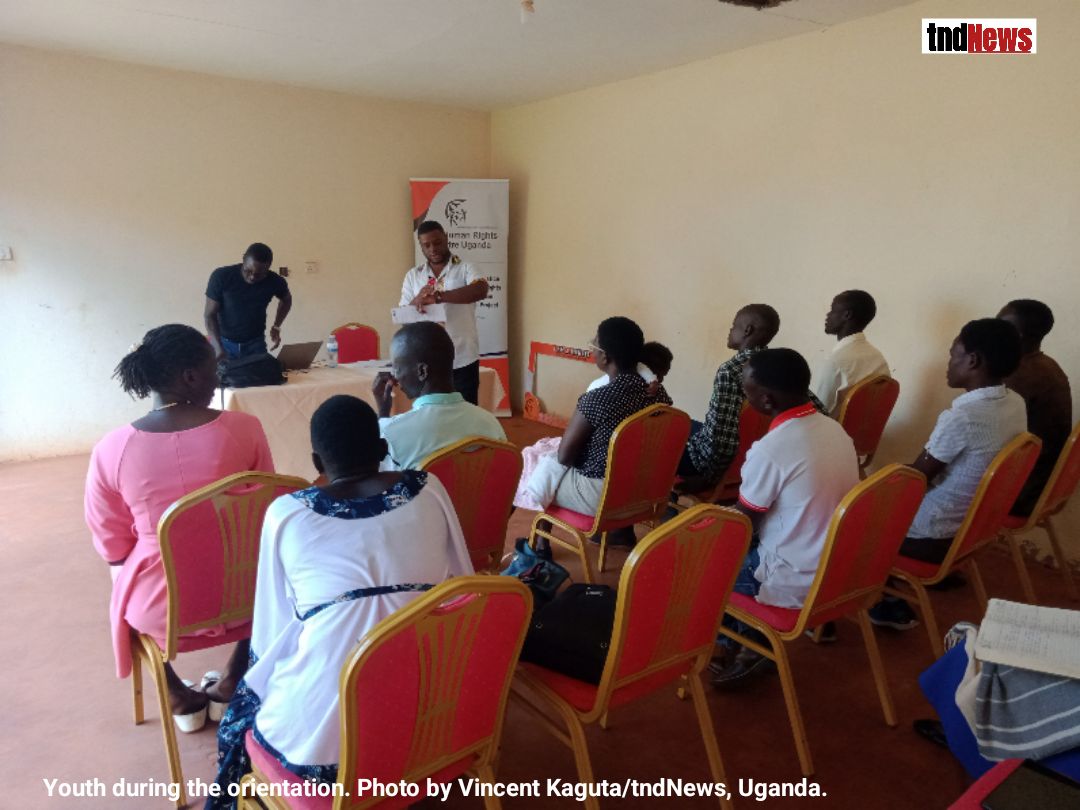
More than 20 young people from Lamwo district have embarked on a two-month mentorship and training programme aimed at strengthening human rights advocacy and improving access to justice for young people across the district.
The initiative, organised by the Human Rights Centre Uganda (HRCU) under the project “Increasing Access to Justice for the Youth in Kitgum and Lamwo districts,” seeks to equip youth leaders and community activists with practical skills in human rights promotion, legal awareness, and community engagement.
Speaking during the programme’s orientation, Human Rights Centre Uganda Program Officer, Ocheng Kennedy, said the initiative was developed in response to persistent challenges that prevent many young people from accessing justice and fully enjoying their rights.
“Many youths in Lamwo face barriers when seeking justice due to limited awareness of their rights, poverty, long distances to justice institutions, and fear of reporting violations,” Ocheng said.
He noted that cases of discrimination, gender-based violence, land conflicts, and stigma continue to affect many vulnerable young people, particularly those living in and around refugee-hosting communities.
According to Ocheng, the mentorship programme aims to establish a network of trained youth human rights defenders capable of bridging the gap between communities and justice institutions.
“By empowering young people with knowledge and practical skills, we are strengthening community-based mechanisms for promoting human rights and ensuring that justice services are more accessible to the youth,” he added.
As part of the programme, participants will be attached to key institutions, including the District Local Government Community Development Department, the Office of the Director of Public Prosecutions (DPP), the media and other justice and governance institutions.
Through these placements, the trainees will gain hands-on experience in human rights protection, case management, and advocacy.
The youth are expected to support communities by identifying human rights violations, documenting cases, referring victims to relevant service providers, and promoting peaceful resolution of disputes.
One of the mentees, Mwaka Bosco, described the training as timely, noting that many young people often suffer in silence because they lack information on where and how to seek help when their rights are violated.
“In our communities, many youths suffer silently because they do not know the procedures for reporting cases or the institutions responsible for helping them,” Bosco said.
“This mentorship will equip us with the knowledge to guide our peers and ensure that justice is accessible to everyone.”
Mwaka further emphasised the need to address stigma and discrimination affecting some young people, especially those living in refugee-hosting areas.
Lamwo district youth councillor, Brenda Achan, commended Human Rights Centre Uganda for investing in young people and creating opportunities for youth leadership and civic participation.
“Young people are often the most affected by unemployment, exploitation, gender-based violence, and social exclusion,” Acan said.
“Through this training, they will become advocates for positive change and help ensure that the voices of young people are heard within the justice system.”
Achan added that trained youth human rights defenders can also play a critical role in conflict prevention through awareness creation, mediation, and community dialogue.
“Many young people experience stigma because of their background, status, or circumstances. We need youth leaders who understand human rights and can promote inclusion, equality, and peaceful coexistence among all communities,” she said.
The mentorship programme forms part of broader efforts to strengthen community-based human rights protection mechanisms in Kitgum and Lamwo districts.
Organisers believe that empowering young people with practical skills and linking them to justice institutions will enhance community awareness, improve reporting of human rights violations, and promote accountability.
Upon completing the programme, the trained youth human rights defenders are expected to return to their communities as advocates for justice, accountability, and respect for human rights, helping vulnerable young people navigate the justice system and access the support they need.
Discover more from tndNews, Uganda
Subscribe to get the latest posts sent to your email.