When dark clouds gather over Lamwo district, many residents no longer see rain as a blessing. Instead, it comes with a growing fear, lightning strikes that have, over the years, claimed lives, killed animals, and left communities shaken.
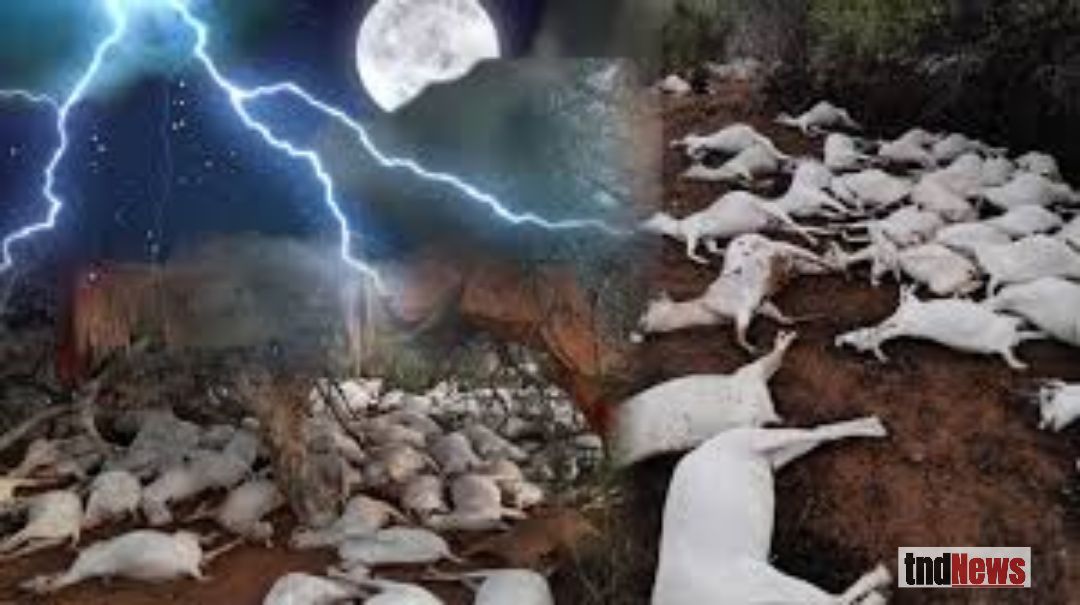
In April 2026, a bolt of lightning struck and killed a cow in Padibe town council, the latest in a series of incidents that have heightened anxiety among residents. For many families who depend on livestock for survival, such losses are devastating.
Odongo Solomon, a resident of Padibe town council in Lamwo district recalls: “I heard a loud bang and the ground shook. “When we rushed to see what had happened, the cow was already dead. It is painful because that is my wealth.”
Across the district, similar stories are becoming more common. In 2016, lightning killed 20 cattle in Madi Opei sub-county, dealing a heavy economic blow to livestock farmers. Years later, the danger escalated beyond animals.
In 2024, tragedy struck at a church in Palabek Settlement Camp in Lamwo district when lightning hit during a service, injuring 18 worshippers and sending shockwaves through the community.
Opio Richard said: “We thought the church was the safest place,” Since then, whenever it rains heavily, people panic. Some even run out of buildings, not knowing where it is truly safe.
Leaders in Lamwo are now raising concern over what appears to be an increasing pattern of lightning-related incidents. The Resident District Commissioner (RDC), William Komakech, has urged residents to take extra precautions during the rainy season.
“Lightning is a serious natural hazard that we must not ignore,” Komakech says. “I advise communities to avoid standing under trees, stay indoors during storms, and where possible, install lightning arresters on buildings, especially schools, churches, and homes.”
He also called on local leaders and development partners to support efforts aimed at improving safety infrastructure in vulnerable areas.
Experts say that while lightning may seem unpredictable, understanding it can help communities stay safer. Thomson Obong, a Geography teacher at Patongo Secondary School in neighboring Agago district, explains that lightning is a powerful natural electrical discharge that occurs during thunderstorms.
“Lightning is essentially a sudden flow of electricity between clouds or between a cloud and the ground,” Obong explains. “It is caused by the buildup of electrical charges in storm clouds. When the difference becomes too great, the energy is released as a lightning strike.”
He adds that tall objects, open fields, and isolated structures are more likely to be struck, which puts rural communities at greater risk.
Environmental experts are also pointing to changing weather patterns as a possible factor. Oyok David, an environmental officer in Kitgum District, notes that climate variability may be intensifying thunderstorms in northern Uganda.
“We are seeing more extreme weather events, including heavier rains and stronger storms,” Oyok says. “This increases the likelihood of lightning strikes. Communities need to adapt by investing in protective measures like lightning conductors and increasing awareness about safety.”
Back in Lamwo, however, many residents say they lack the resources to implement such measures. Installing lightning arresters remains out of reach for most households, leaving them exposed.
Okot Jaspher Lalila, a resident of Madi Opei sub county says “We are told to put lightning arresters, but they are expensive,” He added that there is need for support from the government because people are at risk.
For now, awareness campaigns are being intensified, with local authorities moving from village to village to educate residents on safety practices.
Simple steps like avoiding open spaces, staying away from metal objects during storms, and seeking shelter in safer buildings are being emphasized.
Ventorino Ocitti, an elder from Lamwo district in his reflection said they cannot stop the rain praying that God protects us from lightning because it strikes without warning.
For the people of Lamwo, each rumble of thunder is no longer just a sign of rain but a reminder of a silent and deadly threat from the sky.
Discover more from tndNews, Uganda
Subscribe to get the latest posts sent to your email.