For many rural families in the Lango sub-region, justice has long been something distant found in faraway courtrooms, tied to costly legal processes, and often delayed for years.
But a quiet shift is taking place, bringing justice closer to the people and reshaping how communities resolve their disputes.
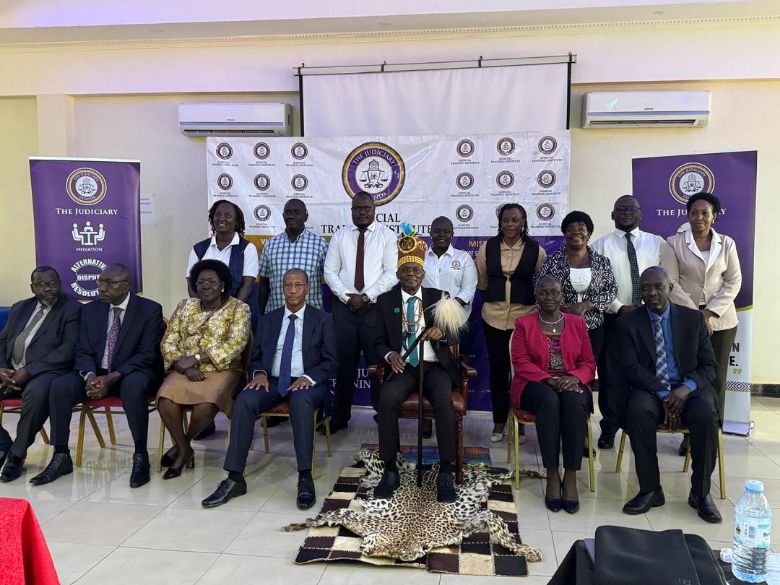
On Tuesday, May 5, 2026, at Margarita Palace Hotel in Lira City, cultural and religious figures, and community stakeholders gathered for a training on Alternative Justice Systems (AJS), an approach increasingly embraced as a practical solution to the overwhelming case backlog in formal courts.
Yet beyond the statistics and policy discussions, the real story lies in the lives of ordinary people who are finding quicker, more affordable paths to justice within their own communities.
In villages across Lango, disputes over land, marriage, and family conflicts are no longer automatically destined for court. Instead, many are resolved through mediation led by clan elders and cultural leaders often under trees, in homesteads, or at community meeting spaces where both parties are given a chance to speak and reach mutual understanding.
The leader of Lango Cultural Institution, Eng. Dr. Micheal Moses Odongo Okune, noted that cultural leaders have long played a central role in maintaining harmony within communities.
He emphasised that many conflicts are settled before they escalate, reducing the burden on formal courts while preserving relationships among families.
“We are not sitting back. We do not want to overload the justice system with cases that can be resolved within our communities,” he said. “Our approach focuses on reconciliation and restoring peace.”
This approach, he explained, has gained increasing acceptance among community members because it is accessible, culturally respected, and cost-free.
Unlike formal court processes, which often produce clear winners and losers, AJS seeks to ensure that both sides walk away with a sense of resolution.
For mediators like Mathew Owaa John Bull, a member of the Council of Elders, the training comes at a critical time. He believes strengthening the skills of cultural leaders will further empower them to handle disputes effectively and fairly.
“As mediators, we are now better equipped to resolve conflicts before they reach court,” Owaa said. “What people need most is harmony, so they can live peacefully with one another.”
The need for alternative approaches is underscored by the sheer volume of cases facing the judiciary.
According to judiciary officials, Lira High Court Circuit alone has over 2,000 pending cases, ranging from criminal and commercial matters to land disputes. When combined with cases at the Chief Magistrate’s Court, the backlog becomes even more daunting.
Justice Prof. Andrew Khaukha, an official involved in promoting AJS, acknowledged that it is humanly impossible for courts to clear the backlog within a short time.
He noted that while courts handle only a fraction of disputes, the majority are already being resolved informally within communities.
Currently, the caseload at Lira High Court Circuit stands at 2,190 cases, with criminal cases leading at 982, followed by commercial cases at 685, land disputes at 516, and civil cases at seven.
At Lira Chief Magistrate’s Court, the civil caseload stands at 332, criminal cases at 530, land cases at 62, and family cases at 117.
Nationally, the Judiciary estimates that formal courts handle less than ten percent of disputes, leaving over 90 percent to be addressed through community-based mechanisms.
The recent launch of AJS in Lango formalizes this reality, creating a partnership between the Judiciary and cultural institutions.
The Principal Judge, Justice Jane Frances Abodo, described the initiative as a milestone in expanding access to justice, noting that it recognizes the critical role communities already play in resolving conflicts.
For many residents, however, the impact is more personal than institutional. It means avoiding long journeys to court, saving money on legal fees, and, most importantly, preserving relationships that might otherwise be destroyed through adversarial legal battles.
As Lango embraces Alternative Justice Systems, justice is no longer just a matter of law, it is becoming a shared community responsibility, rooted in dialogue, understanding, and the enduring value of peace.
Discover more from tndNews, Uganda
Subscribe to get the latest posts sent to your email.