District stakeholders in Northern Uganda have appealed to implementing partners of the Eco Food Project to ensure effective utilisation of funds aimed at transforming livelihoods, particularly among vulnerable communities.
The project, valued at shs8.8 billion, is funded by the Ministry of Internal Affairs of Italy through the Italian Agency for International Cooperation. It will be implemented by a consortium of five partners, including Cerford, NUDIPU, C&D, AgriTalk, with Christian Blind Mission as the lead partner.
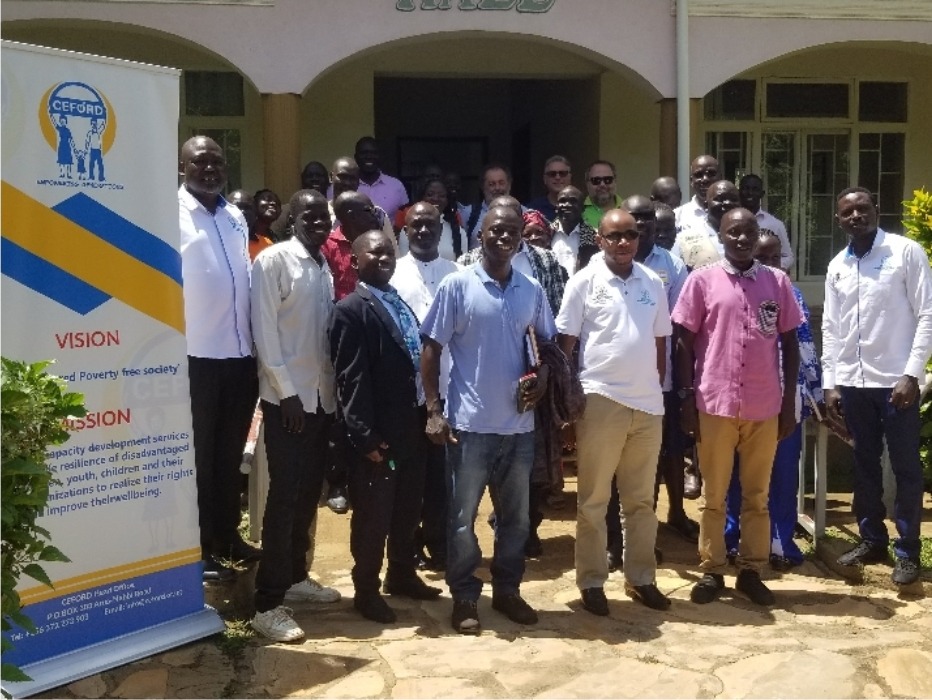
Speaking during the project engagement meeting, Mawa Alatawa, the Head of Programs at Cerford, emphasised the collaborative effort behind the initiative and its intended beneficiaries.
The project, Mawa said, is funded by the Ministry of Internal Affairs of Italy through the Italian Agency for International Cooperation with five partners led by Christian Blind Mission, Ceford, C&D, NUDIPU and AgriTalk.
The project is geared towards supporting vulnerable people in Northern Uganda specifically targeting women and persons with disability.
The core focus of the project is to ensure that the households that are food insecure and also income insecure are able to generate food for the households’ consumption, but also able to sell the supplies to generate income.
The project is looking at approaches to ensure that the economic viability and also employment of the groups is ensured through: a promotion of indigenous crops in terms of the value addition looking at what has previously been done.
And under the new value chains, the focus is on crops that are new to Uganda and are looking at three new crops: kwangwan, sirium and amarantas.
“Amarantas are already indigenous here so we are going to start with the production of amarantas and the market as I said is ready.
“They are going to buy this produce in turns and it turns to ensure that the farmers get income but also to ensure that the right agronomic practices are put in place with the right storage facilities to meet the international market standards,” Mawa added.
However, local leaders raised concerns about the technical capacity required to successfully implement some aspects of the project, particularly the introduction of new crops.
Production Officer for Adjumani District, Dr. Mamawi Ambayo Godfrey, noted the need for specialised training for agricultural officers.
“You know, kwangwan and sirium are new,” he said, adding, “And probably, our agriculture officers or agronomists may not be confident with the agronomy of how to grow it. So, it will be also important for Cerford to have experts contracted to train the agronomists on the value chain of these two enterprises.”
The Principal Assistant Chief Administrative Officer of Adjumani, Edema Richard, underscored the importance of sustainability and responsible resource use under the Eco Food concept.
“We would like to thank you for really supporting us. Mind his letter’s account for this money effectively by using it as it is required. We requested it for economic use of our food or eating food with a sustainable means.
“Therefore, these resources that we are getting from Italy must be used effectively for this. To change the minds of our people. In Adjumani in particular, we are wasting food. So therefore, this project should be used to change the minds of our own people to make sure that we use food sustainably, not wasting it.”
Adjumani Resident District Commissioner, Toko Swaib, called for prudence and accountability in the use of the project funds, cautioning against misuse.
“We should not be talking about poverty now. If all the empowerment programs that the government has initiated were implemented and people fully took up those programs. Some of these partners do what they do, a project comes up with a big sum of money.
“Like we have shs8.8 billion here. How I wish all this is invested in the areas that we’ve talked about. But you’ll see for some other partners what they’ll do, buy expensive land cruisers, buy jeeps.
Toko added: “Almost half of the money that we read for the project goes for those expensive cars. So, my appeal here is that much of this money should go for this inaugurated presentation. Invest there. Then we’ll realize a little bit of change.”
The Eco Food Project is set to be implemented in the districts of Adjumani, Lira, and Kole, with a strong focus on improving food security, boosting incomes, and empowering women and persons living with disabilities through sustainable agricultural practices and market-driven production.
Stakeholders remain optimistic that if properly implemented, the initiative could significantly transform livelihoods and contribute to long-term economic resilience in Northern Uganda.
Discover more from tndNews, Uganda
Subscribe to get the latest posts sent to your email.