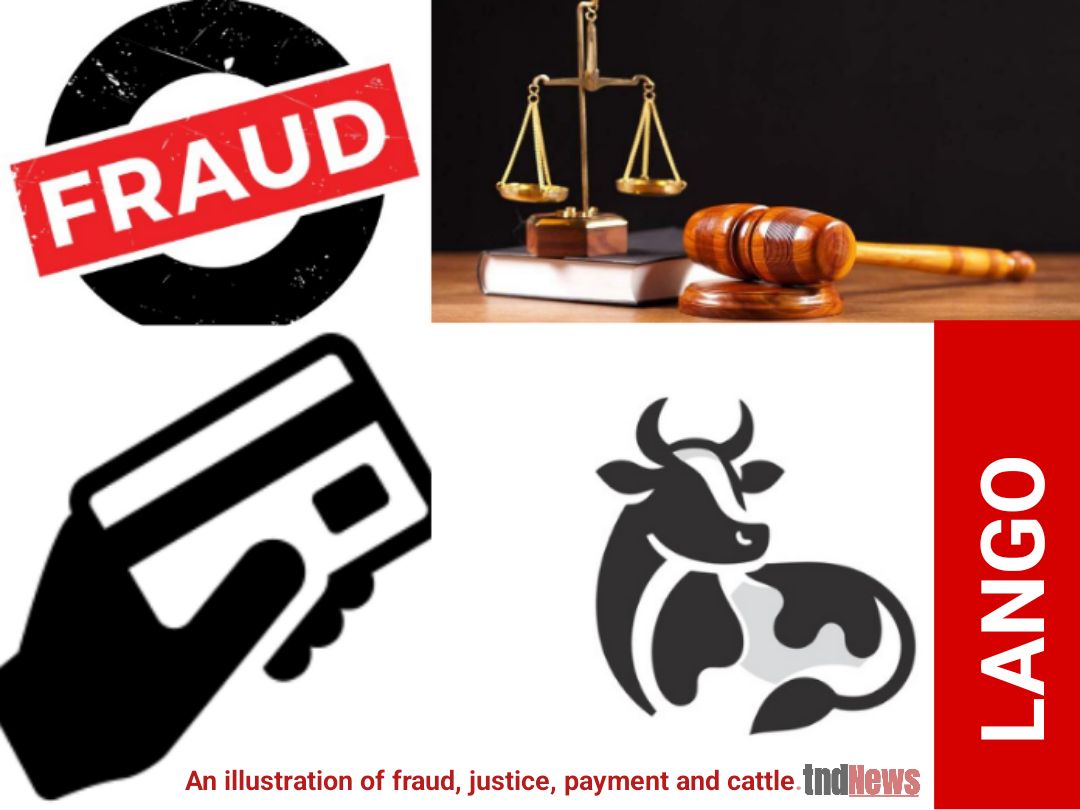
The delay by the NRM government in fully compensating Lango continues to draw frustration across the sub-region.
With more than 2.5 million people according to the 2024 National Housing and Population Census by UBOS, Lango is one of the sub-regions, alongside Teso and Acholi, whose residents took the government to court over stolen cattle during past insurgencies.
In Lango, hundreds of people who claimed their livestock were stolen during the insurgencies dragged the government to court in 2008, demanding more than shs1.9 trillion for compensation.

Under the Lango War Claimants Association, the number of those seeking compensation was 70,000 at that time.
These were the Lango districts of Lira, Oyam, Dokolo, Amolatar, Otuke, and Kole, among others. Under the law firm of Makmot Kibwanga and Co. Advocates, and others, the claimants won the case against the government in 2014. The Lira High Court ruled that the government was responsible for not offering the protection and ordered that the claimants be compensated.
In the Lira district and municipality, now a city, for example, at least 4,516 out of the total 10,085 were ordered to be compensated.
However, the court-awarded figures were disputed by the Attorney General’s Office through the then Commissioner for Litigation Mwabutsya Martin. He argued that the figures, the number of claimants, were never verified.
In 2019, the case reappeared before the Lira High Court, where both the claimants’ legal representatives and the government, through the Attorney General, traded accusations, with Makmot accusing the government and some political leaders of delaying payments.
Years later, the government allocated shs50 billion to compensate claimants in Lango, and shs100 billion to be shared equally between Teso and Acholi sub-regions.
However, tndNews, Uganda, understands that while the money was allocated and released, the majority of claimants in Lango say they have been defrauded, not paid and those paid have been asked for kickbacks.
Linda Akullu, surname not real for fears of being spotlighted, says she received shs2,030,000 in 2023 on her Centenary Bank Account, Lira City branch. “Within less than 20 minutes of credit to my account, shs500,000 was debited. When I inquired because I never had a loan on that account, the bank management told me to be patient. Two days later, I received a call from someone who introduced himself as “Ali Ben”. He told me, “I hope you got your cattle back, can I also get two cows?”
Akullu, who lives in Agali sub-county, Lira district, reveals that she was saved by her son. “My son was concerned when I told him about Ali. He was like, “Mum, these are scammers. Don’t pick his calls again, and never give him money.”
While there are many claimants whose stories have not been shared publicly because of fears, their leaders and representatives are aware of the syndicated fraud.
Moses Ogwang Adonyo, the regional coordinator for Lango War Claimants Association (LWCA) says mismanagement of funds in the cattle compensation process is rampant. He says this has slowed the process since 2012.
Adonyo, who is also the Regional Coordinator for the Greater North War Claimants Association (GNWCA), says, according to the association’s view, the government is to be blamed for the syndicate and mismanagement of funds.
“When the court gave the government a directive to compensate the people of Lango, Acholi and Teso, the government neglected the leaders of the association at the beginning of the compensation process,” he tells tndNews, Uganda.
He recalls that in 2022 when the government officially launched the payment of claimants in Soroti, leaders of the association who were spearheading the process were left out and not involved at any step.
“The government later came out with many irregularities in the criteria that were to be followed,” he says.
Adonyo points to the introduction of data cards and the involvement of Chief Administrative Officers (CAOs), Local Council Five (LC5) chairpersons, Gombola Internal Security Officers (GISOs), Sub-county Chiefs and other lower local leaders, which he says brought many irregularities.
“Everybody getting a data card was required to pay money and almost every step included money,” Adonyo reveals. For this, he says the two associations blame the government for its failed system that affected the smooth cattle compensation process in northern Uganda.
Civil servants needed allowances
Civil servants, Adonyo says, are expected to perform without facilitation. “No money was gazetted for working allowances or mobility to monitor the compensation processes. This forced some civil servants to demand money from claimants, and once a claimant did not have money, they were automatically not paid.”
As LWCA, Adonyo says they wrote several letters to responsible stakeholders and even travelled to State House to meet President Yoweri Kaguta Museveni, who ordered for the inclusion of the association. This order, Adonyo says, was not implemented because some district leaders opposed the idea.
In Amolatar district, Adonyo says the person in charge of the process pinned claimants to pay shs100,000 to get data cards. He adds that when the matter was raised with the RDC and police, no clear action was taken.
The Assistant Resident District Commissioner (ARDC) of Amolatar Bonniface Pule, could not deny nor accept that there is fraud in his district, but acknowledged what he calls “mismanagement that has led to errors in handling the compensation process.”
Pule advises that issuing data cards must follow due process to avoid further complications and spotlight in the district.
Meanwhile, Adonyo argues that during ground checks, claimants in Amolatar paid between shs5,000 and shs10,000 at some LC1 offices and shs20,000 to some GISOs.
“My own mother paid shs20,000 to a specific GISO and spent shs150,000 at the district before getting her compensation,” he revealed, but couldn’t share proof when this publication asked for it.
Some fraudsters are in custody
While Adonyo says several complaints were presented to the Attorney General about fraudsters and no action was taken, he has given a thumbs up to the State House Anti-Corruption Unit for “frequently following up on cattle compensation issues”.
On August 5, 2025, the Otuke Magistrate Court remanded three fraudsters for defrauding over shs1.5 billion meant for compensating elderly claimants.
Her Worship Irene Aber remanded Jimmy Akasa Mokili, 43. He’s a businessman and a former aspirant for Agago West under NRM. Others remanded were Jaspher Okeng, 58-year-old LC3 chairperson of Ogor sub-county in Otuke and Sergeant Amoni Benz alias Okengo Bonny, 42.

The trio were charged with theft and conspiracy to defraud beneficiaries of cattle compensation programs. Investigators told the court that the accused, and others still at large (todate), exploited the registration data and bank accounts’ opening processes to obtain beneficiaries’ banking details.
Investigations revealed that the accused then manipulated the accounts, withdrew government funds without the beneficiaries’ knowledge or in some cases, gave them a small share of the compensation.
The suspects – between January 22 and June 24, 2025, in Otuke and Agago districts, stole shs8,025,000 from Ogali Richard, shs7,950,000 from Adongo Hellen Rose and shs7,954,631 from Alor Carlo.
Okwir Denis, a claimant from Otuke, argues that the district has lost shs15 billion to middlemen and conmen who claim that they are working with the government and other stakeholders on compensation.
At the same meeting, Deputy Attorney General Jackson Karugaba Kafuuzi reported that the government had disbursed shs48.7 billion to compensate 12,389 claimants in Lango. This figure, however, was heatedly denied by a section of Lango leaders, including some beneficiaries in front of President Museveni.
As of August 2025, Kafuuzi reported that shs159.5 billion had been released for cattle compensation in Acholi, Lango and Teso sub-regions. Of the total, shs158.31 billion was paid to 4,838 claimants in Acholi, 12,389 in Lango and 11,056 in Teso.
There were claims that shs48.7 billion reportedly released by the government for Lango was misused and stolen, with the government doing nothing.
Angella Okello, one of the plaintiffs, accuses lawyers for both parties of defrauding Lango and requests the government to “totally cancel the cattle compensation program.”
Okello says that the corruption in cattle compensation has become “unmanageable and frustrating”.
Susan Abeja, the woman MP for Otuke district, calls for the arrest of the “five categories of these thieves sabotaging the program.” Abeja says “thieves categories number 5 and 4 have been arrested” – calling for “the arrests of categories number 3, 2 and 1.”
Museveni meets Lango leaders
While in Lango last year on August 17, President Yoweri Kaguta Museveni directed that a 20-member committee be formed to engage him further on cattle compensation in the sub-region.
Museveni was briefed by those who sued his government, and leaders who informed him of “systematic fraud, and ghost beneficiaries” – most of whom have received millions of shillings at the expense of the rightful beneficiaries.

While reading the Lango joint memo on cattle compensation, Kole North MP, who doubles as General Secretary of Lango Parliamentary Group (LPG), Dr Samuel Opio Acuti, said the question of cattle compensation “lies at the bone marrow of grievances affecting Lango.”
“Our cry for long has been that the cattle compensation question be settled with certainty and finality,” Dr Opio said as he read the joint memo.
Official payment documents from the Ministry of Justice and Constitutional Affairs showed that 498 claimants from Alebtong district were paid in the financial years 2021/22, 2023/24 and 2024/2025.
In Oyam, 630 claimants were paid in the financial years 2021/22, 2023/24 and 2024/25 with shs1,326,150,000 paid in the financial year 2024/25, alone.
In Otuke, shs553,350,000 was paid in the financial year 2024/25, with 155 claimants indicated to have also been paid in the financial year 2021/22 and 2023/24.
Lack of information and bureaucracy were identified as key factors hindering cattle compensation in Lango sub-region in January 2021. However, in 2025 and the immediate years before it, fraud and mismanagement took centre stage.
Dr Bob Marley Achura, health and social economic commentator in Lango sub-region says cattle compensation is not an economic intervention. “It is a justice process.”
When handled poorly, Dr Achura predicts “division.” “Handled transparently, it can heal.”
This story was done with support from ACME under the Public Accountability Reporting Project 2025.
Discover more from tndNews, Uganda
Subscribe to get the latest posts sent to your email.