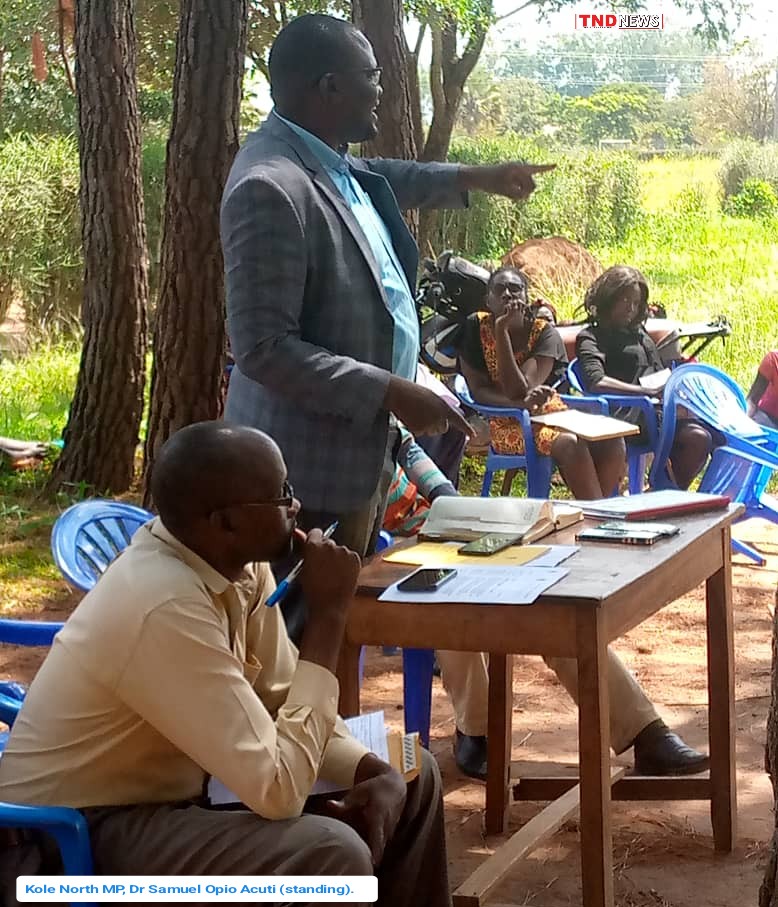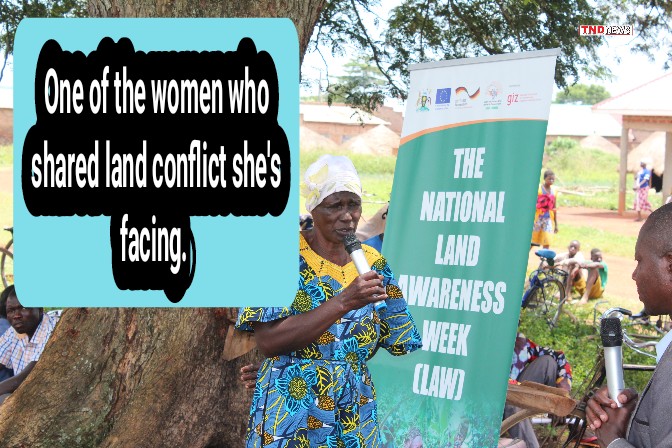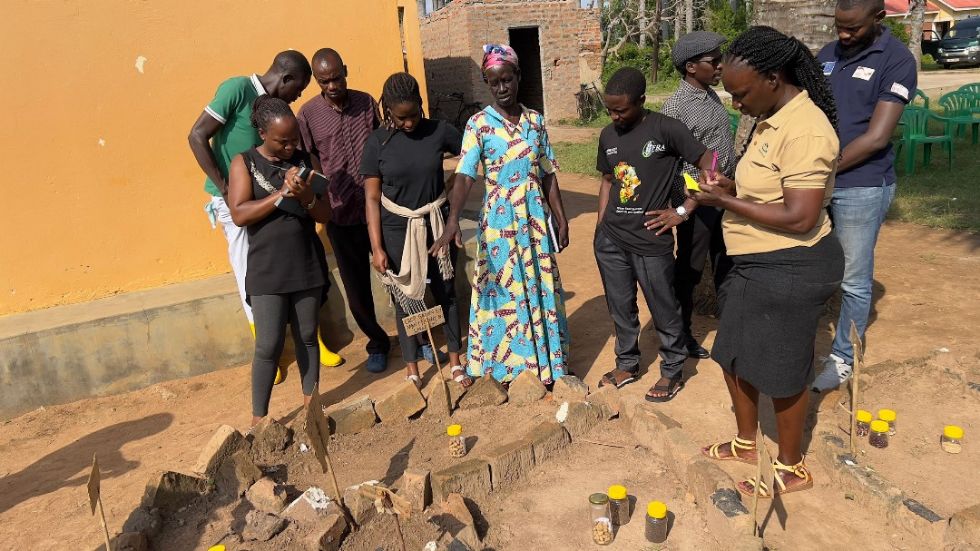
Soroti, Uganda | Land and Equity Movement in Uganda (LEMU) and OXFAM, with other Partners of the “Keep Your Land Keep Your Seed Campaign” convened at the Adamasiko Community Seed Bank in Katine-Soroti City for a learning visit.
The event was hosted by Ojom Oculoi Olwelai Joint Farmers Cooperative Society Ltd. The seed bank is supported by OXFAM, CIDI, and PELUM Uganda.
According to LEMU, the visit was mainly geared towards experience sharing to shape the campaign, but also seize collaboration opportunities with potential campaign members and partners already implementing campaign-related activities, such as Community Integrated Development Initiative (CIDI), OXFAM’s seed partner.
The key objective is to avoid duplication of activities and strengthen a joint effort towards addressing the campaign’s main objectives on the pervasive loss of land, loss of land productivity and the loss of indigenous seeds, foods and animal varieties.
The Keep Your Land Keep Your Seed Campaign was conceived from LEMU’s 20-year reflection on the land question in Uganda, specifically, on why local communities should have the right to customary land. This reflection has revealed a close connection between land ownership and the ability of local farming communities to produce their own food.
LEMU has over the years invested in understanding the question of “who controls the food produced by the local farmers”. “The ensuing reflection has, among other things revealed that farming communities are losing their power over food production due to the decline of local food and seed varieties, among other factors.”
Dr. Theresa Auma, the LEMU Executive Director stated that the campaign “envisions to create a directory where farmers in different sub-regions such as Teso, Lango, Acholi, and elsewhere in Uganda will be able to exchange indigenous seeds among themselves to enhance and broaden preservation of such seeds.
Coordinated by LEMU, the campaign was launched in November 2024 in Okwongodul sub-county, Dokolo district. Only a year after its launch, the campaign now has more than 10 partners working in different social sectors (connected to land, food, trade, pastoralism, among others).
These partners include Food Rights Alliance (FRA), Uganda Community Based Association for Women and Children Welfare (UCOBAC), LANDnet, Southern and Eastern Africa Trade Information and Negotiations Institute (SEATINI), The Coalition of Pastoralist Civil Society Organisations (COPACSO), Uganda Agribusiness Alliance (UAA), OXFAM, Eastern and Southern Africa Small Scale Farmer’s Forum (ESAFF Uganda) and PELUM Uganda and Participatory Ecological Land Use Management (PELUM Uganda).

During the meeting, Cooperative members of Adamasiko shared their experiences and activities like lobbying and advocacy, seed multiplication, seed banking, selling seeds to farmers, capacity building sessions, among others. The seed bank leadership with a strategic committee supports the cooperative’s activities to help farmers access mainly indigenous seeds and resources for production.
The Cooperative unveiled its pivotal role in supporting local farmers with homegrown resources and indigenous knowledge and is quietly transforming farming livelihoods through a powerful blend of tradition and innovation.
As the global agricultural sector grapples with climate change and sustainability challenges, LEMU says grassroots models like Adamasiko offer a template for resilient farming rooted in heritage. “At the core of its operations lies a well-structured facility designed to preserve, promote, and distribute indigenous and local seed varieties.”
The compound features five dedicated areas: the office, seed display room, seed storage room, input room, and main store each contributing uniquely to the preservation of agricultural heritage. With more than 500 members now, (203 men, 210 women, and 120 youths), the cooperative boasts of having and keeping some of the following indigenous seed varieties;
Beans, ground nuts, peas, maize, and black peas serve as staple crops for commercial and community sustenance. (Large-scale cultivation)
Ground nuts, sukuma (collard greens), and chia seeds support daily nutrition. (Small-scale cultivation, primarily for home use)
The oyster nut, once a nutritious household favorite, has vanished from local fields sparking interest in its potential recovery. (lost heritage crop)
Serenat 6T ground nuts are widely favored for their adaptability and yield. (Popular cultivar)
From preservation to innovation
Adamasiko farmers are championing local methods that promote sustainability and food sovereignty in multiple ways:
●Seed saving: Farmers contribute to and benefit from the seed bank by storing indigenous varieties adapted to the region’s climate and pests.
●Eco-friendly pesticides: Locally formulated sprays are safe, natural, and allow for crops to remain edible immediately after application.
●Seasonal planting cycles: Rotational farming practices are helping maintain soil fertility while maximizing harvests.
●Home gardens: Small household plots provide nutritious food all-year-round, reducing dependency on market produce.
●Farmer knowledge exchanges: Regular community gatherings empower farmers to share tips, revive lost varieties, and integrate new ideas grounded in ancestral wisdom.
“Adamasiko is showing the world that food security begins with cultural pride and community-driven action, we are not just planting seeds, we’re planting hope,” said one cooperative member.
From showcasing indigenous seeds to producing safe local pesticides, this community-led initiative is breathing life back into traditional farming and preserving future harvests.
For many in Katine and beyond, the seed bank is more than a facility: it’s a testament to the power of collective heritage, ecological wisdom, and the enduring strength of Uganda’s farming spirit.
“While in Soroti, the campaign partners also had an opportunity to meet and share experiences and activities they are individually conducting. The activities are connected to the campaign, as well as thinking collective action going forward,” Racheal Aduk, LEMU’s Communication and advocacy officer, said.
Discover more from tndNews, Uganda
Subscribe to get the latest posts sent to your email.