Acholi leaders are rallying parents to actively participate in the Baseline Education Census (BEC) by allowing their children to report early for term II.
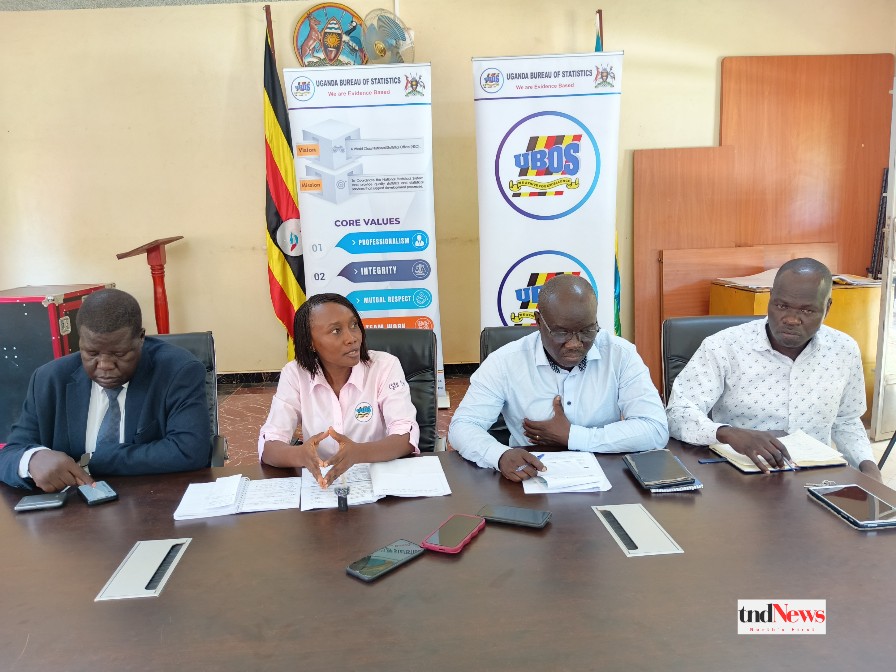
The BEC will be conducted by Uganda Bureaus of Statistics (UBOS) in collaboration with the Ministry of Education and Sports to ascertain the number of learners in the country and the number of government aided and private institutions.
Fiona Atim, the inspector of schools in Gulu City reveals that most parents and guardians prefer taking their children to school after a week or two when the term has already started.
She, however, appeals to them to prioritize this exercise so that their children’s biodata are entered into the system.
Janan Lakony, senior education officer for Gulu district assured the officials from UBOS of their continuous support to ensure the exercise is a success in Acholi sub-region.
“This exercise will be a physical headcount, and so learners should return early to school, because once an enumerator reaches your school when you are absent, you will be marked absent,” she said.
Sarah Apiyo, Gulu City statistician who represented Gulu City Clerk at a meeting with UBOS and Ministry of Education officials, appeals to all stakeholders to embrace this exercise. She noted that the data will be used for resource mobilization and proper planning.
Alfred Okwonga, Mayor of Gulu City Council advises that the census be conducted a month after schools reopen. He argued that (period) is the peak when all learners have reported to schools.
The Mayor added that the census will help the district and city officials too.

“If the Baseline Education Census is intended to be successful then it should be conducted a month when schools reopen otherwise the data will be inaccurate,” he emphasised.
Nancy Anyango, the senior Public Relation Officer with UBOS reveals that the census is in accordance with their mandate given by Parliament in the 1998 Statistics Act.
The Act sets them as the official agency that collects, analyzes and disseminates official statistics in the country to be used for planning.
“All schools will be enumerated; from kindergarten to universities to establish the number of learning institutions we have. It is the first time we are conducting this kind of census and the Ministry of Education awaits the data because it’s going to help them understand where the sector stands,” she said.
Over 8000 enumerators were recruited and trained to conduct the exercise when second term reopens, according to Anyango
What are the requirements?
According to Anyango, they need learner’s name, date of birth, sex, nationality, learner’s information number (LIN) and NIN for those having, Refugee ID for refugee children, and special needs status.
For the teaching staff, the census will capture their names, date of birth, sex, nationality, NIN, work permit, refugee ID status, and the subjects they are teaching.
It will also capture the Teacher Management Information System Number, highest teaching qualification and highest level of education.
For the non-teaching staff like the cooks, cleaners, matrons, security guards and administrators, the digital system will capture their name, date of birth, sex, nationality, job title, and identification documents.
Learning institutions are required to provide their Education Management Information System number (EMIS).