In summary:
- This story exposes the squad responsible for electoral crimes and how they were mobilised.
- Veteran politician recalls the first election and who was involved.
- Police refuse to take responsibility for various crimes committed.
Election periods in Uganda can be taken as a time for chaos and human rights abuses. In the past elections, kidnaps and unlawful arrests of civilians who support different political parties or candidates were witnessed across the country. Majority of these were “allegedly” done by security forces and others in plain cloth.
Robinson Tabu, the then secretary at the Election Commission Gulu office, is one of the many victims. He allegedly got kidnapped on January 8, 2021, when he stepped out of the Commission’s office in Senior Quarters for lunch.
One week later, the search team found the 28-year-old dead near Lagoon in Forest Ward, Laroo-Peace Division, Gulu City.
According to the postmortem report, he died from poisoning. Some speculate that he was killed for political reasons, including his anticipated roles in the 2021 general elections.
The aforementioned, according to human rights advocates and organizations, undercuts the fundamental tenets of a democratic election. Electoral violence, for example, exposes, injures, and kills citizens who believed their rights to vote and support a candidate of their choice would be protected.
What is worse, this undermines the democratic process and citizens’ ability to choose their leaders based on their preferences.
In Lira City, for example, authorities unlawfully arrested and detained some people. Micheal Adonyo, the National Unity Platform (NUP) coordinator for the Lango sub-region before being promoted to northern Uganda coordinator, described what happened to him and other party members. He described 2021 as a difficult year that saw a couple of his colleagues arrested.
“In Amolatar, they [security personnel] detained many of our leaders. One of our supporters who had arrived in Lira from the United States was arrested by men in plain clothes and detained for days.”
Adonyo also stated that his home was raided and that a security team from the Chieftaincy of Military Intelligence seized his car, which had been given to him by his party to manage the elections in Lango.
“They (the CMI) insisted I was running a tally centre from my home. It was not true,” Adonyo states, adding that there was no such thing as a tally centre at his home.
tndNews attempted to contact CMI to verify what their officers did, but an audience was never granted.
Many of those arrested between 2016 and 2021 were young people, according to police records at Lira CPS. “These youths were accused of hooliganism, threatening violence, and working for, or in the interest of, various politicians to cause chaos,” says a police officer who handled some cases at the time and asked to remain anonymous.
Political parties such as the UPC and the NRM fought hard enough to win supremacy in Lira Municipality in 2016 and previous elections. UPC took over Lira Municipality in 2006, and its dominance continues to this day, with Jimmy Akena, UPC party president, serving as the Member of Parliament for Lira City East Division.
Sadrack Obong Eyit, the Lira City West Division MP, supports Akena’s UPC party. However, Lira City Woman MP and Lira district Woman MP seats are all occupied by NRM.
“For years, the ruling party sought to take over Lira Municipality from the opposition. Many attempts were made, including during the late Cecilia Atim Ogwal’s tenure, but UPC remained strong. Boda-bodas were mobilized under Sam Engola, the Lira district NRM chairman, to counter the UPC’s dominance; it did not work,” Victor Odyek, a member of the UPC campaign squad who was allegedly harmed in the 2016 confrontation, recalls.
He states that a new strategy would be developed, with the goal of mobilizing youth from various political parties to support the UPC and its ideology. UPC youth would frequently gather at the late President Apollo Milton Obote’s home in Senior Quarters, where Akena now resides. In all their meetings, they would talk about strategies, how to out-compete the NRM youths, and what they needed for their candidates to win.
“UPC has always been for the people, and for the people. We are a party that practices democracy, which is why we engage youth across political groups to support us,” Omura Bonny, former aide to Jimmy Akena, says.
While the UPC was strategizing, Victor Odyek claims that the NRM was not only buying off some rival supporters but also beating those who resisted. “Some of us were bribed and beaten, while others were arrested. When they beat and harmed my left thigh, one of the NRM cadres told me, ‘We have power; we can and will smash. Lira, municipality, or district should be under our control’.”
More of the same?
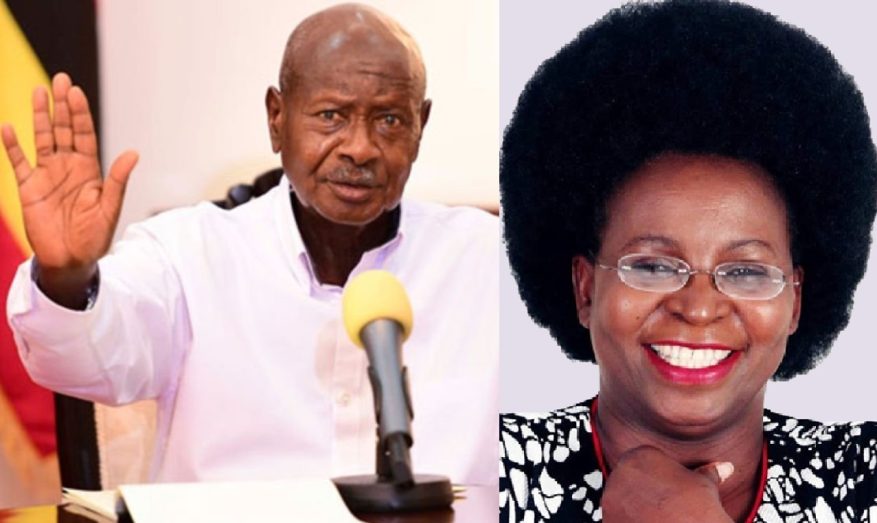
With less than three years until the next general election, the race for the Lira City Woman MP seat is already fraught with animosity, false information, and threats from both camps of incumbent MP, Dr. Jane Ruth Aceng, and the Oyam South MP, Betty Amongi. Aceng is Health Minister, while Amongi is the Minister for Gender, Labour and Social Development.
Since Amongi announced her intention to run in Lira City in 2026, “an atmosphere for violent contest has been created,” according to Tamali Auma, a local human rights activist. The two senior politicians’ desire to run for one constituency in the upcoming election has created platforms for the spread of hate speech, misinformation, and disinformation. Each of their supporters uses these platforms, particularly WhatsApp, to attack the opposing side, even threatening lives.

As members of some of these WhatsApp groups, none of these senior ministers have spoken out to condemn the actions of their supporters; instead, they remain silent and follow the attacks and discussions as they occur.
“We [group members] do our best to be fair, truthful to our agenda, and to inform people about what our principal, Honourable Dr. Jane Ruth Aceng Ocero, has done. We just sell our agenda, her agenda from 2021 to 2026 and beyond. If you went out and asked any Lira City dweller, many of them will tell you how Dr. Aceng has achieved a lot since she was elected. There are facts and achievements, yet some in UPC are coming to write it off,” says Juliet Alaba, media strategist to Lira City Woman MP.
Come 2026, Alaba adds that they [in NRM] are ready to retain the incumbent ‘at all costs’, stating that ‘the work will speak, the hands will vote, and the eyes will protect our votes’.
Activist Auma believes that, given the current trend of both camps sharing misinformation online in order to gain traction, it will be critical to protect personal safety; promoters of both camps must also be cautious. She blames the media for playing a role.
She further asserts that the media has been both appropriately and inappropriately utilized, particularly in relation to elections. “… from promoting peace to raising awareness of what is going on, the media has a critical role to play.”
Once such a media report is not well reported–or lacks facts–according to Auma, it either escalates the situation and people fail to control it anymore.
During the 2021 elections, security personnel detained journalists in Lira City, who worked for various media outlets. On December 11, 2020, security personnel assaulted another group of journalists covering presidential candidate Robert Kyagulanyi Ssentamu.
One victim, however, accused a senior politician of the assault, arrest, and confiscation of the reporting equipment.
“After my arrest, a senior police officer informed me that someone wanted to speak with me. I asked him: ‘Who?’ ‘Is that person behind my arrest?’ ‘Tell me you are ready to meet him and you will hear what he wants to share with you’.”
This journalist, speaking on the condition of anonymity for personal safety, met with this politician, his campaign team, and the aforementioned senior police officer for “talks and good working relations.” “He agreed to compensate me and he did it. One major warning followed: do not report the negatives about me anywhere.”
Human rights activist Auma urges the media to pay close attention to what they report ahead of the 2026 general elections, believing that it has the potential to expose electoral crimes and human rights violations.
She blames security forces for causing the public to react and then conducting the arrests. “How they react will also determine how the community will react. I hope security adopts engagement and peaceful ways of engaging the local population other than using extra force that is really not required.”

During previous general elections, including the 2023 Oyam North MP by-election in the Lango sub-region, opposition candidates’ supporters were threatened and arrested. They were eventually released with charges.
On July 6, 2023, Robert Ogwal, the UPC leader for Otwal sub-county, and another member from Minakulu in Oyam South, were arrested. The pair was arrested by police in the early morning on suspicion of carrying cash worth shs150,000 to bribe voters to vote for the UPC candidate.
Their case was dismissed hours later, after the Returning Officer of the Electoral Commission declared the UPC candidate the winner.
“Most of these arrests are carried out by security forces or men in plain clothes working for the State. When I was arrested, I spent three days in the police custody and later was told I had no case to answer. My biggest problem was supporting a politician of my choice,” Isaac Opio, from Oyam and currently riding a boda boda in Lira City, says.
It is unusual for a civilian to arrest and detain another civilian, he claims. “You will find someone arrested, just like I was in police custody. I hold the police and sister forces responsible. I blame politicians who are threatened by what those who oppose them say, because the majority of them collaborate with men in uniform to arrest, detain, and violate the rights of political opponents or supporters.”
Although verified statistics on electoral crimes at the local level are limited, the Lango Cultural Foundation identified the districts of Oyam and Kwania, as well as the Lira City East and Lira City West Divisions, as key hotspots for electoral violence in 2021 during an engagement with Electoral Commission officials and various stakeholders.
For example, the above divisions have nearly equal numbers of NRM and UPC supporters, both seeking dominance. Each political party had a “voter protection squad.” In 2021, both parties expanded their “squads” just as they did in 2016. Moses Okello Alyana (now deceased), Odongo Bonny (aka Bodyguard), and Moses Okwir (aka Kampala) were NRM leaders in Lira district and Lira city in 2016 and 2021, respectively.
They ‘commanded squads’ and were ‘recruited’ to protect votes for NRM candidates, including Museveni.
For many years, Lira Municipality, now a city, was a stronghold for the UPC party. To demonstrate this, in the 2021 parliamentary and lower elections, the UPC won Lira City East and Lira City West Divisions. Dr. Jane Ruth Aceng of the NRM was elected as the only Lira City Woman MP.
During the campaign for the Lira City East Parliamentary seat, supporters of candidate Jimmy Akena and NRM’s Apollo Onyango clashed. Security forces, particularly police, intervened and arrested a few of them. Some supporters of these parties expressed a desire for their candidate to be elected as the first representative to the 11th Parliament after the government granted Lira a city status on July 1, 2020.
Rights Watch
In January 2021, Human Rights Watch (HRW) reported cases of killings by security forces, as well as arrests and beatings of opposition supporters and journalists. In its publication, the Human Rights Watch noted the disruption of opposition rallies as well as the internet’s shutdown.
At least 54 people died when security forces cracked down on demonstrators calling for the release of Ssentamu Robert Kyagulanyi, aka Bobi Wine, who was detained on November 18 and 19, according to a report from HRW.
“A democratic playing field for free and fair elections was worryingly absent during these elections,” said Human Rights Watch’s Africa researcher, Oryem Nyeko.
Instead of restricting free expression, movement, and assembly, Nyeko suggested that the Ugandan government take concrete steps to improve universal respect for human rights and eliminate all remaining restrictions.
For example, during the 2021 general elections, the internet and one social media platform, Facebook, were turned off. Presidential candidate Yoweri Museveni accused the social media platform and other foreign agents of arrogance. “If you want to take sides against the ruling party, then that group [Facebook] will not operate in Uganda,” Museveni said at the time. Until today, Facebook is officially closed in Uganda.
Michelle Gavin of the US Council of Foreign Relations described Uganda’s general elections as an opportunity for President Museveni to “demonstrate the repressive power of the state rather than a chance for Uganda’s population to express its political will.”
Perspectives
Politician and human rights advocate Newton Odongo claimed that additional state security agencies had a shady hand in the elections. “Whereas the law is very clear that the office of the RDC, the District Internal Security Officer, and the Gombolola Internal Security Officer are supposed to be non-partisan; we have seen situations where this organ gets directly involved in mobilizing for a candidate that a State or NRM as a party is interested in. They become an electoral apparatus for the NRM party, which is again very unfortunate against the principles of fairness.”
Odongo stated that all the security organs mentioned above have had the opportunity to support their preferred candidate. “And sometimes they give preferential treatment to a candidate they are interested in. Some candidates even use bribery to gain their support. We have had scenarios where they [candidates say] we have the backing of the security and so on…. this also sends fear.
In the run-up to the 2016 elections outside Lira district, Odongo stated, without naming anyone, that there was a candidate in Kole North, Kole, who used the security organ to protect votes and bribe his way into Parliament, while supporters of the other candidates became agitated. However, the security was overwhelming for these supporters.
The MP in question this publication found was Okello Bonny Desales. He eventually lost his legislative seat for Kole North in 2021. In the race to 2021, Okello allegedly “lost the support of the masses.” He refused to admit it.
On the allegations that he used security to ‘change votes,’ he replies, “Let those who accuse me go and hang.”
Regarding cases of human rights violations during the 2021 elections in Lira district and Lira city, Odongo states that while there were violations, he did not witness the abduction of candidates or even supporters of some candidates, as had been alleged.
“What I can provide are two accounts of commercialisation and voter bribery during the election. In terms of violence, yes, supporters of candidates would clash here and there, but abduction remains a hearsay to me.
“Arrest of supporters, yes, for those alleged to have violated electoral laws. For example, if the campaigns were run outside of the designated time frame, security would occasionally intervene to stop some of these practices.
Odongo states that as a country, it has been a vice we have been grappling with, citing the current influence and partisanship by the office of the RDCs, who are already taking sides with specific candidates, as “not a very good sign.”
“They are directly campaigning for a specific candidate even before the Electoral Commission has opened up space for campaigns.”
To what extent actions by security forces and RDCs can incite the public to respond or react against the other, he says, “it triggers reactions,” particularly from opposing party candidates who believe they are being cheated. “They are supposed to be non-partisan. Once they realize that the system is not for them, it attracts reactions from them.”
Regional security speaks
SP Jimmy Patrick Okema, the North Kyoga Regional Police PRO, has denied accusations that his officers have taken sides with ruling party candidates and are involved in electoral crimes during elections. Okema, who was assigned to his current station after the 2016 elections, claims there is no evidence of that effect. “But… looking from what I got, we didn’t have electoral violence in this region.”
Okema further refutes claims that local police took sides and barred rival contenders from entering certain locations while in Lira City, including former presidential candidate Robert Kyagulanyi Ssentamu, as well as his supporters.

Under his command, the rally, which had drawn hundreds of people, was abruptly halted, with gunshots and tear gas filling the venue. As a result, Cecelia became ill and was admitted to Lira Medical Centre in serious condition.
“That is not true because, as police officers, we have a clear mandate, as stated in the Constitution of the Republic of Uganda. We are nonpartisan. We work with everybody but not forgetting that in 2021 we were in the period of Covid-19 and there were a number of Standard Operating Procedures (SOPs) issued and the guidelines from both the Ministry of Health and the Electoral Commission. So, you are aware that most candidates like you have said from the opposition are a little adamant, they are defiant.
“Meanwhile, others may respect the SOPs and guidelines issued. So, maybe sometimes people look at that angle because the other candidates are respecting the SOPs, others are not; that may bring the suspicion that maybe we are not working in conformity with what the Law says.
“The Police Force is a non-partisan institution but provides security for anybody, any institution in this country.”
Looking ahead to the next election, SP Okema stated that North Kyoga was prepared, acknowledging receipt of the Electoral Commission’s road map for 2026. He reveals that their strategic bosses have adopted that roadmap, and plans are in the works to prepare in advance of that time frame.
“But, as a region, we do not work in isolation, we work with other stakeholders, that means all our work is done in conformity with the guidelines that will come from the Electoral Commission, and, of course, not forgetting our core mandate in the Constitution of providing protection of life and property, preservation of law and order; detection and prevention of crime, and the last one says we are supposed to work with any other security agencies established in the Constitution.
“Basically, that is where our operational guidance falls… we are only waiting for that period, but do not forget that on a strategic level, they are also planning for us because there are a number of other things that need to be put in place, such as mobility, fuel, and food ratio…”
He says that training is currently underway, and that some of their commanders are taking part. Okema adds that these commanders are free to disseminate information from training to ground commanders so that “we are all on the same page.”
Naphtali Jimmy Olea, Officer in Charge (OC) of Lira City Central Police Station tells tndNews that while training is taking place, “no one from his station” is benefiting from it. “There is nothing being done at the CPS. What I know is that the police are already training people in the training wing. We are preparing those officers specifically for elections.
“For us who are already in the field, those are things we have done before. But we are also getting more personnel from the training wing,” says Olea.
The training has already been going on for two months, according to OC Olea. “There is no meeting going on here (at CPS) in relation to electoral issues,” he reveals, but added that they expect personnel to be provided because what they have is insufficient to manage the elections.
Take a listen by CLICKING HERE.
Polling agents remember
Richard Edinga, a poll agent for the 2021 general election, described what he witnessed. He stated that police officers were heavily deployed, and that one of the candidates [he declined to mention his/her name) wanted to cause chaos, but was quickly apprehended alongside rowdy supporters.
They needed to report “some cases of voter bribery and intimidations to the police,” he says when asked what he had witnessed during the elections that was improper. “Police had to arrest those [supporters of different candidates] who started a fight.” Interestingly, Edinga stated that no one was arrested at his polling station, St. Thomas Baya, despite the fact that there was disorder.
Paska Akot worked as a polling agent in one of Lira’s polling stations. She describes how, while the police were on the ground to prevent electoral crimes, some incumbent candidates’ agents intimidated voters.
“What I can recall and summarize from my observations is that many incumbents from LC3 to parliament never wanted to lose. Some attempted to use police personnel to change the polling station results, but this was not possible.”
The Electoral Commission assigned Vincent Opio to supervise Railway and Ojwina in Lira City, East and West, respectively. He denied recording any cases of electoral crimes in the areas to which he was assigned. What was evident, in his opinion, was the heavy deployment of security and the tardy delivery of voting materials.
He went on to say, “In polling stations I went to, the majority of voters did not turn up, allegedly for fear of heavy security deployment; they chose not to vote because of fears, and I believe the government should implement another strategy to ensure all those eligible to vote do so without any worries in 2026.”
In addition, he states that “leaders in power” have threatened opposing supporters during campaigns and leading up to election day, which he anticipates will occur in 2026.
Electoral Commission speaks
“The Electoral Commission is simply a referee,” says the Commission’s spokesperson, Julius Mucunguzi, who condemns any actions that lead to electoral violence. Further describing these actions as “unacceptable,” Mucunguzi emphasizes that an election is not a war, but rather a constitutional means provided by our Laws for Ugandans to elect their leaders in peace, safety, and security.
“Violence is perpetrated by human beings and the message from the Electoral Commission, especially the chairperson Justice Byabakama, has been, and continues to be, that all actors in the electoral process be it their agents, be it voters; be it security agencies, all of them should act according to the Law and ensure that the elections are conducted in a peaceful, secure atmosphere.”
According to him, violence has the tendency to scare people away, which is contrary to the country’s democratic aspirations. “The Electoral Commission is not a law enforcement agency; rather, it is a body mandated to conduct elections in the country. When asked about the Commission’s roles in reducing violence and other forms of human rights violations, the spokesperson explained that there are institutions in this country whose duty it is to ensure that any form of lawlessness is dealt with in accordance with the Law.
As a result, the Electoral Commission does not run a police force to go and arrest people; there are still the police and the court system.
According to Mucunguzi, the police are responsible for the enforcement. “For us, we set the rules and ask the actors in the electoral process to abide and conduct themselves accordingly.”
The Commission is taking up steps…
Mucunguzi acknowledges the existence of violence and human rights violations during previous elections and expresses hope that by meeting with people across the country, they will be able to reduce these crimes. He believes that voter education and sensitization will be critical. Two, he says there will be meetings with all stakeholders.
“Three, we are calling on everyone to follow the law and regulations that have been established, and to act reasonably.
“The Electoral Commission’s only option is to appeal to actors; we’re a referee in the electoral process. The players, coaches, and team managers all have an impact on the quality of a game. No matter how good the referee is, if the players choose to kick the bones rather than the ball, the game is jeopardised.
“So, it is the responsibility of all actors and players in the process to follow the rules in order to avoid discrediting the game, which we all want to be clean.”
Take a listen HERE to Mucunguzi, explains more.
The Church weighs in
Rev. Tom Obong, Secretary of the Lango Religious Leaders Forum (LARELEF), has urged various political parties, security personnel, Lango residents, and Ugandans in general to always practice fairness, promote freedom, and human rights.
Rev. Obong adds that the Forum ensured that they were not partisan in any political endeavors. “We remain impartial to maintain our neutrality, offering counseling and pastoral care.”
When campaigns begin, he notes it is always tempting to try to divide or pull religious leaders to their side because of religious affiliations. “You find that some religious leaders choose to be partisan by openly campaigning for a specific person or directly being involved–there are many rumors about that. We always encourage religious leaders to remain neutral so that they can continue to be a source of hope for members of the community who politicians can turn to.
According to Rev. Obong, the Church urges all those with ill intentions who are hired to cause chaos and electoral violence to stop. When asked if they are aware that people are always hired to cause chaos, he responded, “We are aware, and that is why we are coming out today to raise our collective voices for it to stop. Elections are organized to elect leaders, and they must be free and fair.”
Monitoring elections
The Secretary of LARELEF stated that they have been part of the elections monitoring team, witnessing how the elections are conducted. On some irregularities and electoral crimes they could have observed during their monitoring of previous elections, Rev. Tom Obong says, “In the last elections, though we did not have any funding on it, but on our individual basis as Lango Religious Leaders Forum, we were able to go to some few places, like some of the polling stations I went to, I found that the voting materials had arrived late, some places the network was poor, and yet people had come in large numbers. We discovered a bit of suspicion among some people who were suspecting one another of rigging, but you could not verify that because electoral materials were already present.
“The most important issue we observed was the late arrival of materials.” Regarding the violence, he states that the majority of it occurred in the evening, but they had never witnessed it in Lango “except for one particular polling station” in Akongoro Primary School in Ogur sub-county, Lira district, where we discovered supporters of a certain presidential candidate were suspicious and wanted to cause chaos.
“But also, one thing you would see on the road as you are moving, you find people running, the boda-bodas are running up and down–speedy vehicles and you wonder what is happening.”
“We cannot conclude that there was rigging, but perhaps those were agents going from one polling station to the next to supervise or monitor what was going on.”
Looking ahead, the LARELEF secretary urges people to avoid allowing money [bribes] to determine the next leaders, instead making their own decisions based on credibility, potential, and good representation, particularly in parliament, local levels, and the presidency.
“I pray they create a conducive atmosphere for everyone to participate to have a free and fair election. One other big area of concern is normally people get divided on issues of religion. I think when we talk of leadership, it’s not in terms of religion–it’s in terms of potentiality, the one who can provide.
“And you will also see that the issue of religion will always speak higher than even the issue of political affiliations. Religion is always a big challenge for people of Lango, and religion, money and party affiliations.”
History of political clashes or confrontation in Lango
Daniel Omara Atubo, veteran politician and former minister in Museveni’s NRM government, has recalled the history of political clashes in Lango and across the nation.
He mentions that the first general election took place in 1958 and that Apolo Milton Obote of the Uganda National Congress (UNC) and Benedicto Olwich of the Democratic Party were the two candidates. It was during colonial times; the election was very peaceful–very, very peaceful, Atubo recalls.
“Then the election of 1961 for independence progressively came a bit contentious, then 1962 was a bit rough.
“One cause of election violence in Lango and in Uganda was the alleged rigging of elections, cheating and false declaration. Otherwise, somebody believed he had won, but the returning officer declared somebody else as the winner. It brings distrust because elections really should be transparent, and should be seen to be free and fair.
“So, when it is not perceived to be free and fair, the losing party is disappointed, which can lead to violence and fights,” he explains
Regarding the other groups he has seen over the years that have been behind all of these electoral malpractices and violence, Atubo states that first and foremost are those who influence returning officers or Electoral Commission officials to declare results in his or her favor even if he has lost.
“He’s using money. Normally they use a good amount of money to bribe the election officials, change results in their favor. I would say that it is not too widespread, I would say it can be something like 30 percent or even 40 percent.
“The other elections normally are cases of bribery before the vote, where somebody misuses the security forces to threaten voters that if they must vote for so and so your area is not going to be safe. This normally happens in the areas in the north and in the east, which have witnessed insecurity and war.”
In Lango, he identifies Alebtong, Otuke, and Oyam districts, as well as the northern part of Lira district, as electoral areas where he witnessed intimidation and electoral violence carried out by security forces.
Meeting to address electoral complaints
“Yes, there have been complaints. There are some meetings which are held with the leaders in the districts: cultural, religious, even political leaders. You know. The head of the security in every district is the RDC, but when it comes to elections, the security forces are supporters of the government in power (NRM). They want to see that the supporters of the NRM win and also in particular they want to see that President Museveni wins the election,” Atubo recalls.
“So, they will go to any extent to ensure that votes are secured for President Museveni and for other candidates in the NRM. Even if you try to hold those meetings to calm down the situation, it will be superficial.”
Why? “Because I remember where I was involved in Otuke, we held meetings with security forces, the candidates had meetings but at night the very people who were supposed to ensure our security are the ones who went with boda-bodas, went with motorcycles to bribe the voters and intimidate voters at night.”
Atubo further reveals that in Otuke, they wrote a letter to the then District Police Commander (DPC) SP Sadak Saliba, who was deployed there during the last election of 2021.
“Yes, the DPC was heavily involved in intimidating people. A letter was written about him, both to the Police and to the Electoral Commission. We also have had other people like GISOs, PISOs–all these internal security officers are very intimidating–they go to the field and they make sure that the voters vote for the NRM candidates or for President Museveni.”
Former Otuke County MP, Atubo remembers one person he says was very instrumental in intimidating people. “But unfortunately, he has died. He was called Opio Emuna from Otuke. He was deployed to intimidate people.”
Ahead of 2026, he says even in the previous election of 2021, two presidential candidates in particular Robert Kyagulanyi Ssentamu aka Bobi Wine of NUP and Patrick Amuriat Oboi of FDC were not allowed to campaign in Lango. “Whenever they appeared here, they would be stopped. They had a very, very hard time.”
Another factor, as noted by Atubo, is that their polling agents were chased away at the polling stations. “So, the results which were declared especially for the Presidential were not genuine, polling agents for Bobi Wine, for Amuriat were not there; they just entered whatever they wanted to enter for candidate Museveni.
“What I want to see in 2026, but I doubt because this has been repeated since 1996, 2001 and so on: interference by security forces in elections. During elections, the army, you know, Uganda, becomes in a state of war: there is this massive deployment of soldiers, police and intelligence officers and even some cadres of the Movement–they go with guns, they are armed. – Atubo.
Atubo sees no change in 2026. “I don’t see any change. The level of violence throughout the past elections–four-five elections have been even worse.
“My prayer is that really to make the election free and fair, the security forces never interfere with the elections. If they are to be deployed somewhere, let them be seen to be keeping security, law and order only but not intimidating people to say vote for so and so and to stop certain candidates from addressing rallies, from accessing voters as have been happening in all past elections. So, the first thing to do is the question of the security forces in the election, candidate Museveni and the NRM,” Atubo notes.
This story was supported by the African Institute for Investigative Journalism (AIIJ) and USAID.
Discover more from tndNews, Uganda
Subscribe to get the latest posts sent to your email.