Archbishop St. Janani Luwum Vocational Training Institution in Gulu City is ready to champion the commercialisation of coffee farming and production to achieve economic sustainability and combat poverty in northern Uganda.
The institute was named after the prominent Ugandan Anglican Archbishop, Janani Luwum, who served as Archbishop of the Church of Uganda, Rwanda, Burundi, and Boga in Zaire from 1974 to 1977, until his Martyrdom under President Idi Amin Dada’s regime.
Archbishop Janani Luwum was born in 1924 in Mucwini Chua, Kitgum distrThe institute, situateduated on 40 acres of ltute will accommodate commercialised coffee farming and production. For a long time, the institute has worked to address both spiritual and material poverty, transforming the local economy.
Rev. Canon Willy Akena, the chaplain, said the institute, which started in 2000, offers eight courses, including agriculture and production, as a mindset change for people.
“The institute is providing formal and non-formal skills training to our students, prioritising agriculture and production, where we are planning to expand the land outside the city to allow us to transition into coffee production,” he said.
He added that the institute is giving market-oriented skills to the most vulnerable youths in Northern Uganda, empowering them financially when they get out to meet production and business-oriented minds.
The institute has entered into a partnership with the Diocese of Northern Uganda, Operation Wealth Creation and the Ministry of Agriculture, Animal Industry and Fishery to provide coffee seedlings.
Akena noted that recently, through the Diocese of Northern Uganda, they have bought a coffee hulling machine that would make a shift to coffee processing. About 1,500 tons of coffee per hour will be produced at the institute, he disclosed.
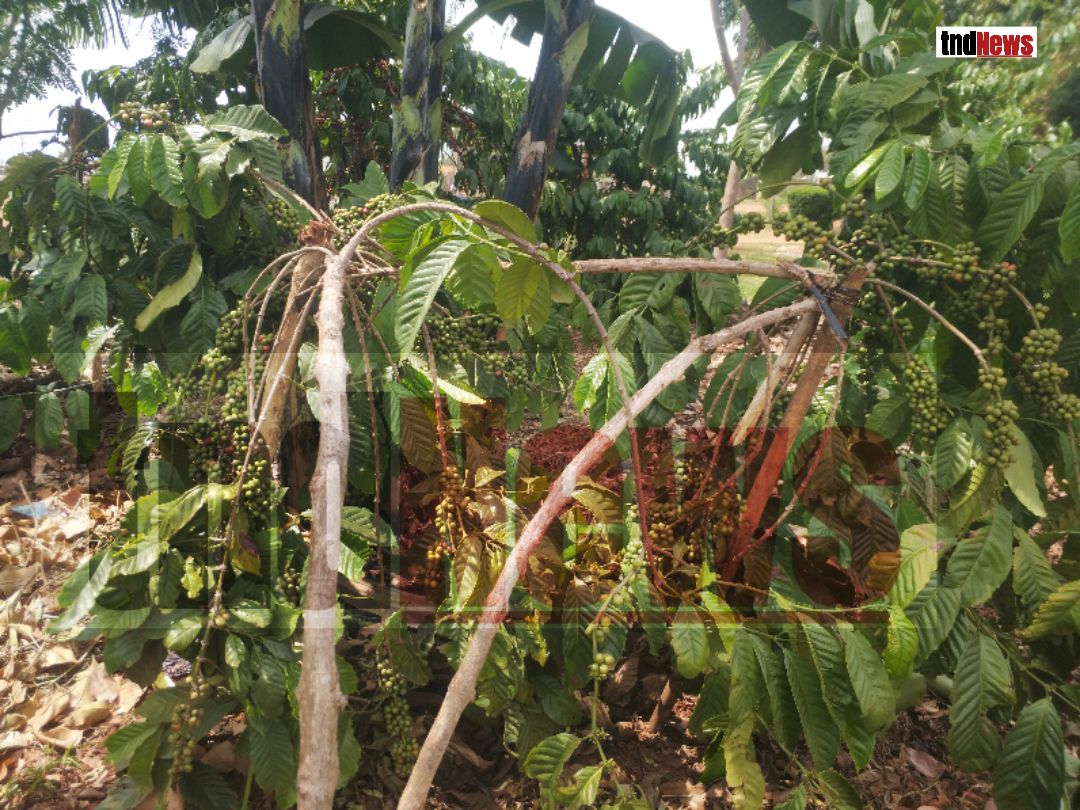
The institute has already planted over 1,000 coffee seedlings and 1,000 species of banana suckers. “We have a farm within the school which is running about three major crops: banana plantation, coffee plantation, and cassava.
“We are champions in the commercialisation of coffee farming and production among the few institutions in northern Uganda. Our part of the farms would be a demonstration farm to both students and the local community,” Akena highlighted..
Akena urges students to transfer skills and knowledge on coffee production into the community and bcommercialisedafter school, get involved in coffee farming as we transition into commercialization farming.
He also urged his students to take advantage of the available milling machine.
“Our relationship with the local community is very good, they value this school, which has hit our target of about 700 students,” he said, adding, “According to our capacity, allcommercialisationk out with coffee production skills.”
Emanuel Okello, pursuing a national certificate in automatic mechanics, assures that he will use the skills that the institute has transferred to him to work on coffee-hulling machines to earn money for life.
“Because of the influential exposure on how to operate big machines at the institute, and skills gained on how to plant coffee, it will drive me to be an ambassador on coffee farming in the community.”
Joseph Lupeam Lukole, pursuing a national certificate in agricultural and production, said: “I have transferred my skills into my local community in Southern Sudan. For the onethe past year, I am able to train on coffee farming and how to handlean ambassador for”
A vocational school is better than formal academics, he said. “In vocational, we do practical work purely for learners with less theory. Students understand better, and first, it is the only way of transforming our local people into a money economy. Paper can be an additional advantage,” Jineph revealed.
During holidays, Lukole is involved in some part-time work in Nowya district where I earns about shs300,000.
“After joining a vocational training school, he or she should be a job creator, not a job seeker after completion.”
Susan Debra Clear, a student pursuing a national certificate in hotel and hospitality, advises female youths to join vocational schools. “We are the most vulnerable people in the community. We need to transition to agricultural production as we generate economic prosperity.”
Susan, who is a citizen of Southern Sudan, said she will use skills gained to encourage people to embrace and transition to coffee farming. “The availability of coffee harvesting machines in Uganda is a production pathway.”
Jenny Winifred Oyella, an agricultural officer attached to West Acholi under MAAIF, said they are distributing coffee seedlings based on farmers’ demand.
Oyella added that the ministry is in the process of making seedl,ings available due to overwhelming demands.
George Nicolas Kidega, the principal commercial officer at Gulu City Council, advised farmers to approach coffee farming cautiously despite the that growing excitthe ement surrounding it.
“There is a lot of misinformation about coffee farming; let institutions be careful if they want to achieve success in commercialized production of coffee,” Kidega advised.
Kidega noted that coffee offers strong investment returns because the prices are generally more stable compared to many other crops.
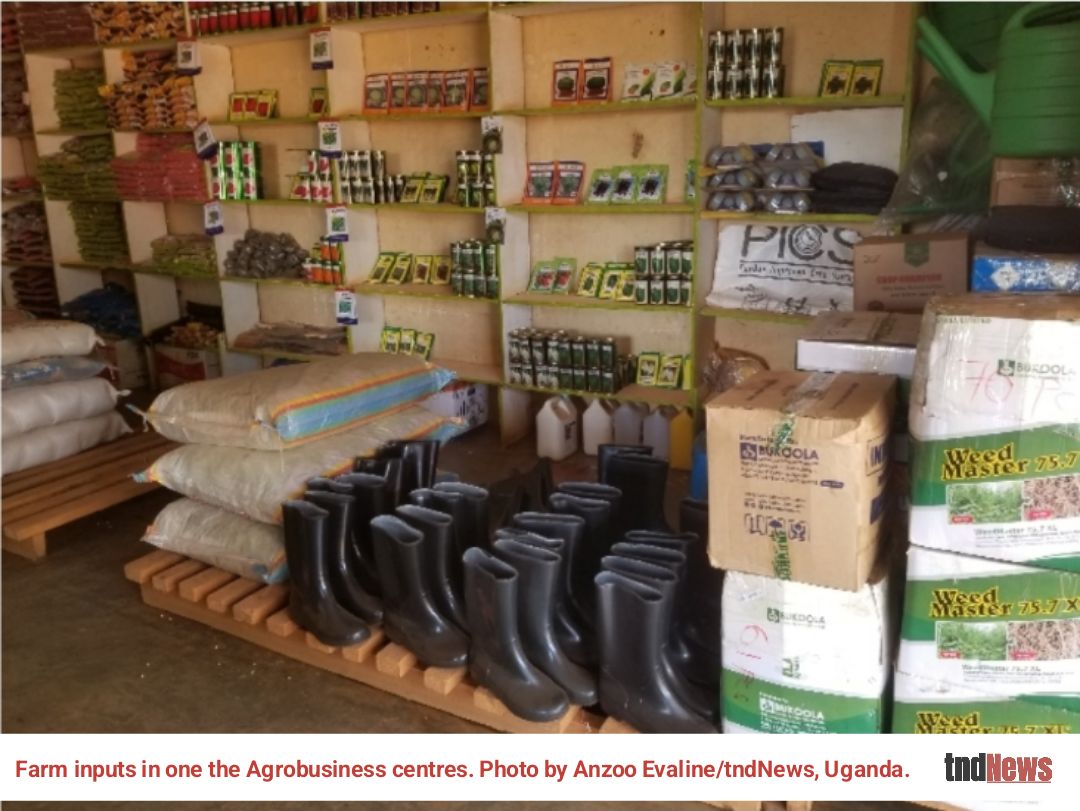
He further warned farmers against fake agricultural inputs on the market, advising them to buy seeds from recognized, trusted farm suppliers.
“Coffee farming is steadily gaining popularity in the Acholi sub-region where cooperatives, large-scale farmers and institutions seek to tap into growing global demandfor” he noted.
Operation Wealth Creation (OWC) and MAAIF have committed to providing cofee seedlings worth more than shs20 million targeting over 10,000 farmers.

Discover more from tndNews, Uganda
Subscribe to get the latest posts sent to your email.