Uganda Revenue Authority (URA) officials have explained that revenue targets assigned to border posts contribute to pressure to collect taxes.
This was announced following complaints from South Sudanese authorities over charges imposed on traders and boda boda operators crossing into Uganda.
The concerns were raised during a cross-border meeting between Ugandan and South Sudanese officials aimed at strengthening cooperation, facilitating trade and addressing challenges affecting communities along the Uganda–South Sudan border.
Kilama David Sam, the Payam Administrator of Lobone Payam in Magwi County, South Sudan, said traders and farmers were facing multiple charges when transporting agricultural produce across the border.
Kilama said the charges could affect the earnings of small-scale farmers who depend on cross-border trade to support their families and pay school fees.
He cited the Awen-olwi border point, where he said traders carrying commodities such as maize and beans face taxation and other charges.
Also read: Uganda, South Sudan seek deal to resume border road works
“To facilitate quality education, our people need to till the land, get the grain, sell it at a good price without complications, and then pay school fees,” Kilama said.
He said a sack of maize could fetch about shs25,000 or more, while beans and other commodities could fetch between shs30,000 and shs40,000 per sack.
Kilama questioned how much would remain for a trader who transports several sacks after paying taxes and other charges.
“If someone has 10 sacks and they are taking shs40,000 per sack, what will remain to ensure that the person can pay school fees for their children?” he asked.
He also raised concerns over charges faced by boda boda operators who make repeated trips across the border, saying the costs could accumulate and affect their businesses.
Kilama called for a coordinated system in which traders and transporters are properly documented and pay clearly defined charges without being subjected to repeated taxation for the same movement.

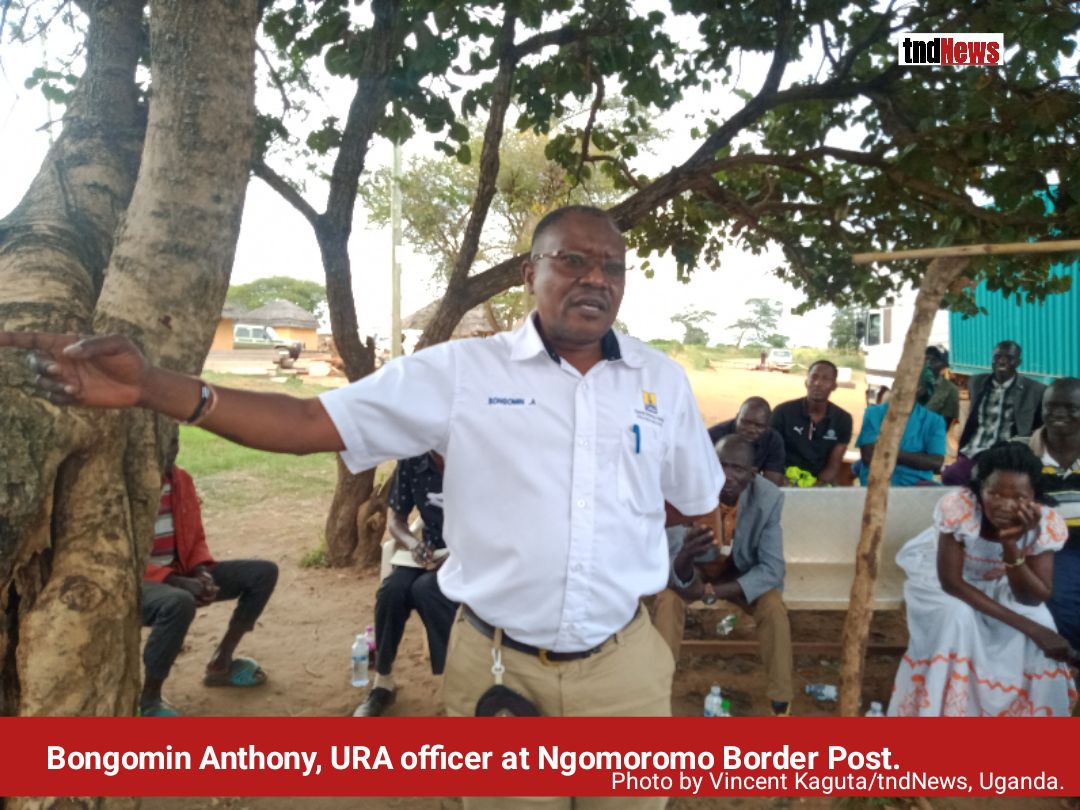
However, Bongomin Anthony Edwin, the URA official in charge of Ngomoromo and Awen-olwi border points, said the stations have annual revenue targets that officers are expected to meet.
Bongomin said Ngomoromo border point has been given a revenue target of shs800 million, while Awen-olwi has a target of shs700 million, bringing the combined target for the two stations to shs1.5 billion for the year.
Bongomin explained that the targets require officers to monitor the movement and value of goods passing through the border points and ensure that applicable taxes and duties are collected.
He, however, acknowledged the concerns raised by the South Sudanese officials and promised to look into the complaints.
Lamwo Resident District Commissioner William Komakech asked URA to investigate the complaints and establish whether all the people collecting money from traders were actually authorised URA officials.
Komakech said it was possible that some of the people demanding payments from traders were not authorised to collect revenue on behalf of URA.
He asked the authority to establish what was happening at the border points and explore possible ways of handling the matter.
The RDC said clear procedures were necessary to protect traders from possible exploitation while ensuring that legitimate government revenue was collected.
Magwi County Commissioner Lam Francis Gabriel Ogiki emphasised the importance of maintaining strong business and trade connections between communities on both sides of the border.
Ogiki said cross-border trade plays an important role in connecting businesses and communities, creating markets for agricultural produce and supporting livelihoods.
He called for cooperation between authorities in Uganda and South Sudan to ensure that border procedures do not unnecessarily hinder legitimate business and trade.
The officials said stronger trade links could benefit communities by expanding markets and improving the movement of agricultural produce and other goods between the two countries.
The meeting brought together local government officials, revenue authorities, security officials and representatives from communities on both sides of the border.
Kilama said communities around Lobone and Lamwo have strong social and economic ties and should not be disadvantaged by misunderstandings over border procedures.
He appealed to authorities to keep movement across the border open while ensuring that traders and travellers comply with documentation requirements and lawful charges.
The officials also discussed the importance of improving roads and border infrastructure to facilitate the movement of goods and people between Uganda and South Sudan.
They said improved road networks could reduce transport costs, increase access to markets and create economic opportunities for communities on both sides of the border.
The officials agreed that regular engagement between local governments, revenue authorities, security agencies and border communities would be necessary to address concerns affecting cross-border trade.
They also called for better communication about applicable taxes, fees and documentation requirements so that traders can understand what they are required to pay.
Further, the meeting provided an opportunity for officials from the two countries to raise concerns directly and seek practical solutions to challenges affecting cross-border movement and trade.
Bongomin said the revenue authority would consider the concerns raised, while Komakech called for investigations into allegations of unauthorised collections at the border.
The officials called for continued cooperation between Uganda and South Sudan to balance lawful revenue collection with the need to facilitate trade and protect the livelihoods of border communities.
Interested in supporting our journalism and work? We would love to hear from you or DONATE HERE.
Discover more from tndNews, Uganda
Subscribe to get the latest posts sent to your email.