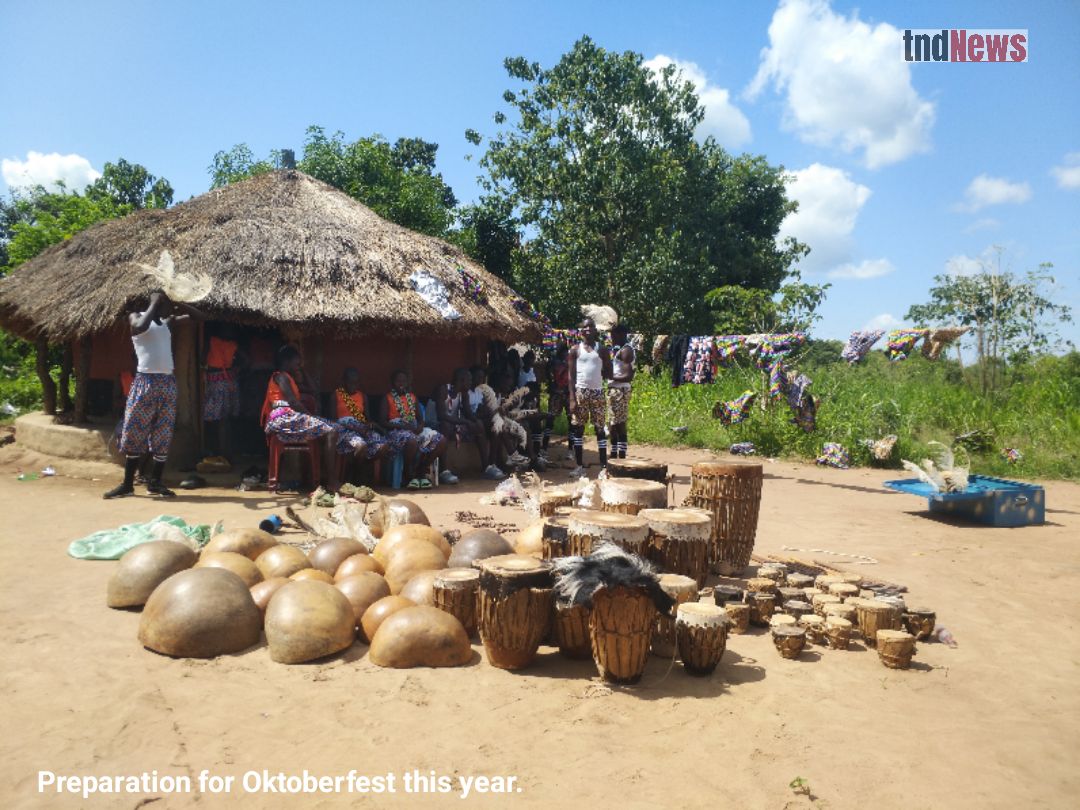
Gulu City | As the rhythmic beat of the bul drum echoes across Kaunda Grounds this October, thousands of visitors will gather not only to celebrate Acholi culture but also to fuel what organisers believe could become one of Northern Uganda’s biggest annual economic events.
From October 3 to 12, Gulu City will host the second edition of Oktoberfest, a 10-day cultural and tourism festival expected to attract more than 100,000 participants, including about 30,000 registered guests from across Uganda and abroad.
In addition, the event promises a vibrant showcase of Acholi traditions, music, dance, cuisine, fashion and art, while creating new income opportunities for hotels, transport operators, food vendors, artisans and small businesses.
For many residents, the festival is far more than entertainment and it represents a chance to earn an income, expand businesses and introduce Northern Uganda’s rich cultural heritage to the world.
Organisers estimate that the festival could inject more than shs4 billion into the local economy through spending on accommodation, transport, food, entertainment and shopping while the figures remain projections, business owners across Gulu are already preparing for what they hope will be a surge in customers.
Among them is Apacu Linda, a 43-year-old widow whose humble porridge business has grown into a thriving enterprise.
Every morning before sunrise, Linda begins preparing millet porridge and tea for hundreds of customers in Gulu City and what started as a small venture during the COVID-19 pandemic has become the main source of income for her family.
“I began with only 10 litres of porridge and today I prepare nearly 120 litres every day, and during Oktoberfest I expect to double that amount,” she recalls.
Adding that, “the festivals offer me one of the biggest business opportunities and if many visitors come as expected, I will earn enough to continue building my house.”
Her business has already transformed her life and the profits have enabled her to buy five acres of land in Patiko and another plot closer to Gulu City where she hopes to construct a permanent home.
“The prices of charcoal, wheat flour and other ingredients keep increasing and sometimes we make sales, but the profits remain very small,” she says.
Still, Linda remains optimistic and encourages other women, especially widows and single mothers, to embrace entrepreneurship instead of depending on relatives for support.
“Savings groups helped me start this business and women should believe that even a small business can change their lives,” she says.
Her story reflects the aspirations of hundreds of informal traders expected to benefit from the festival.
Across Gulu, hotel owners are preparing for fully booked rooms, while restaurants, supermarkets, craft shops and transport operators anticipate a sharp rise in demand as visitors stream into the city.
According to organisers, the festival is designed not only to entertain but also to position Gulu as a leading cultural tourism destination in East Africa.
The programme will feature traditional Acholi dances, storytelling sessions, exhibitions, fashion showcases, culinary experiences and performances by local and national musicians.
On the other hand, cultural institutions, community groups and entrepreneurs will also use the event to promote local products and investment opportunities.
Counsel Walter Okidi Ladwar, the festival’s chief organizer, says the event seeks to demonstrate that culture can serve as a powerful driver of economic development.
“For many years, Northern Uganda has largely been associated with conflict and we now want the region to be recognised for its resilience, cultural richness and business potential,” he says.
He believes festivals such as Oktoberfest can help reshape perceptions of the Acholi sub-region while generating sustainable livelihoods for local communities.
Tourism experts note that cultural festivals have become increasingly important in stimulating local economies because visitors spend money across multiple sectors, including accommodation, food, transport, entertainment and retail.
Unlike one-off conferences, cultural festivals encourage visitors to stay longer, explore surrounding attractions and interact directly with local communities and the result is a wider distribution of economic benefits that reaches beyond established businesses to include market vendors, boda boda riders, artisans and performers.
For Gulu, where the tourism sector continues to recover and expand, Oktoberfest presents an opportunity to strengthen the city’s profile as a gateway to Northern Uganda.
Hotels are already receiving inquiries from prospective visitors, while event planners expect demand for conference facilities, tour guides and cultural experiences to increase significantly during the festival period.
Organisers are also working with local authorities, security agencies and private sector partners to ensure that the event meets international standards while providing a safe and memorable experience for visitors.
If successful, they hope Oktoberfest will become a permanent fixture on Uganda’s tourism calendar, attracting larger crowds and greater investment each year.
Beyond the projected billions in revenue lies a more enduring ambition: using culture as a catalyst for development, social cohesion and renewed confidence in a region that has spent decades rebuilding after conflict.
Additionally, the success of the festival, however, will depend on more than attracting large crowds and organisers say collaboration between government, the private sector and local communities will be essential to ensuring that the economic benefits are widely shared.
Gulu City authorities have welcomed the initiative, describing it as an opportunity to strengthen tourism, stimulate investment and showcase Northern Uganda’s transformation.
For years, the city served primarily as a humanitarian and recovery hub following two decades of conflict caused by the Lord’s Resistance Army insurgency and today, modern hotels, expanding businesses and improved infrastructure tell a different story, one of resilience and renewal.
“Our vision is to build an event that belongs to the people of Northern Uganda and every edition should create opportunities for businesses, artists, cultural groups and young entrepreneurs while celebrating our identity,” says Counsel Walter Okidi Ladwar.
Visitors will experience traditional Acholi dances such as Larakaraka, storytelling sessions, cultural exhibitions, local cuisine, fashion showcases and craft displays that celebrate generations of heritage.
In addition, musicians and performers from across Uganda are also expected to entertain crowds, creating an atmosphere that blends tradition with contemporary entertainment.
For artisans, the festival offers more than a platform to display their work and it provides direct access to customers who appreciate handmade products and authentic cultural experiences.
Wood carvings, woven baskets, beadwork, traditional musical instruments and locally designed clothing are expected to feature prominently, giving visitors a chance to take home a piece of Acholi culture while supporting local livelihoods.
Hotel operators expect occupancy rates to rise significantly during the festival period as guests arrive from different parts of Uganda and neighbouring countries.
Further, restaurants are preparing expanded menus featuring both local and international dishes, while transport providers anticipate increased demand for airport transfers, city tours and travel to nearby attractions.
Farmers supplying fresh produce, poultry, meat and grains could benefit from increased demand, while boda boda riders, taxi operators and small retailers are also likely to see higher earnings.
Economic analysts often describe such events as having a “multiplier effect” because money spent by visitors circulates through multiple sectors of the local economy.
A tourist who books a hotel room also pays for transport, buys meals, shops for souvenirs and visits local attractions. Each transaction creates income for another business, helping communities retain more of the value generated by tourism.
For entrepreneurs like Linda, these economic theories translate into practical realities and every additional customer means another opportunity to pay school fees, expand a business or invest in property.
“I want this festival to succeed because it will benefit everyone and when visitors come, they don’t only buy porridge; they buy food, use transport, stay in hotels and support many businesses,” she says.
Her optimism is shared by many traders who see the festival as a chance to recover from years of economic uncertainty caused by the COVID-19 pandemic and rising costs of doing business.
Security, sanitation, traffic management and quality customer service will all influence visitors’ experiences and determine whether they return in future years.
While the inaugural festival generated significant local interest, organisers hope to attract even larger regional and international audiences by promoting Gulu as a destination where culture, history and hospitality converge.
Northern Uganda offers visitors much more than festival grounds and tourists can explore cultural sites, historical landmarks and nearby protected areas, while experiencing the warmth and hospitality for which the Acholi people are widely known.
Organisers further believe Oktoberfest can become the gateway through which many first-time visitors discover the broader tourism potential of the region.
For decades, stories about Northern Uganda were dominated by conflict, displacement and humanitarian crises.
Although those experiences remain part of the region’s history, local leaders say they should no longer define its future
Discover more from tndNews, Uganda
Subscribe to get the latest posts sent to your email.