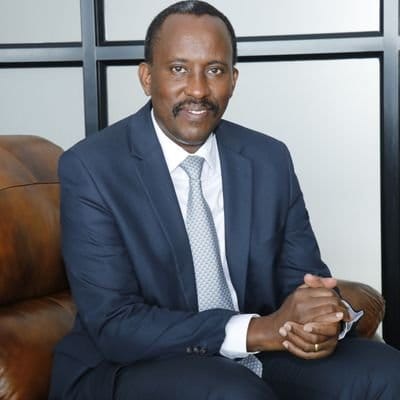
By Barrister Peter Magomu Mashate
During a retreat at Kyankwanzi in July 2024, President Yoweri Museveni expressed concern over the limited taxes being collected by the Uganda Revenue Authority (URA).
The Head of State noted that URA was not only collecting less revenue than expected but that some officers were also stealing the little that was collected.
“First of all, there is a lot of under-collection of taxes, but also there is massive stealing of what is collected. Now you can imagine how much we could do if we plug both under-collection and the stealing,” he said during a Ministers and Permanent Secretaries retreat at Kyankwanzi.
Following these concerns, President Museveni established a special desk at State House for Revenue Intelligence sharing, appointing Mr David Kalemera as its pioneer head while working alongside other agencies, including the Inspectorate of Government (IGG) and the State House Anti-Corruption Unit (SHACU).
Since 2024, the fight against corruption within URA has intensified, with several officers arrested and others interdicted.

According to reports by the Daily Monitor, another URA officer, Mr Geoffrey Ssozi, the External Operations Manager in charge of Dar-es-Salaam Customs, was arrested on Thursday last week.
URA Assistant Commissioner for Public and Corporate Affairs, Mr Robert Kalumba, confirmed that the officer was allegedly caught red-handed soliciting a bribe of USD 60,000 (approximately UGX 220 million) from an investor whom Mr Ssozi reportedly identified as Simbaland.
Mr Ssozi’s arrest adds to the growing list of URA officers who have faced arrest or disciplinary action since the President expressed his dissatisfaction with corruption within the tax body.
Without delving into the merits of Mr Ssozi’s alleged case, since it remains under investigation, my concern is whether the URA Commissioner General will respond by expanding the scope of investigations to uncover more gaps within the institution. This is clearly in the national interest.
By widening the investigation, the Commissioner General and the country at large will be able to establish whether the frequent arrests of URA officers initiated by taxpayers or whistle-blowers are genuine corruption cases or whether they could sometimes be tactics by possible tax evaders to intimidate, frustrate, or divert ongoing internal audits against them.
On this particular matter, I would urge the Commissioner General to also shift focus to the taxpayer, Simbaland, as mentioned by Mr Ssozi, while investigations against the officer continue.
Of particular interest is the alleged bribe amount of UGX 220 million. This is not a small amount for anyone to pay without having a significant interest at stake. According to URA’s explanation, the initial bribe demand by Mr Ssozi was USD 100,000, equivalent to approximately UGX 380 million. The question therefore remains: What was the purpose of this huge payment?
Secondly, if there was a tax audit against the taxpayer, as URA explains, how much money was involved and what period did the audit cover?
Thirdly, what was the nature and magnitude of taxes allegedly owed to URA that would motivate the taxpayer to consider paying a bribe worth USD 100,000?
Fourthly, considering that Mr Ssozi’s duty station is in Dar-es-Salaam, miles away from Uganda, what influence did he have on the audit team handling the matter involving Simbaland?
These and many other questions would help the Commissioner General widen the investigation and provide answers to Ugandans who remain concerned following the President’s warning.
Otherwise, if the investigation is restricted only to Mr Ssozi’s alleged misconduct, there is a risk of missing the bigger picture, including the possibility of tax evasion or a diversion from wider issues affecting revenue collection.
The Commissioner General and his team should use this opportunity to demand and examine the taxpayer’s books of accounts.
To put this into context, globally, large importers, exporters, and consolidators have sometimes been accused of making illegal remittances back to their countries of origin without obtaining the required remittance licences or paying the necessary taxes. Some of these practices can continue for several years, including five, ten, or even more years.

This is the area where the Commissioner General and his team should focus because it remains a possible avenue exploited by some taxpayers.
For that reason, it is my humble prayer that the investigation is widened to cover the possibility of a diversion being created and to ensure all parties involved are thoroughly examined.
However, what remains beyond doubt is that the fight against corruption of whatever form in this “Kisanja No More Sleep” era is well and truly underway and unstoppable, as spearheaded by Balaam Barugahara, Justine Nameere, and David Kalemera.
URA now has an opportunity to prove tax equality, patriotism, fairness, rights, and accountability — principles that are non-negotiable.
With a week having passed since news of Mr Ssozi’s arrest emerged, the public is anxiously waiting for his arraignment before a court of law so that justice can prevail.
The writer is a former London-based Barrister, an Administrative, Constitutional and Human Rights Barrister-at-Law of the Honourable Society of Lincoln’s Inn of Court, London, United Kingdom.
Discover more from tndNews, Uganda
Subscribe to get the latest posts sent to your email.