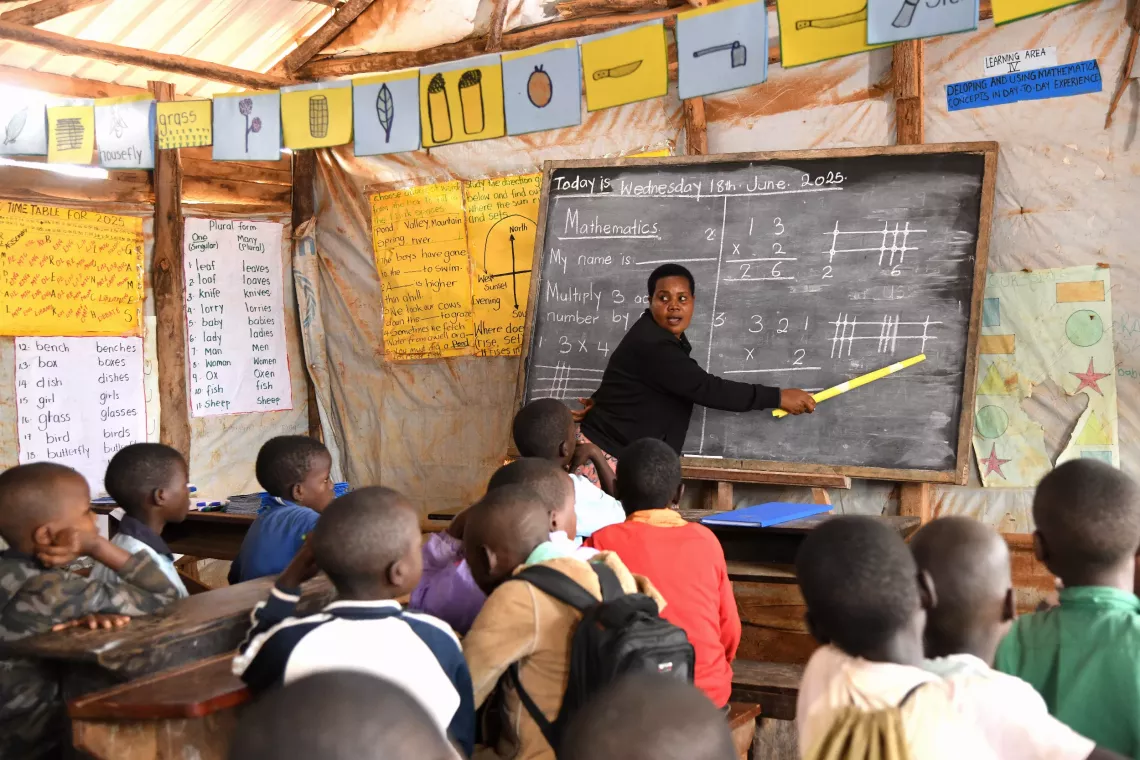
Ugandan pupils in lower primary could spend a maximum of three hours a day in structured learning under a new competency-based curriculum (CBC) expected to be introduced in 2028.
The proposed curriculum, being developed by the National Curriculum Development Centre (NCDC), is designed to focus on the developmental needs of young children rather than keeping them in classrooms for long hours.
Dr Patrice Ssembirige, the acting director of NCDC, said the new approach will reduce structured learning time for young learners to ensure that lessons match their physical, emotional and cognitive development.
He explained that children aged between three and four years should spend a maximum of two hours in structured learning activities, while those aged four to five years should study for about two to three hours.
According to Ssembirige, children aged between five and six years should spend approximately three hours in structured learning each day.
He said young children should not be treated like older learners because their learning abilities and developmental needs are different.
“These children have to be engaged for about 15 to 30 minutes at a time, so there is no need for them to be in school as early as 5am,” Ssembirige said.

He explained that the curriculum will focus on areas such as physical development, language growth, cognitive skills, social interaction and emotional development.
Ssembirige said the early childhood curriculum has intentionally been kept light because young learners require more practical engagement rather than long classroom sessions.
He added that the curriculum remains under review as NCDC continues consulting teachers and other stakeholders on what is suitable for different age groups.
The new lower primary curriculum will introduce a competency-based learning approach aimed at moving away from memorisation and encouraging creativity, problem-solving and practical skills.
NCDC officials said the reforms are intended to help learners develop abilities they can apply in real-life situations instead of focusing only on passing examinations.
Before the curriculum is rolled out, learning materials will undergo quality checks and approval processes to ensure they meet the required standards.
Ssembirige said NCDC will work with its governing council and the Ministry of Education and Sports to ensure that the materials are properly reviewed before being released for public use.
The planned lower primary reforms will follow the introduction of competency-based learning at lower secondary level, which started in 2020.
However, the implementation of CBC at lower secondary has faced challenges, with some teachers, parents and other stakeholders still adjusting to their new roles.

Gilbert Gift Siima, the manager of the Secondary Department at NCDC, said many schools have now embraced the new approach and learners have started developing innovative projects.
He said some learners have produced practical solutions within their communities, showing the potential of competency-based education when properly implemented.
Siima, however, noted that successful implementation requires cooperation from teachers, parents and the wider community because a curriculum can only succeed when all stakeholders play their part.
He said some stakeholders are still struggling to understand the responsibilities that come with the new system, but learners have responded positively because lessons are becoming more interactive.
NCDC is also working on a new A-level curriculum that will place more emphasis on critical thinking, creativity and practical application of knowledge.
Officials said the reforms are aimed at preparing Ugandan learners with skills needed for the changing labour market and a competitive global economy.
The proposed curriculum changes are expected to transform the education system by encouraging learners to become more creative, innovative and capable of applying knowledge beyond the classroom.
Discover more from tndNews, Uganda
Subscribe to get the latest posts sent to your email.