For years, residents of Padibe town council have lived with the visible burden of poor waste management.
Heaps of garbage near trading centres, clogged drainage channels, and scattered litter in markets have not only affected the town’s appearance but also raised growing concerns about public health.
Now, a new constituency-wide initiative is seeking to change that narrative.
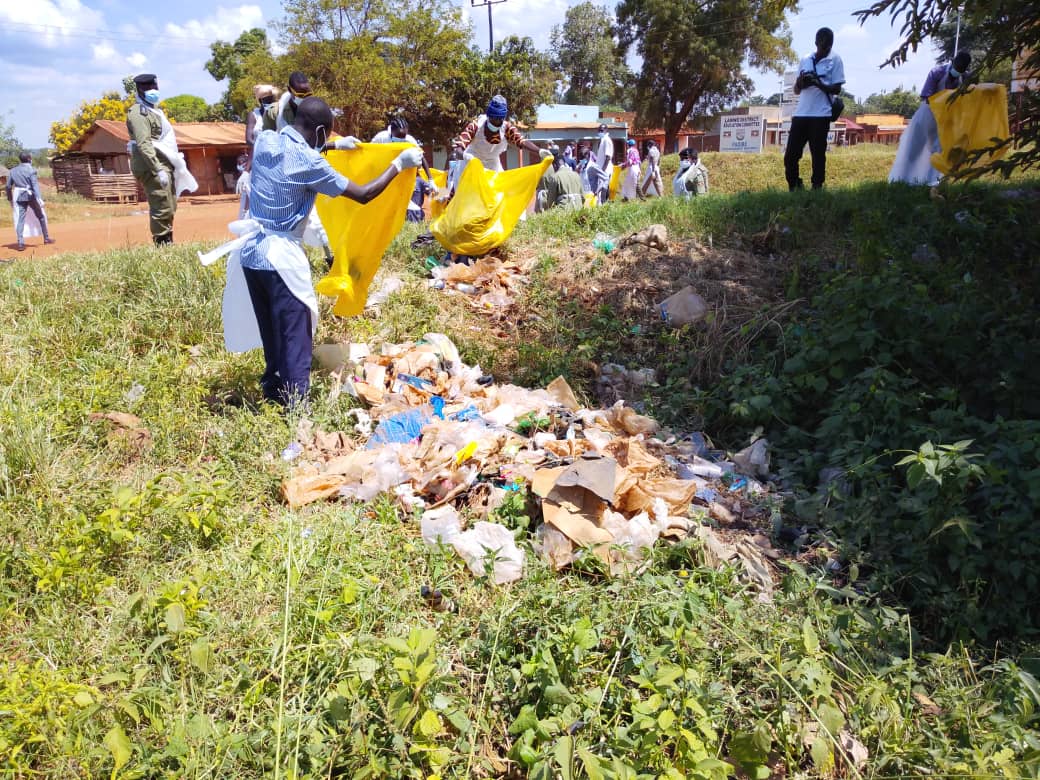
Lamwo County Member of Parliament Nyeko Johnson Kezikia has launched the “Keep Lamwo Clean” campaign, a sanitation and environmental cleanliness drive targeting all 13 sub-counties within Lamwo County.
The campaign focuses on trading centres, schools, health facilities, and public spaces, aiming to mobilise communities to take shared responsibility for hygiene and environmental protection.
Speaking during the launch, Nyeko said poor sanitation remains a persistent challenge in many rural communities and continues to contribute to preventable diseases.
“We want Padibe and all the sub-counties in Lamwo constituency to become models of cleanliness,” he said. “A clean environment is essential for good health, dignity, and development.”
He noted that the initiative will involve regular community clean-up exercises, improved waste management systems, tree planting, and public awareness campaigns on hygiene practices.
The initiative has been welcomed by local leaders and residents who say it addresses a long-standing gap in waste management.
Otema Wilfred, the LCIII chairperson of Padibe town council, said the campaign complements ongoing efforts by the local government of Padibe to manage growing volumes of waste in trading centres.
“This initiative has come at the right time,” Otema said. “Garbage management has been a big challenge in the town council, especially in busy trading days when waste accumulates quickly.”
He added that the town council has been planning community meetings to strengthen waste collection systems and improve coordination with residents and business owners.
Health officials have also warned that poor sanitation poses serious risks to public health if not addressed. Padibe town council health inspector, Adong Mary, said improper waste disposal and poor drainage systems increase the risk of disease outbreaks.
“We are seeing cases of malaria, diarrheal diseases, and other infections linked to poor sanitation practices,” she said. “If garbage is not properly managed, it becomes a breeding ground for mosquitoes and other disease vectors.”
She emphasised that sanitation is not only a local government responsibility but also a shared duty among residents, traders, and institutions.
“People must understand that keeping the environment clean is the first line of defence against disease. Every household and business has a role to play,” she added.
Residents in Padibe say the campaign is timely and necessary. Juliet Akello, a trader in Padibe, said waste accumulation has often made it difficult for vendors and customers to operate comfortably.

“Sometimes garbage stays for several days without being collected,” she said. “It makes the market dirty and discourages customers. If everyone participates in cleaning, our environment will improve.”
Another resident, Ocen Patrick, said the campaign should be backed with stronger enforcement to ensure compliance.
“Sensitisation is good, but people also need to be held accountable if they dump waste carelessly,” she said. “We need both education and discipline.”
A shared responsibility
Environmental experts note that sanitation challenges in rural trading centers are often driven by rapid population growth, weak enforcement of waste management bylaws, and limited infrastructure for garbage collection.
They argue that community-led campaigns are most effective when they combine awareness, local leadership involvement, and consistent follow-up. As Padibe town council continues to expand as a commercial hub, stakeholders say improved sanitation will be critical for public health, business growth, and urban development.
The “Keep Lamwo Clean” campaign is expected to roll out across all 13 sub-counties, with support from local leaders, schools, and community groups.
Clean surroundings mean healthier families, stronger communities, and a better future for Lamwo.
Discover more from tndNews, Uganda
Subscribe to get the latest posts sent to your email.