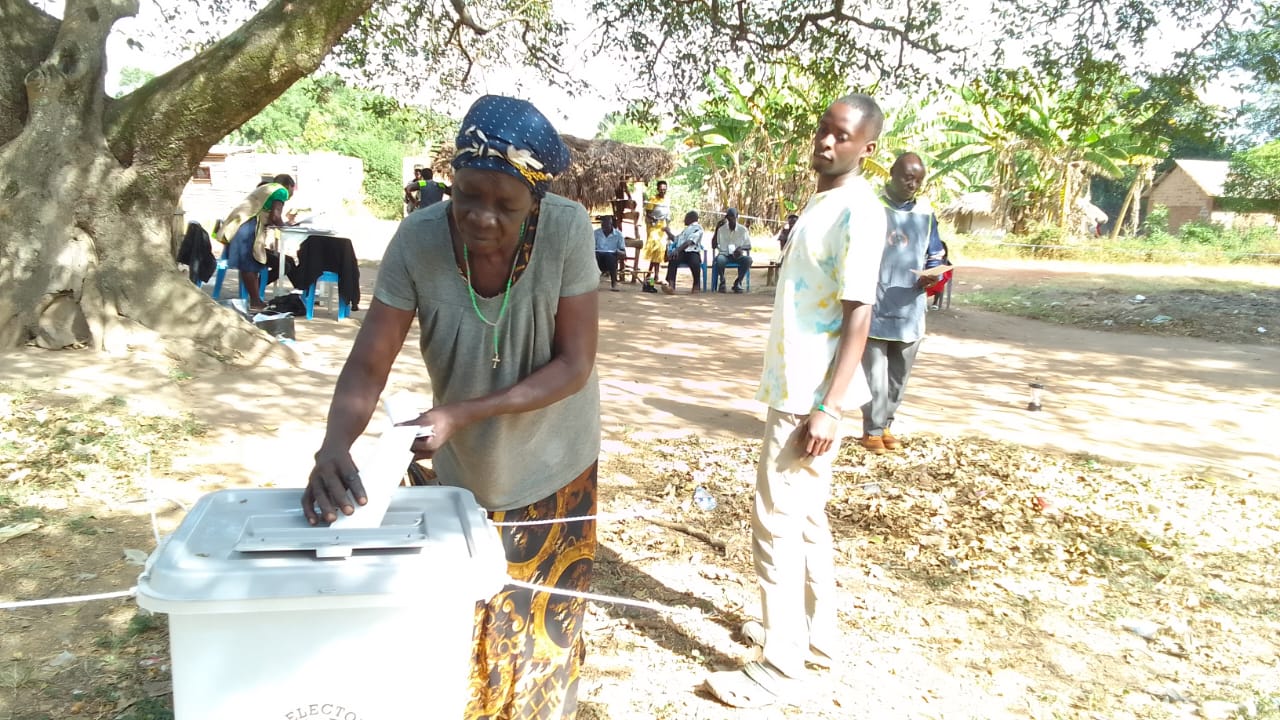
Across the Lango sub-region, voters from diverse backgrounds shared their expectations for the newly elected Members of Parliament, reflecting common priorities rooted in everyday realities.
The Lango sub-region has elected a total of 31 Members of Parliament to serve in the 12th Parliament (2026–2031), with the National Resistance Movement (NRM) emerging as the dominant party, followed by the Uganda People’s Congress (UPC) and one Independent Candidate.
According to the declared results by the different electoral areas, NRM secured 18 parliamentary seats, UPC won 12, while one seat went to an Independent candidate of UPC colour.
As Lango prepares to witness the work of its lawmakers in the 12th Parliament, attention will turn from party tallies to performance.
Speaking to different voters across the Lango sub-region, expectations are high around service delivery, youth employment, infrastructure, health, education, and post-conflict socio-economic recovery, including expanding government programmes such as the Youth Livelihood Programme, Parish Development Model (PDM), and Emyooga, among others.
The newly elected MPs will now be judged less by party colours but more by their ability to articulate and deliver on the sub-region’s priorities between 2026 and 2031.
In Lira City, voters re-elected Dr. Jane Ruth Aceng Ocero (NRM) as their Woman Member of Parliament. Lira City West re-elected Cedrick Ebong Eyit (UPC), while Lira City East sent a new face, Denis Alyela Omodi (NRM).
From the market stalls, Florence Aciro, a market vendor and mother of five, said her vote was guided by the state of public health facilities.
She expects MPs, especially Lira City Woman MP-elect, Dr Jane Ruth Aceng Ocero to push for better-equipped health centres, Lira Regional Referral Hospital and other health facilities across Lango, particularly maternal services, noting that many women still struggle to access timely medical care.
“Having cast my vote for Dr. Jane Aceng Ocero, I believe to see more input in our referral hospital, especially those geared towards saving expectant mothers,” she added.
From Dokolo, a district annually hit by heavy floods, Sarah Akello, a subsistence farmer, said women want practical agricultural economic empowerment.
Dokolo district voters re-elected Sarah Nyankori (UPC) as Woman MP, Vincent Opito (UPC) for Dokolo South, while Dokolo North voted for Ogwal Joseph Jones (NRM).
She now expects the three elected MPs to advocate for more affordable agricultural inputs, access to credit, and storage facilities to reduce post-harvest losses caused by floods.
“Year in, year out, we experience deadly floods due to heavy rains which spoil food crops and cause displacement or loss of animals,” she added.
In Apac district, Margaret Auma, a primary school teacher, said education remains her biggest concern. She wants MPs to lobby for more teachers in government schools to boost performance, improve school infrastructure, and provide bursaries for children from vulnerable households.
Janet Ocen, a small business owner in Alebtong, said women entrepreneurs expect MPs to support skills training and link local businesses to markets.
She added that women are ready to contribute to economic growth if given the right support.
She further noted that land rights and household income security are key issues for women, calling on elected MPs to push for the formulation and promotion of policies that protect women’s access to land and livelihoods.
Otuke district, whose MPs were all re-elected and which frequently witnesses conflicts linked to cattle rustling from the neighbouring Karamoja region, called on its leaders to streamline water and sanitation facilities.
Abeja Susan Jolly (NRM) will continue to represent women in the 12th Parliament, alongside Acon Julius Bua (NRM) for Otuke East and Paul Omara (NRM) for Otuke County.
With all three re-elected, Ruth Aber, a mother of four, emphasised water and sanitation, saying MPs must prioritise clean water projects to reduce the burden on women and girls who walk long distances daily.
“Our Members of Parliament must prioritise water and sanitation. Most of our girls drop out due to sanitation issues. Some girls even walk long distances to fetch water, which later affects their attendance at school,” said Aber.
Meanwhile, among the youth, expectations centred on employment, skills, and inclusion.
In Lira City, Mercy Ayo, a 24-year-old female graduate, said the youth voted with the hope of jobs.
She expects MPs to champion skills-based training, digital opportunities, and private-sector partnerships that can absorb educated youth.
“We need more skilling hubs in Lira City because our city has many unemployed and unskilled young people,” she added.
Ayo called on elected MPs to push for the creation of more practical courses.
“Creation of more skills at the different skilling hubs will help bring about creativity, thus reducing the high level of unemployment,” she added.
Daniel Oryem, a boda-boda rider in Myene, Oyam South, said MPs must improve roads and regulate youth funds under government programmes such as PDM, Emyooga, and the Youth Livelihood Programme.
He noted that many programmes exist on paper but rarely benefit ordinary young people.
“Youths have embraced PDM and Emyooga, which have enabled them to engage in different projects. However, our biggest problem is poor roads, which make it difficult to transport our goods, especially crops and livestock,” he emphasised.
Similarly, Akello Christine, a young female agripreneur in Dokolo, expects MPs to support youth-led agribusiness by lobbying for more startup capital, extension services, and market access.
“Now that the government is helping young people with startup funds under PDM and Emyooga, our MPs should connect us to bigger markets where we can sell our food crops and animals,” said Akello.
In Kole district, Isaac Paul Laker, a youth artisan, said inclusion matters, urging elected MPs to involve youth in planning and implementation of development projects.
“Most youth are approached during campaign periods and later left out in the planning and implementation of projects that should bring the future generation closer to government programmes,” he added.
Although records continue to show that fewer men cast votes during the polls, those who voted echoed similar concerns, particularly around infrastructure and accountability.
Back in Oyam District, James Okello, a maize farmer, said MPs must prioritise feeder roads to ease the transport of agricultural produce.
“I know my candidate, Jane Frances Acilo, did not go through as a Woman MP, but I believe those who won can lobby for road development, especially in Oyam North,” he said.
“Our roads are very bad. When it rains, even big trucks fail to reach stores to collect produce like maize, soya, and beans,” he added.
In the same district, community elder Patrick Odong said visibility and accountability are critical. He expects MPs to hold regular constituency meetings and explain their work in Parliament, warning that silence after elections breeds mistrust.
“This time around, our elected MPs must return to us for accountability. In the just-concluded elections, most MPs failed because after the elections, none returned to engage with us,” he said.
Discover more from tndNews, Uganda
Subscribe to get the latest posts sent to your email.