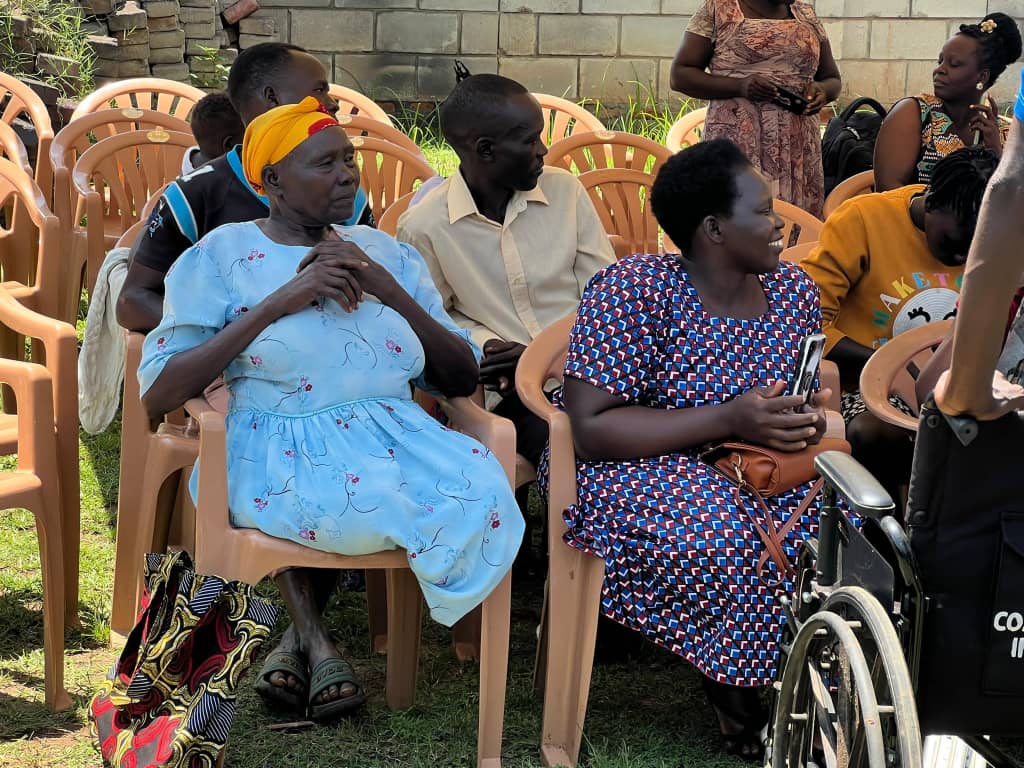
As Uganda heads toward the 2026 general elections, testimonies from caregivers, political actors, disability rights advocates, and community leaders in the Lango sub-region reveal deep-rooted barriers that continue to lock women with disabilities out of political and civic participation.
Despite constitutional guarantees, structural exclusion persists through inaccessible polling stations, lack of braille electoral materials, stigma, mobility challenges, and weak policy implementation.
Aspirants confront systemic barriers
In Kwania district, aspiring female councillor for Atongtidi sub-county, Juliet Awino Amwanga, says PWDs have been without meaningful representation for years. She says many girls and women with disabilities fail to access government services, including education.
Awino recalls being mishandled due to mobility challenges and urges the Electoral Commission to reduce nomination fees and provide interpreters and braille at polling stations.
In Lira City East Division, an amputee and aspiring councillor Aisha Bint Abdul, says her rehabilitation journey inspired her to uplift others. She wants the government programs on education, health, and wealth creation to reach women and girls with disabilities.
Aisha warns that blind voters remain excluded because registers and ballot papers are not in braille, noting that braille is needed for voter communication, civic education, and budget processes.
Aisha says she feels empowered as a woman with a disability and believes PWDs should know their rights and take up leadership positions. She notes that electoral reforms are needed so that PWDs can fully participate, adding that those who are financially stable dominate leadership because they can fund campaigns and even bribe voters, which leaves many PWDs frustrated.
Voters speak out: Distance, discrimination and stigma
Voters also describe significant obstacles. Apio Vera, also an aspirant (councillor) from Apac, says many PWDs stay away from elections due to distance, poor roads, mobility issues, and natural calamities like floods.
Vera notes different types of disabilities come with challenges, especially in villages with bad roads, where blind voters using white canes require helpers to reach polling stations, which are often far. She calls for braille voting to ensure full inclusion.
Stuart Cyprian cites discrimination and calls for empowerment programs to help PWDs take up electoral positions.
Stuart says that during the recent nomination exercise, some PWDs were frustrated as if they were not worthy of the positions they were seeking, showing the need for greater inclusion in political participation.
Emmanuel Ian says society continues to label persons with disabilities as a separate group, urging the government to prioritize their participation. “Inclusive democracy means allowing PWDs to fully participate, not just vote,” he says.
Ian believes inclusive democracy goes beyond voting to include PWDs also being elected and appearing on ballot papers. He says stigma must be fought before educating PWDs, especially youth and women, about their rights. He adds that it is rare to hear aspiring MPs talk about what they will do for PWDs during elections.
Caregivers: “The system is not designed for deaf women”
Linda Emor, a caregiver from Kwania district, decries impatient officials who address interpreters instead of deaf participants. She says some stakeholders lack knowledge on how to engage different disability categories, resulting in shallow and disrespectful interactions.
With a heavy financial burden, Emor says interpreters are rarely paid, even after hours of work. She recalls working in the rain during a presidential visit to Kwania District on October 3, 2025, but receiving only shs20,000.
She wants the Electoral Commission to deploy sign language interpreters during elections and ensure priority voting for PWDs.
Grace Alimo (not real name), also a caregiver from Amolatar district, says in the 2021 polls she encountered disrupted routines, limited mobility, and lack of support as she balanced voting with responsibilities.
“Long queues, inaccessible polling stations make participation difficult,” she notes.
She cites stress, fatigue, and fear of leaving vulnerable dependents unattended, which further reduces their ability to engage fully in election processes and civic activities.
According to Ceasar Okello Ivan, Assistant General Secretary for UPC for Barapwo Parish, many still believe women with disabilities “cannot and don’t deserve leadership roles.” The UPC flag bearer for directly elected councillor in Barapwo Parish calls for deeper inclusion education, saying community stigma remains a major barrier.
Women with disabilities are often viewed as “dumb” or unable to deliver, with some community members openly rejecting the idea of being led by them.
He says the community still believes that PWDs, especially women, should not be in leadership roles because of their disability. He says the perception that PWDs cannot perform leadership responsibilities is wrong and calls for awareness creation by leaders from central government and civil society to help communities understand that disability does not stop anyone from taking up political roles.
Political parties say they support PWD participation through established structures, but civil society argues that disability inclusion remains poor.
Jennifer Oleko, Uganda People’s Congress (UPC) Women Leader for Lira City West Division, says while the Ministry of Gender has made some efforts, election violence such as chaotic rallies and lack of funding discourage participation of PWDs. She calls for more mobilization and the end of stigma.
She encourages the government to put more effort into mobilising PWDs and providing funding, urging that stigma and violence against PWDs during elections must be addressed.
Civil society actors like James Acar, Lango Civil Society Network (LACSON) focal person, express disappointment that no voter materials such as braille have been produced specifically for use by PWDs in the forthcoming elections.
He also notes that no voter education has targeted women with disabilities. To address this gap, local organizations like LACSON are training women in public speaking and manifesto development.
PWD councillor for Lira City, Mathew Omara, says inclusion stands at only 50 percent, criticising manifestos that ignore disability issues and election materials that disadvantage the visually impaired.
He also notes that disability laws exist only in print, not braille, making implementation by persons with visual impairment difficult. He says the system forces national PWD candidates to vote in Kampala, creating serious barriers for female aspirants and PWDs at large with mobility challenges.
Government and EC: Progress, but gaps remain
Electoral Commission deputy spokesperson Paul Bukenya says the Commission works within legal frameworks and has reorganized polling stations to ease mobility.
According to Bukenya, one of the activities in the electoral roadmap is reorganising polling stations to make them accessible to PWDs by using outdoor and flat spaces.
He says priority voting is emphasised so that PWDs do not spend long hours in queues, and they are allowed to vote with assistance when necessary.
Bukenya says the process is still manual and can be challenging, though progress is being made. He adds that biometric voter verification is user-friendly, but braille voting is not yet available, although plans are underway to create an enabling environment for its use.
 He cites training for presiding officers and priority voting for persons with disability. However, he admits that braille voting has not yet been adopted due to unresolved challenges requiring research, noting that mapping of PWDs has been done ahead of the 2026 elections in collaboration with NCPD and National Union of Disabled Persons (NUDIPU), though budget constraints remain.
Human rights advocate Dr. Patricia Atim cites Uganda’s Constitution, particularly Article 35 and Objective 16, and warns that rights remain unenforced.
Dr. Patricia says measures to help PWDs realize their full potential are still missing, citing research recently done in Apac District under NUDIPU, which found that councillors lack money to reach out to their constituencies, educate members about legal provisions, and collect data.
She adds that local governments do not have resources to provide supportive devices that PWDs need to perform fully as voters or leaders. She says reforms, funding, and supportive devices are necessary because cost remains a major challenge in electoral democracy.
She says PWD councillors lack operational support, assistive devices, or transport, while poverty, nomination fees, and violence discourage participation.
She urges closer coordination between the Ministry of Gender and the Electoral Commission.
From the National Union of Disabled Persons of Uganda (NUDIPU), Chief Executive Officer Esther Kyozira questions why political parties do not effectively implement their manifesto promises, especially those focusing on PWDs.
She says many people think PWDs are represented once there is someone on the Central Executive Committee, but the question is whether such representatives are working and serving the constituency.
Kyozira says political parties have disability leagues, but their roles, mobilization efforts, and the benefits reaching different disability categories remain unclear. She notes that manifestos often contain good messages but are rarely implemented, making them appear ceremonial.

According to Kyozira, parties often believe representation alone is enough, yet little is achieved for wider PWD constituencies. Implementation gaps persist, limiting women’s participation.
Ministry speaks out on inclusion efforts for women with disabilities
Agnes Nampeera, the Principal Rehabilitation Officer in the Department of Disability and Elderly Affairs at the Ministry of Gender, Labour and Social Development, says government efforts toward strengthening political participation for persons with disabilities, especially women, are anchored in the creation and enforcement of inclusive legal and policy frameworks.
Nampeera explains that the Ministry continues to push for an enabling environment where every Ugandan, regardless of disability, can exercise their political rights without obstacles. “Our initiatives focus on establishing and implementing conducive legal and policy frameworks for participation by all Ugandans, including those with disabilities,” she says.
She notes that there is consistent coordination between the Ministry and the Electoral Commission to ensure accessibility and inclusion throughout the electoral cycle.
According to her, the Ministry works closely with the EC as one of the key government actors responsible for guaranteeing equal participation in national politics.
Monitoring the enforcement of disability-related laws during elections is largely handled by the National Council for Persons with Disabilities (NCPD), a semi-autonomous government body mandated to oversee inclusion across all spheres of life.
“The Council is responsible for monitoring how disability provisions are implemented, including during political processes,” Nampeera adds.
While cultural barriers have historically hindered women with disabilities from engaging in leadership or political activities, Nampeera notes that the Ministry has not recently documented cultures actively preventing their participation.
Even so, she says their role remains critical in raising awareness about the rights of persons with disabilities and promoting their inclusion in all aspects of society.
Looking ahead to the 2026 elections, Nampeera says more must be done to translate disability inclusion policies into meaningful change on the ground. She emphasizes the need for increased awareness, stronger community mobilization, and greater investment in accessible election materials and environments.
“We need to ensure that the policies we have do not remain on paper. There must be practical action to make polling stations accessible, provide disability-friendly voter education, and address the unique challenges women with disabilities face,” she says.
According to data from the Electoral Commission, Uganda has a population of 45 million people. As of May 2024, the country has 21,501,584 registered voters. Of these, 10,244,546 are male, while 11,257,546 are female.
There are 45,505 elective positions, excluding roles such as LC I and women councillors. A total of 83,597 candidates have been nominated, ranging from the presidential level to LC III councillors.
Furthermore, the 2024 Uganda Census shows that 5.5 million people, about 13.2% of the population, have some form of disability. Of these, 1.7 million experience “significant difficulty,” meaning they may struggle to function independently.
Uganda’s Persons with Disabilities Act, 2020 guarantees that persons with disabilities have the right to participate in political and public life, including voting and being elected (Article 13, Sections 1–2). It obliges government and political parties to ensure accessible campaigns, meetings, and voting procedures.
The law requires voter materials and public information to be available in braille, large print, sign language, and other accessible formats (Sections 6–7).
The Act further mandates priority support at polling stations, representation at all government levels (Section 12), protection from discrimination (Section 8), and provision of assistive devices (Section 5).
The production of this story was made possible through financial support from the Finnish Foundation for Media and Development (VIKES), in partnership with the Uganda Media Women’s Association (UMWA).
Discover more from tndNews, Uganda
Subscribe to get the latest posts sent to your email.