Adjumani | The National Water and Sewerage Corporation (NWSC) has announced a revised completion timeline for the shs59.8 billion World Bank–funded Adjumani Water Project, following the advancement of construction works.
The project, which began in April last year and was initially scheduled to run for one year and six months, was expected to be completed in October this year. However, NWSC has now set a new deadline as implementation nears its final phase.
Implemented under the Integrated Water Management and Development Project (IWMDP), the initiative is aimed at improving access to clean and safe water as well as sanitation services in Adjumani district, including selected refugee settlements.
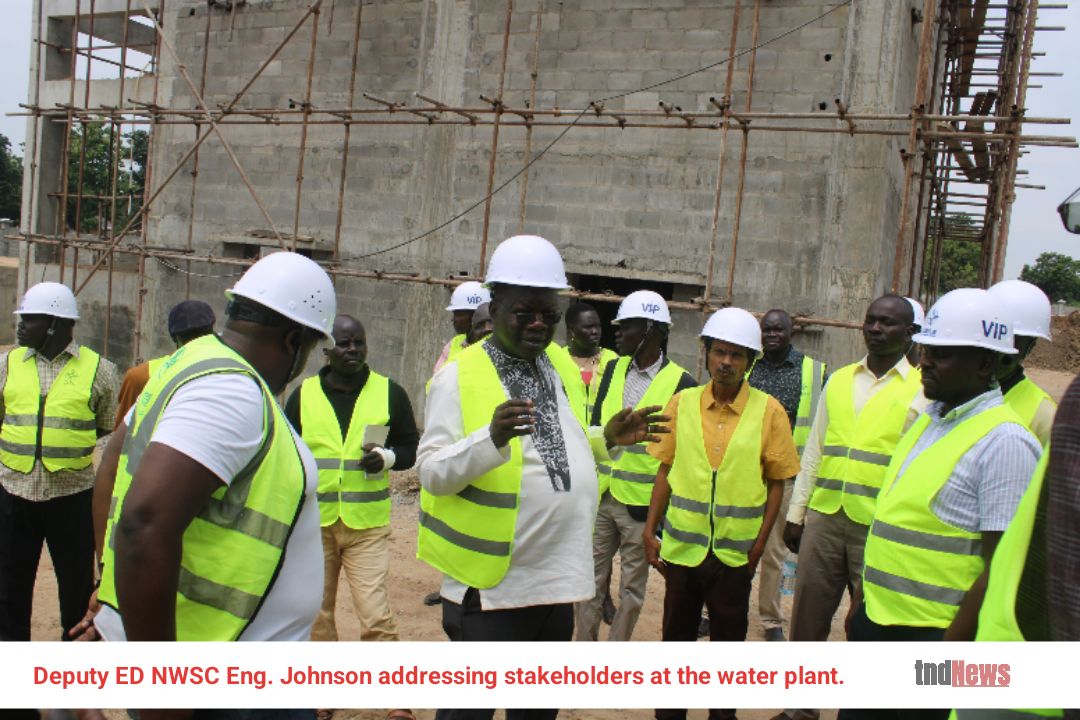
Speaking during a stakeholder engagement meeting in Adjumani Town, NWSC Project Manager Eng. Herbert Mujuni revealed that the project has so far achieved 90 percent completion and is expected to hit 95 percent by the end of this month.
Mujuni said the engagement was particularly important to align plans for extending water services to refugee settlements, noting that issues of policy, operations, maintenance, and long-term sustainability need to be clearly understood and agreed upon by all stakeholders.
“We are here to agree on how water supply to refugee settlements will be handled. We want to understand the current policies governing refugee operations and the protocols involved, especially because maintenance and sustainability remain key concerns,” Mujuni said.
He explained that the project comprises several major components, including a water intake system from the River Nile with a capacity of 12,000 cubic metres per day. This is complemented by a water treatment plant located at Mijale village, which has the capacity to process up to 8,000 cubic metres of water daily.
In addition, the project involves the installation of an extensive water distribution network designed to supply targeted urban and peri-urban areas.
The sanitation component includes the construction of an elevated steel reservoir in Adjumani Town Council, a faecal sludge treatment plant at Amelo, and seven sanitation blocks at key public facilities and institutions.
NWSC Adjumani Area Manager, Paul Bhona, said the corporation is engaging the Office of the Prime Minister (OPM) and the United Nations High Commissioner for Refugees (UNHCR) to guide the extension of water services to refugee settlements.
“The settlements to be supplied include Nyumanzi, Pagirinya, Olua 1 and 2, and Boroli. Since NWSC does not directly operate in the settlements, we found it necessary to consult OPM and UNHCR on the best way to extend these services,” Bhona said.
However, local leaders urged caution in how water infrastructure is rolled out in refugee-hosting areas. Welborn Kenyi, the Local Council III Chairperson of Pakele sub-county, appealed for priority to be given to public institutions rather than individual homesteads.
He warned that supplying water directly to households could result in idle infrastructure in the future should refugees be repatriated, turning such investments into “white elephant” projects.
Meanwhile, Adjumani District Water Officer, Richard Izakere, said the district currently has a water coverage rate of 74 percent, with functionality standing at 94 percent. He noted that once the NWSC project is fully completed, water coverage in the district is expected to exceed 90 percent.
Albert Alumgi, the Assistant Settlement Commandant, welcomed plans to extend piped water to refugee settlements, noting that access to safe drinking water remains inadequate despite the presence of some water systems.
“Adjumani has 19 refugee settlements. While some communities have access to water systems, the availability of clean and safe water remains low. Many settlements rely on boreholes, which are difficult to manage,” Alumgi said.
He added that in some settlements, residents share water sources with animals, leading to long queues and clear signs of water scarcity.
Alumgi expressed optimism that the new project would significantly improve living conditions in both refugee and host communities.