Deep in the heart of Adjumani district, the Zoka Central Forest Reserve, once a lush tropical ecosystem teeming with rare tree species and wildlife, is now under siege.
What was once a conservation treasure in Uganda’s northwestern frontier has become the epicentre of a dangerous battle over timber, charcoal, and power.
For months, reports have surfaced accusing sections of the Uganda People’s Defence Force (UPDF) of aiding and guarding illegal loggers and charcoal traders within the forest. The allegations, first raised by local environmental activists and community members, have shaken public trust in institutions meant to protect the country’s natural resources.
Today, piles of freshly cut logs, blackened earth from charcoal kilns, and abandoned camps tell a story of greed, impunity, and survival, one that threatens not only the forest’s biodiversity but also the very livelihoods of the communities that depend on it. “The soldiers are guarding the charcoal trucks”
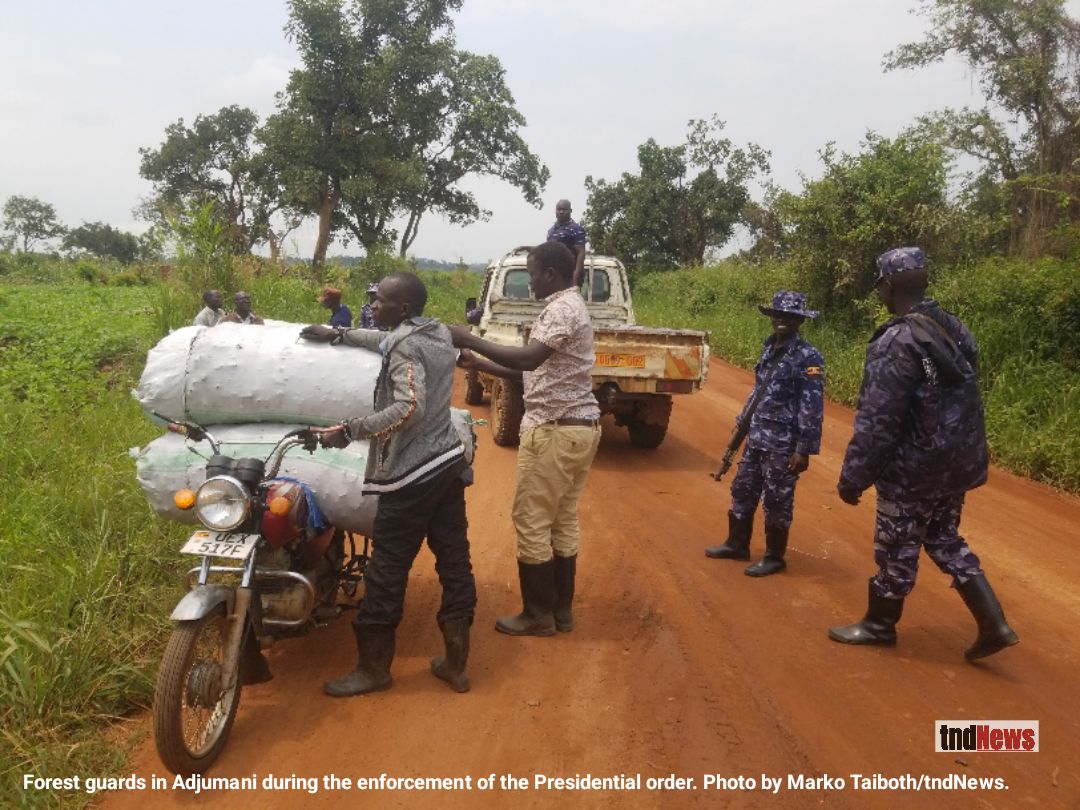
 On a recent afternoon, a group of local vigilantes from Friends of Zoka, a volunteer conservation network formed to protect the forest, stood near a dirt track on the edge of the reserve. From a distance, a rumbling truck emerged, stacked high with sacks of charcoal. One of the men, who requested anonymity for safety reasons, whispered:
“We see the soldiers almost every night. They escort the trucks out. When we try to stop them, they tell us the matter is above us.”
He pointed toward a small UPDF detachment nearby. “The army says they are here to ensure security, but security for whom? The trees or the traders?”
Community members claim that in just one week, they discovered more than 200 bags of charcoal and evidence of fresh timber falling deep inside the reserve. To them, the illegal activity is no longer hidden, it is systematic.
The National Forestry Authority is under strain
The National Forestry Authority (NFA), responsible for managing Uganda’s central forest reserves, admits it is overwhelmed. Mr Zachary Okuni Zema, the NFA supervisor for Zoka, says patrolling the forest has become a near-impossible task, worsened by the long-running Apaa land conflict, which has turned parts of the area into militarised zones.
“There are several roadblocks and detachments set up to curb charcoal production,” he said. “Yet I sometimes wonder how trucks loaded with charcoal manage to pass through them.”
Zema confirms that field teams have repeatedly reported the alleged involvement of army personnel. “We have directed our officers to gather concrete evidence. Once verified, we shall forward the matter to our superiors for action.”
But for now, he admits, the NFA’s presence is minimal. Vast areas of Zoka remain unmonitored, and every time the agency plans a patrol, its officers face threats not just from armed guards but also from the economic desperation that drives locals to cut down trees for a living.
UPDF denies institutional involvement
Contacted for comment, Brig. Felix Busizoori, the 4th Division Commander, firmly rejected claims of organised UPDF participation in illegal logging. He insists that any soldier found engaging in or protecting such trade acts on personal motives, not under orders.
“We are looking for these individuals,” Brig. Busizoori said. “Once we get them with evidence, we shall charge them. The UPDF was not deployed to do lumbering, we are deployed to keep peace.”
He maintains that the army supports environmental protection and has participated in past joint operations with NFA and police to dismantle illegal logging networks.
Yet, despite such assurances, many locals say the problem persists and grows worse.
Activists point to systemic failure
For Williams Amanzuru, the founder and team leader of Friends of Zoka, the current crisis represents years of frustration. Amanzuru, a soft-spoken environmental defender who has faced threats for his activism, describes the militarisation of the forest as a “betrayal of public trust.”
“We fought so hard to save this forest,” he says. “But instead of protection, we see soldiers guarding the destruction.”
Amanzuru says the Friends of Zoka network, supported by the Strengthening Environment and Natural Resources Management (SEA-WN) Project funded by the Royal Danish Embassy in collaboration with the Embassies of Sweden, the Netherlands, and Ireland has tried to empower communities to report illegal logging.
“We have trained local monitors who take photos, record videos, and alert authorities,” he explains. “But when the same authorities are complicit, the people lose hope.”
He notes that environmental defenders are now forced to work in fear. Some have been followed, others warned to “stop interfering” with operations in the forest.
A royal lament: “We thought the charcoal ban would save us”
The Paramount Chief of the Madi, His Royal Highness Simon Suru Baru, says the continued destruction of Zoka Forest, despite a presidential directive banning the production and trade of charcoal, is disheartening.
“When the president issued the order, we were very happy, thinking all charcoal activities would stop,” he said. “But what we see today is the opposite: more trucks, more charcoal, and more forest loss.”
Chief Baru has urged local leaders and security forces to enforce the ban “to the letter,” warning that the ecological damage threatens not just the forest but also rainfall patterns, soil fertility, and future food security in the West Nile sub-region.
A forest with a troubled history
Zoka Central Forest Reserve covers about 1,259 hectares and is Uganda’s only tropical rainforest north of the Nile. It forms part of the larger East Madi Wildlife Reserve and serves as a vital water catchment area for the region.
Over the years, however, it has faced repeated waves of destruction. In 2016, the UPDF 4th Division in Gulu established a special probe committee after reports emerged that some of its soldiers were involved in timber trade within Zoka. Despite the probe, illegal activities persisted.

In 2021, a joint operation involving UPDF, NFA, police, and local leaders from Itirikwa Sub-county resulted in the arrest of 27 illegal loggers including 22 Ugandans, three Rwandans, and two Congolese. A year later, residents discovered 1,128 pieces of timber hidden in an illegal camp inside the forest.
Even national leaders have raised alarms. In 2024, Deputy Speaker of Parliament Thomas Tayebwa directed the Committee on Environment and Natural Resources to inspect Zoka after receiving reports of large-scale encroachment. The committee has yet to make the visit.
“Zoka is dying” local testimonies
For residents living along the forest fringes, the signs of decline are stark. Streams that once flowed throughout the year now dry up by mid-season. Wild honey and medicinal herbs have become rare.
At Itirikwa trading centre, 45-year-old farmer Ajok Florence remembers when the forest’s shade cooled the air even during dry months.
“Now, when you walk through, it feels like a desert,” she said. “We used to collect firewood and fruits without cutting trees. But now, the big men come with power saws and lorries. They don’t care.”
Another resident, Sile Swaib, the vice-chairperson of the Bodaboda Association at Araka stage, says corruption has made every government initiative “a business venture.”
“Even in the Parish Development Model, we are left out,” he said. “The big people eat everything. Now even the forest is part of their business.”
Why Zoka matters
Environmentalists warn that Zoka Forest’s destruction could have long-term consequences for the entire West Nile ecosystem. The forest serves as a carbon sink, a water regulator, and a buffer against desertification spreading from the north.
Dr Joseph Okot, an environmental scientist at Gulu University, explains:
“Zoka is small, but it is extremely valuable. Its loss will accelerate soil erosion and alter local rainfall patterns. Forests like Zoka are natural air conditioners. Once gone, the climate becomes harsher.”
Zoka also supports a range of wildlife, including primates, duikers, and rare bird species. The forest’s canopy and biodiversity make it a vital research site for scientists studying forest regeneration and climate adaptation in northern Uganda.
The economics of destruction
Behind every sack of charcoal and log of mahogany lies an intricate supply chain. From local cutters to middlemen and transporters, the trade generates quick cash. A single truckload of charcoal can fetch up to Shs 3 million when sold in urban centres such as Kampala or Gulu.
“Charcoal has become the new gold,” says a trader in Adjumani town who requested anonymity. “Everyone in it is soldiers, police, politicians, even forest officers.”
For many impoverished villagers, the trade is also a survival strategy. Years of land disputes, poor harvests, and unemployment have pushed them into the forest. “If I don’t burn charcoal, my children will not eat,” says Ouma Bosco, a father of five. “I know it is wrong, but what choice do we have?”
Such realities make enforcement complex. Cracking down without offering alternatives risks worsening poverty and resentment. Yet inaction guarantees environmental collapse.
The Apaa connection: conflict spilling into conservation
The chaos in Zoka cannot be separated from the wider Apaa land conflict, which straddles Adjumani and Amuru districts. The contested territory, claimed both as part of the East Madi Wildlife Reserve and as ancestral Acholi land, has seen repeated clashes between communities and security forces.
The tension has made forest monitoring perilous. “Our rangers are sometimes mistaken for spies,” Zema, the NFA supervisor, explained. “People are angry and suspicious, and armed groups exploit that confusion to carry out illegal trade.”
Human rights defenders argue that the militarisation of land disputes often opens doors for environmental crime. “When there is conflict, accountability disappears,” Amanzuru adds. “Those with guns take advantage.”
What can be done?
Environmental experts and civil society organisations are urging a multifaceted approach to rescue Zoka:
Independent investigation: They demand an impartial inquiry into allegations of UPDF involvement, beyond internal army probes.
Community stewardship: Strengthening local forest committees and giving communities legal authority to co-manage the reserve could restore trust.
Economic alternatives: Introducing sustainable livelihoods such as beekeeping, fruit tree planting, and eco-tourism would reduce dependence on charcoal.
Transparent enforcement: Regular public reporting on arrests, seizures, and prosecutions related to illegal logging can deter impunity.
A test of political will
For many Ugandans, Zoka Forest has become a symbol of how corruption, weak governance, and militarisation can undo environmental conservation. The silence of oversight bodies, including Parliament’s Environment Committee, is eroding public confidence.
“Every government says it wants to protect the environment,” says Chief Baru. “But when you allow soldiers and businessmen to destroy forests, what future are we building?”
He warns that if leaders fail to act, future generations will inherit “barren land and empty promises.”
A fragile hope
Despite the dangers, environmental activists say they will not stop. On a recent morning, Friends of Zoka members gathered for a patrol armed with only notebooks, GPS trackers, and cellphones. They sang softly as they entered the forest, a mix of fear and defiance.
“We are the last line of defense,” Amanzuru said. “If we lose Zoka, we lose our heritage.”
The group’s work has begun attracting attention from regional conservation networks and international partners. Plans are underway to establish community-based eco-tourism and reforestation projects once security stabilizes.
Still, for many, hope feels fragile.
At sunset, as the sound of power saws echoes faintly from the forest interior, an elder from Itirikwa gazes toward the treeline. “Our fathers told us Zoka is sacred,” he says. “But now, even the sacred is for sale.”
Discover more from tndNews, Uganda
Subscribe to get the latest posts sent to your email.