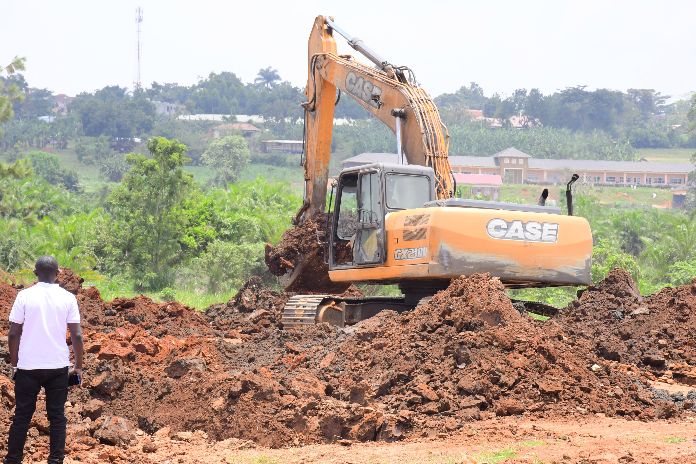
In a decisive move for environmental conservation, the National Environment Management Authority (NEMA) has successfully restored a degraded section of the Nakiyanja Wetland System in Sonde village, Mukono district.
The restoration exercise, conducted on Friday, September 12, 2025, comes amid growing concerns over illegal encroachment and degradation of Uganda’s vital wetland ecosystems.
The operation targeted sections of the wetland along Namugongo-Sonde Road, where illegal backfilling, construction, and commercial activities had severely threatened the ecological balance.
Wetlands like Nakiyanja, with their permanent water table, clay-loam soils, and diverse vegetation including Raffia palms and Miscanthus species, are critical for supporting biodiversity, mitigating floods, and maintaining groundwater recharge.
According to NEMA, over four acres of the wetland were restored during the exercise. Ten illegal kiosks and other structures that had encroached upon the wetland were demolished, while more than 30 tonnes of sand dumped in the area were removed and returned to their owners.
The exercise was carried out in collaboration with the Ministry of Water and Environment and the Environment Protection Police Unit, reflecting a coordinated effort between government agencies to safeguard natural resources.
“NEMA’s swift action underscores the importance of protecting Uganda’s wetlands,” the authority said in a press release. “Wetlands like Nakiyanja are vital not only for ecological balance but also for the livelihoods of communities that depend on these ecosystems for water, vegetation, and flood control.”
The restoration operation followed intense public scrutiny and media reports highlighting illegal activities in the wetland.
Community members had expressed concern over kiosks, car washing bays, and other commercial ventures encroaching on the wetland, warning that such activities increased the risk of flooding and threatened biodiversity.
In addition to physical restoration, NEMA focused on sensitising the local community about the significance of wetland conservation.
Officials engaged residents, highlighting the role of wetlands in purifying water, sustaining fisheries, and supporting agricultural activities. The awareness drive is part of NEMA’s broader mandate to foster community involvement in environmental protection.
The authority also revealed ongoing efforts to bring to justice those responsible for degrading Uganda’s wetlands.
Naomi N Karekaho, Head of the Corporate Communications Unit at NEMA, said intelligence teams are actively pursuing suspects involved in illegal activities, citing relevant legislation such as Section 110 of the National Environment Act, Cap. 181, and the National Environment (Wetland, River Bank and Lake Shore Management) Regulations, 2000.
The authority also references the National Environment (Environmental and Social Assessment) Regulations, 2020, which prohibit unauthorised activities harmful to wetlands.
“Accountability is critical. We want to ensure that all individuals and businesses comply with environmental laws and regulations to prevent further degradation of these important ecosystems,” Karekaho said.
NEMA has emphasised that wetlands are not merely water bodies but critical components of Uganda’s natural heritage. They perform essential ecological functions, including flood control, groundwater recharge, water purification, and biodiversity conservation.
Wetland loss and degradation, often driven by illegal construction, waste dumping, and unplanned commercial activity, pose serious environmental and socio-economic risks.
The Nakiyanja Wetland restoration is part of NEMA’s ongoing initiatives as the authority marks 30 years of operation. Over the past three decades, NEMA has spearheaded multiple campaigns to protect Uganda’s wetlands, rivers, lakes, and forests, often working closely with local communities to encourage sustainable environmental practices.
Environmental experts say the restoration sets a positive example for other districts grappling with wetland encroachment. Dr. Josephine Akello, an environmental scientist, noted that community engagement combined with strict law enforcement is key to ensuring wetlands are preserved for future generations.
“The Nakiyanja exercise shows that when authorities act decisively and involve local communities, the results can be transformative,” she said.
The exercise in Mukono also signals a growing recognition of wetlands’ economic and ecological importance.
Beyond their environmental functions, wetlands provide resources such as reeds, papyrus, and fish, which contribute to local livelihoods. Protecting them ensures these benefits are sustained over the long term.

NEMA officials have urged communities and businesses to comply with environmental regulations and report any illegal activities in wetlands.
Residents are encouraged to actively participate in conservation efforts, including avoiding dumping waste, backfilling, or constructing unauthorised structures in these areas.
Discover more from tndNews, Uganda
Subscribe to get the latest posts sent to your email.