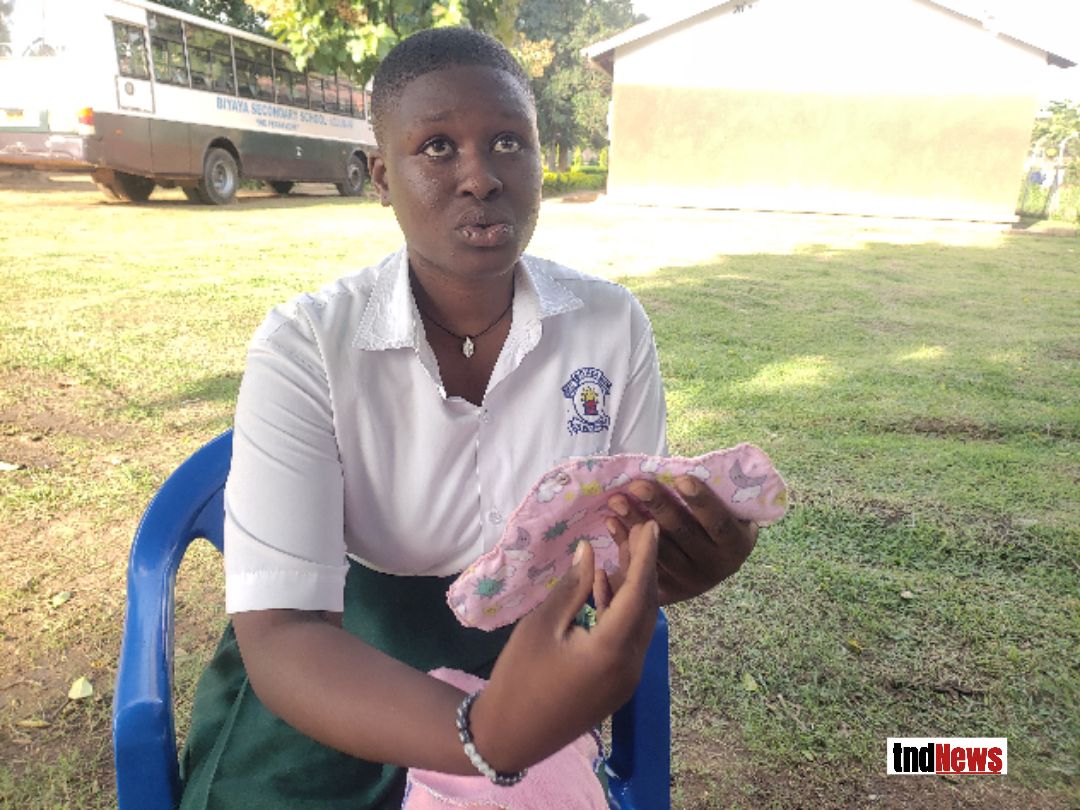
For Pavin Masudio, it’s not about age, or what you have to start giving back to the communities. At 18 years old, she’s already helping girls in her village to manage their menstrual hygiene and health.
She makes reusable pads for them and sensitizes those who, like her younger self, start menstruating without understanding what is happening to their bodies.
From fear to empowerment.
At just 13 years old, Masudio began menstruating while in primary school. With no parental guidance and no access to pads, she was forced to tear pieces of her own clothes to use as makeshift sanitary materials.
The discomfort and shame left her missing nearly a week of school every month.
Her struggles did not stop there. Boys bullied her whenever she was on her period, instilling fear and embarrassment that eroded her self-confidence.
Despite her dream of excelling academically, her grades slipped from first grade to second, and she came close to dropping out altogether.
“I cut one of the clothes my aunt bought. When she realized it was missing, I told her it got burnt,” Pavin recalled in an interview with tndNews.
Her turning point came following the arrival of the SHARE Project in Adjumani district. She joined the Sexual Health and Reproductive Education (SHARE) project, implemented by a consortium of partners in her school.
The project taught her how to make reusable sanitary pads, an innovation that changed her life. She could finally manage her period with dignity, regain concentration in class, and pursue her education without fear.
Reflecting on her journey, Pavin admitted “she almost left school because of the challenges linked to menstruation.” But the training restored her hope and gave her a new mission.
“I have met girls as young as 12 who started menstruating but didn’t know what was happening. I have already helped more than five girls in such situations,” she said proudly.
Through her actions, Pavin has become a role model and a lifeline for girls at risk of dropping out.
Findings from the Performance Monitoring and Accountability Group (PMA) in 2020 revealed that 65% of women including young girls use disposable pads, 42% rely on cloth and 5% use cotton wool.
Reports by the Ministry of Education and UNESCO indicate that girls miss up to five school days every month due to menstruation.
The Auditor General’s report further revealed that 64% of female students surveyed had missed school or classes because of their periods.
Discover more from tndNews, Uganda
Subscribe to get the latest posts sent to your email.