By Joseph Okul
In a strategic effort to decongest Lira Prison and tackle the overwhelming backlog of criminal cases, the Judiciary has launched a three-day plea bargain camp.
This legal outreach, scheduled from June 25 to 27, 2025, offers a rare opportunity for inmates to plead guilty and potentially secure reduced sentences or acquittals based on the nature and context of their charges.
Organized under the supervision of the Director of Public Prosecution (DPP) and the Principal Judge of Uganda, the camp targets inmates willing to admit guilt, allowing for a fast-tracked review of their cases. The initiative is expected to significantly ease the burden on the Lira High Court, which currently grapples with a staggering backlog of more than 2,500 criminal cases.
At least 300 inmates charged with serious offenses including murder, manslaughter, aggravated defilement, robbery, rape, and trafficking have already expressed interest in having their case files reviewed during the plea sessions.
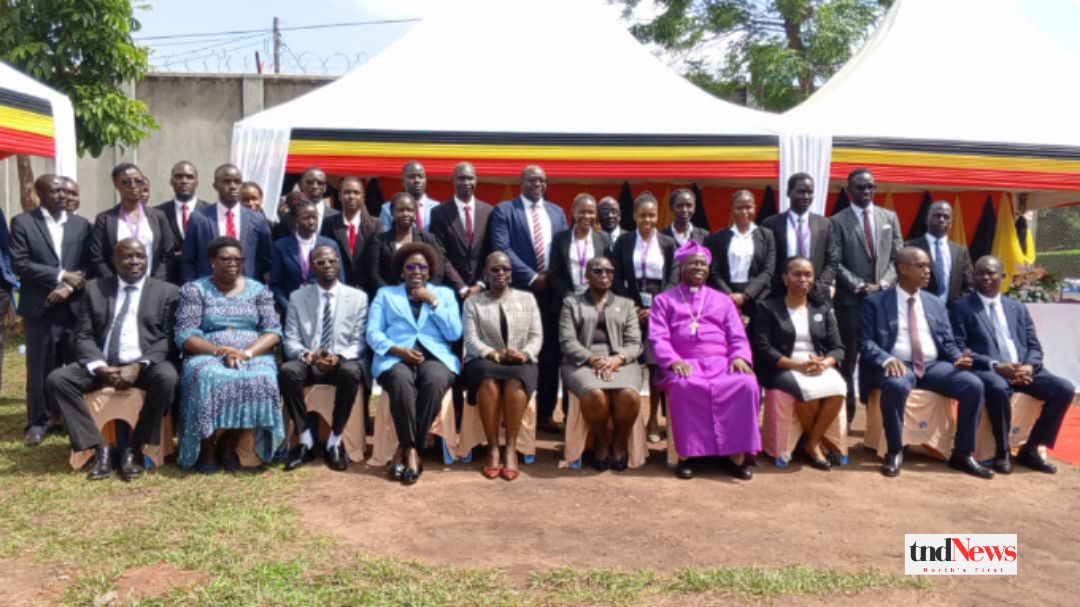
Speaking during the official opening ceremony at Lira government prison, the Principal Judge, Justice Jane Okuo Kajugo, urged all actors involved from prosecutors and defense attorneys to judges, the accused, and complainants to approach the plea bargain process with integrity and commitment.
“Our interest should be justice! So every file you are handling, remember there’s a human being behind it. It’s not just a file, it’s not just random facts,” emphasized Justice Kajugo.
She underscored the importance of reconciliation during these sessions, encouraging victims, offenders, and communities to embrace forgiveness, which remains a central tenet of both formal and traditional justice systems across Northern Uganda.
Justice Kajugo further advised inmates to be honest and provide compelling, factual explanations for their guilty pleas, warning that dishonesty could compromise their only chance at negotiating a lighter sentence within Uganda’s criminal justice system.
In an additional effort to speed up case resolution, Justice Kajugo revealed plans to assign two to three additional judges to Lira between July and September 2025, specifically to address cases where inmates claim wrongful imprisonment.
Meanwhile, Director of Public Prosecution Hellen Abodo reassured the inmates that her office had meticulously reviewed the 213 case files submitted for the camp. She explained the aim was not only to confirm the legitimacy of charges but also to identify any legal oversights that might justify sentence reduction or full acquittal.
Abodo challenged the misconception that prosecutors are solely interested in convicting suspects. She stressed that the DPP’s office works collaboratively with defense attorneys to ensure the rights of the accused are respected and that justice is fairly administered.
“A prosecutor’s duty goes beyond securing convictions. Our role is to ensure that no one is charged beyond what they committed,” Abodo affirmed.
Importantly, Abodo emphasized the need for complainants to attend the plea sessions. Their presence, she said, is crucial in assessing the transformation of accused persons and building community readiness for reintegration after release.
She appealed to all judges presiding over the camp to consider fair and proportional convictions that serve the best interests of justice while supporting rehabilitation and societal reintegration of offenders.
On her part, the Resident Judge of Lira High Court, Justice Margaret Apiny, expressed confidence that the camp would significantly cut down the overwhelming backlog of cases.
“I am optimistic that the backlog of over 2,500 cases currently at Lira High Court will drastically reduce by the end of this camp,” she said.
Justice Apiny acknowledged that Lango sub-region’s rising crime rates have stretched the judicial system, but maintained that periodic interventions like the plea bargain camp could help ease the load.
She called for coordinated efforts from community, religious, and clan leaders, alongside law enforcement and the judiciary, to stem lawlessness in the region.
She also recounted how, upon assuming her role in Lira, she was immediately confronted with serious concerns from prison officials regarding inmate congestion.
“It was overwhelming. To respond, I had to initiate contact with both the DPP’s office and the Principal Judge to organize this plea bargain camp. Their swift and positive response made this event possible,” she revealed.
According to Godfrey Komakech, the Regional Prisons Commander for the Mid-northern region, the region currently hosts 18 prison facilities housing 3,875 inmates and 14 children. Of these, 2,187 are convicts while 1,681 are on remand.
Komakech further revealed that the facilities are staffed by 753 officers, putting the staff-to-inmate ratio at 1:5, which falls short of the international standard of 1:3.
Despite these challenges, Komakech praised the Lira Judiciary for its consistent support and collaboration with prison authorities. He expressed optimism that the plea bargain camp would bring tangible relief by reducing congestion across detention centers in the region.
“We commend the judiciary for their continued efforts, despite facing many institutional hurdles. The plea bargain camp gives us hope for a more manageable prison environment,” he added.
As the three-day legal initiative unfolds, optimism is high that it will not only address the pressing issue of prison congestion but also strengthen the broader goals of justice, rehabilitation, and community healing in Lango sub-region.
The plea bargain approach in Uganda is increasingly being seen as a practical solution to judicial inefficiencies. It enables faster resolution of cases, reduces trial-related costs, and allows courts to focus on more complex or contested cases.

Inmates who plead guilty often do so in exchange for more lenient sentences or other negotiated outcomes, offering both relief to the judicial system and a second chance to the offenders.
In Northern Uganda, where traditional systems of justice value reconciliation and restoration over punitive measures, the integration of plea bargaining fits well within local cultural contexts. It also provides a pathway for healing, especially in communities torn apart by cycles of violence and crime.
Legal experts view the Lira plea bargain camp as part of a larger reform strategy by the Uganda Judiciary to decongest prisons, reduce pretrial detentions, and improve the efficiency of courts. Several other regional camps are expected to follow if the Lira initiative proves successful.
It also underscores the importance of inter-institutional collaboration between the judiciary, the DPP, prison services, and civil society to ensure access to justice, especially for vulnerable populations.
Stakeholders and community leaders present at the camp’s launch have called for regularization of such camps, community sensitization on plea bargaining rights, and legal aid services to support inmates who lack representation.
Inmates who spoke on condition of anonymity expressed gratitude for the opportunity and said they hoped their cases would finally be resolved after years of uncertainty behind bars.
“This gives us a new hope. I’ve been on remand for three years with no trial. I just want a chance to be heard and maybe go home,” said one of the inmates scheduled to appear before the camp.
Another inmate added, “We’re not saying we didn’t do wrong. But we want to change. This program gives us that chance.”
The Lira plea bargain amp represents a beacon of hope, not just for the inmates but for a justice system under pressure. By embracing innovative judicial approaches, the Ugandan Judiciary is taking bold steps to not only deliver justice but also restore dignity to a population that has long been caught in the grip of delay and systemic congestion.
As the camp concludes on June 27, many eyes will be on Lira to assess whether this model can be replicated elsewhere and whether justice, forgiveness, and rehabilitation can indeed walk hand in hand.
Discover more from tndNews, Uganda
Subscribe to get the latest posts sent to your email.