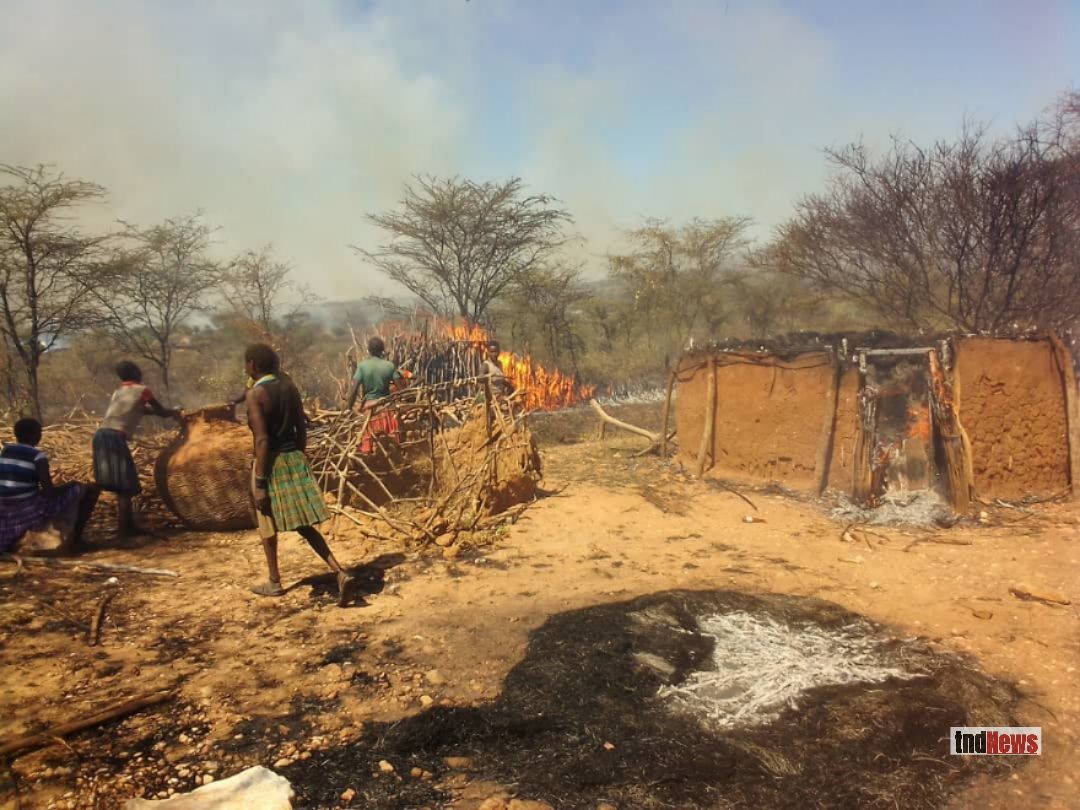
In Northern Uganda, climate change is no longer a distant warning; it is a lived reality etched into scorched landscapes, withered crops, erratic rains, and the charred stumps of felled forests.
Deforestation, driven largely by the illegal charcoal trade, is ravaging the fragile ecosystems of the Lango and Acholi sub-regions, turning once-verdant communities into barren plains. At the heart of Uganda’s climate struggle lies a single, embattled policy tool: Executive Order No. 3 of 2023.
Issued by President Yoweri Museveni in May 2023, the directive banned commercial charcoal production and prohibited the transport of charcoal outside northern Uganda.
It also instructed District Security Committees to enforce the order, mandated public auctions for impounded charcoal, and aimed to curb forest exploitation. But two years later, the situation appears worse.
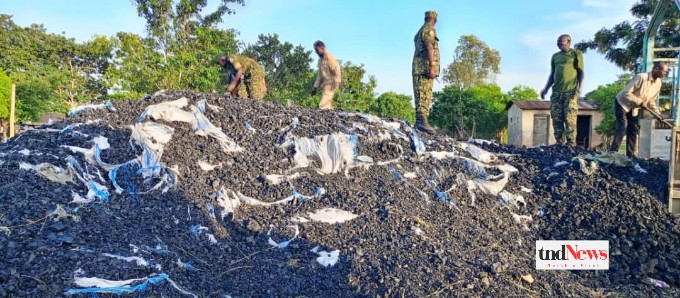
Despite the presidential order, trucks laden with illegal charcoal still exit the region, often unchecked, as reports of bribery, collusion, and impunity among security forces continue to mount. The failure to enforce the order has triggered public outcry, environmental despair, and a growing movement of community-led environmental resistance, a glimmer of hope amidst state failure.
Charcoal remains the dominant cooking fuel for over 90 percent of Ugandan households, particularly in urban centers like Lira, Gulu, Arua, Kampala, among others. This insatiable demand has created a billion-shilling black market, where forests in Otuke, Alebtong, Amolatar, and Oyam are razed daily to fill truckloads bound for southern-based cities.
In its 2024 report, Uganda’s Ministry of Water and Environment estimated that the country loses more than 200,000 hectares of forest each year, a majority of it in northern Uganda. With forest loss comes a domino effect: soil erosion, drying rivers, reduced rainfall, declining crop yields, and worsening floods.
Entire ecosystems are collapsing under the weight of axes and kilns. “Charcoal is no longer just an energy issue,” warns Leonard Otika, Lira City Environmental Officer. “It is a climate emergency. It’s killing our land, our rivers, our air and eventually, our people.”
What was intended as a forceful intervention through Executive Order No. 3 has become a case study in policy sabotage. Reports of illegal charcoal transportation passing military and police checkpoints uninspected—or worse, escorted—are widespread.
At a recent multi-district stakeholders’ meeting in Lira, called for by Minister for northern Uganda Dr. Kenneth Omona, district leaders voiced their frustration with the system.
Amolatar RDC Francis Okello Rwotlonyo declared that every time a truck exits a checkpoint full of charcoal, someone in uniform has failed the nation.
Alebtong RDC Geoffrey Okiswa described a disturbing incident where an impounded charcoal truck was diverted to the Achol Pii Military Barracks instead of being processed by police.

Otuke LC5 chairperson Francis Abola decried the targeting of boda-boda riders and small traders, while wealthy transporters exploit corrupt networks to move illegal charcoal with impunity.
Erute North MP Christine Akello Gwokadako issued a stinging critique, questioning why charcoal is openly sold from Karuma to Kampala if the ban truly exists. She accused elements within the Uganda Police and the Uganda People’s Defence Forces of reselling confiscated charcoal, turning a presidential order into a profit scheme.
These revelations paint a picture of deliberate sabotage, not just incompetence, raising serious questions about the state’s capacity to protect its own natural resources.
On June 25, 2025, Lira City hosted a large-scale commemoration of World Environment Day under the theme “Stop Plastic Pollution Today.” But the event quickly evolved into a broader climate justice rally, with over 500 residents including students, boda-boda riders, faith leaders, market women, and city officials calling for genuine enforcement of Executive Order No. 3.
From street cleanups and poetry to tree planting and art exhibitions, the day climaxed with the symbolic handover of 37 rugged bicycles to environmental patrol volunteers. The bicycles, donated by World Bicycle Relief and Buffalo Bicycles Uganda Ltd, were allocated to wetland defenders in Lira and Oyam.
Joseph Ongol, Assistant Commissioner for Wetlands Management, described the donations not as gifts but as tools of duty. “Our forests and wetlands are not defended by speeches but by sacrifice,” he said.
Faith leaders have become unexpected champions in northern Uganda’s climate resistance. Rt. Rev. Sanctus Lino Wanok, Bishop of Lira Diocese, issued a moral indictment at the World Environment Day gathering, calling charcoal burning a sin against creation.
Quoting Pope Francis’ Laudato Si’, he warned that environmental destruction is spiritual corruption and urged repentance through action. Schools and religious institutions are now incorporating climate education, while youth and women’s groups are spearheading practical solutions.
Fourteen-year-old Martha Apio swore off polythene bags after learning about their environmental impact during a school cleanup.
Meanwhile, a boda-boda rider, Joseph Omara joined a drainage campaign, explaining that flooded roads hurt his business and that cleaning them is survival.
With state enforcement broken, civil society groups are stepping in. Organizations like Friends of Zoka, Tree Talk Plus, and the Northern Environmental Rights Association have launched tree nurseries, run sensitization campaigns, and trained community forest monitors.
According to a Tree Talk Plus coordinator, communities are not waiting for the central government. Every village has youth, he said. They just need to be trusted and equipped.
Despite its flaws, Executive Order No. 3 remains Uganda’s boldest environmental directive. For it to work, implementation must move from reaction to transformation.
Experts and stakeholders are calling for a complete audit and overhaul of UPDF and police checkpoints across northern Uganda. Officers with corruption allegations should be removed or reassigned, and checkpoint operations must be digitally tracked using GPS and body cameras;
Community environmental patrols must be equipped and funded through district budgets and donor partnerships. Patrol members need uniforms, legal training, protective gear, and transport support. Their work must be officially recognized and incentivized.
District Charcoal Committees should be operationalized, meeting monthly with participation from civil society, the media, and public observers. Their actions must be made transparent, including enforcement statistics and reports on auction proceeds.
Access to clean energy alternatives must be fast-tracked. LPG, briquettes, biogas, and electric cookers should be subsidized and promoted, especially in urban slums and rural trading centers where charcoal dominates.
Reforestation efforts must be expanded into a National Reforestation Initiative targeting five million new trees in five years, led by schools, churches, and youth clubs. Native species should be prioritized, and tree growers given secure land tenure.
Environmental conservation and anti-corruption topics should be mainstreamed in school syllabi, vocational training centers, and religious curricula. Climate literacy must begin from childhood to build a generation of stewards.
The rollout of NUSAF IV, a $276 million World Bank-funded project, is viewed with cautious optimism. The program aims to support over 667,000 households in more than 4,000 parishes to reduce poverty and build resilience. However, critics warn that past government projects in northern Uganda have been marred by corruption, exclusion, and poor planning.
For NUSAF IV to work, it must prioritize reforestation and environmental restoration, include youth and women in its design, enforce public audits, and ensure charcoal-producing communities receive clean energy support. As one youth leader put it, the region does not need another white elephant; it needs sustainable livelihoods.
While charcoal may dominate the rural crisis, urban centers like Lira are also fighting battles of their own particularly against plastic pollution.
According to Lira’s Environmental Officer, the city produces over 40 tonnes of plastic waste every month, most of which clogs drainage systems or pollutes water sources. In response, Lira City Council recently passed a Solid Waste Management Ordinance banning open burning, illegal dumping, and the use of polythene.
The law empowers local enforcement teams and prescribes penalties for violators.
Mayor of Lira City East division, George Okello Ayoo sees the battle against plastic and charcoal as part of the same war. He believes that both destroy the environment and that the bicycles donated to patrols are now weapons in these twin fights.
The tragedy of Executive Order No. 3 is not in its intention, but in its betrayal. Meant to be a firewall against environmental collapse, it now risks becoming a broken promise unless radically reimagined and reclaimed. But all is not lost.
In Lira, a different story is taking root. Community patrols are moving with bicycles. Children are pledging environmental responsibility. Pastors are quoting climate encyclicals. Boda-boda riders are becoming sanitation advocates, and women are demanding biodegradable packaging. These actions are not symbolic. They are the grassroots of climate resilience.
Uganda’s climate fight cannot be won by policy alone. It requires people-powered enforcement, faith-rooted stewardship, and youth-led innovation. Executive Order No. 3 can still succeed but only if the country embraces a decentralized, accountable, and community-driven climate strategy. The forests of Lango and Acholi are not just carbon sinks, they are cultural sanctuaries, water sources, and life-support systems.
As black smoke continues to rise from illegal kilns, so too must the resolve of a nation starting from Parliament and echoing down to every parish and homestead.
If the state is to reclaim its environmental authority, it must walk with its people, not work against them. The message from Lira is clear: forests are not firewood, wetlands are not wastelands, and climate justice begins at home.
Discover more from tndNews, Uganda
Subscribe to get the latest posts sent to your email.