Alebtong | Residents of Alebtong district are raising alarm over rising corruption and the relentless spread of malaria. To deal with this, they are calling for urgent reforms to Uganda’s legal and health systems.
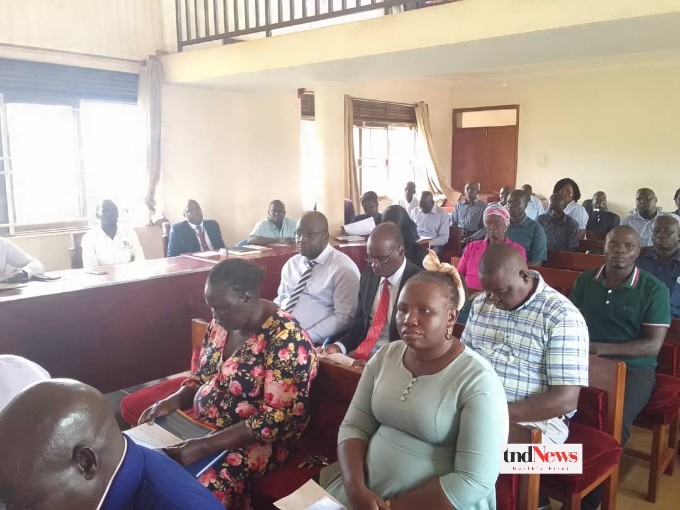
The call came during a Baraza (community dialogue) held on Wednesday May 21 at Aloi town council, organized by the Inspectorate of Government (IG).
Community members, civil servants, and local leaders voiced frustration at how corruption continues to derail development, particularly in education, healthcare, and public service delivery.

Anthony Opio, a resident of Aloi, acknowledged the efforts of the Anti-Corruption Act, but stressed that it fails to address both sides of bribery.
“The fight against corruption cannot succeed unless those who give bribes are punished just like those who receive them,” he said. “Those with political or financial power often walk free.”
Opio also criticized community complicity, pointing to a culture of willingly offering bribes to secure jobs and favors.
“We must hold ourselves accountable. Both givers and receivers should face equal consequences,” he added.
Push for legal reforms
Stella Pamela Akello, vice LC3 chairperson of Aloi town council, called for a complete overhaul of Uganda’s anti-corruption legal framework to eliminate existing loopholes.
“Lawmakers must revise the law to ensure fair and impartial investigations,” she said. “Harsher penalties and transparency are critical.”
She added that those who offer bribes should be arrested even before the recipients as a deterrent.
Corruption in the shadow of elections
With the 2026 general elections approaching, concerns are mounting about vote-buying and the misuse of campaign funds.
Dr. Tonny Odung, Alebtong District Health Officer, highlighted how electoral periods have historically bred corruption.
“Soon, money will be changing hands like candy. Where it comes from is always unclear,” he remarked.
He argued that voters and agents who solicit money from candidates should be punished more severely than politicians who give it in.
“Demanding cash for votes or work is corruption. The instigators must face the law.”
Government response
Mary Marble Nakajoba Ssebagala, Principal Inspectorate Officer at the Inspectorate of Government, assured the public that the law applies to both bribe givers and receivers.
“Often, it’s the giver who initiates the crime. Both parties are liable,” she stated.
She added that some citizens reject official receipts in favor of informal, corrupt dealings, which hinders accountability.
Uganda’s Anti-Corruption Act criminalizes bribery, embezzlement, and abuse of office. Still, public dissatisfaction continues to grow over unequal enforcement and perceived impunity.
Malaria: The silent killer in Alebtong
While corruption dominates discussions, malaria remains a persistent and deadly threat in the district.
Health records show that 123,522 cases were reported over the past three years—representing nearly 50% of the district’s disease burden.
Despite these alarming figures, the district struggles with irregular and insufficient drug supply.
Community leaders are calling on the Inspectorate to investigate how malaria medication is distributed across the country.
“If the population is rising and malaria is this common, why are we still running out of drugs?” asked one elder. “We need fairness and transparency in the supply chain.”
As Alebtong faces the dual burden of corruption and disease, its residents are united in demanding reform, accountability, and justice for all.
Discover more from tndNews, Uganda
Subscribe to get the latest posts sent to your email.