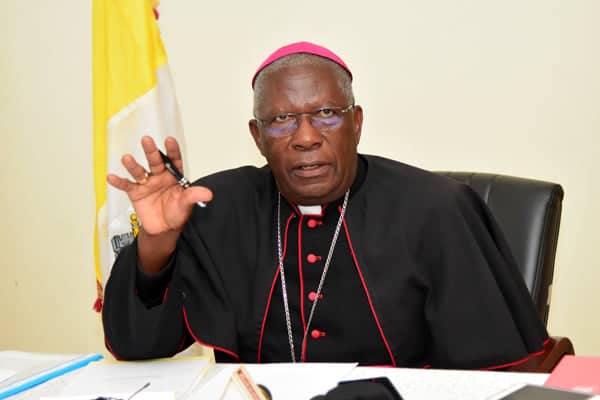
The Uganda Episcopal Conference (UEC) has issued a powerful and urgent message to the nation, urging Ugandans to embrace truth, justice, and the common good in the face of deepening crises of corruption, moral decay, and sociopolitical challenges.
The March 2025 Pastoral Letter, titled “The Truth Will Set You Free,” echoes the Gospel of John (8:32), inviting citizens and leaders to a journey of renewal, courage, and faith.
The letter is reverberating across Uganda, from serene cathedral halls to dusty trading centers, speaking to every heart burdened by dishonesty and longing for a better country.
The Bishops’ message is centered on an unrelenting condemnation of corruption, which they describe as a cancer gnawing at Uganda’s soul.
“Corruption is no longer just an individual vice; it has become a culture,” the letter reads. “It cripples institutions, undermines public trust, and kills hope.”
Ugandans from all walks of life have grown accustomed to hearing about scandals, embezzlement, and misuse of public funds. Roads remain unpaved, health-care facilities understaffed, and schools collapsing, all while billions of shillings disappear into private pockets.
The UEC’s pastoral letter places the blame squarely on a broken moral compass.
But the Bishops are not just pointing fingers; they are calling for change. They urge every Ugandan, from the lowest official to the highest office, to examine their conscience and return to the values of honesty, service, and stewardship.
“Speak the truth. Do the right thing, even when no one is watching,” the letter urges.
With Uganda preparing for the 2026 general elections, the UEC’s pastoral message also turns a sharp eye to the nation’s political life. The Bishops warn against the normalization of electoral fraud, voter bribery, and manipulation of electoral laws to favor incumbents.
“Elections must be a reflection of the people’s true will, not a spectacle choreographed by money and power,” the letter states.
They call on the Electoral Commission to act independently, for security agencies to remain neutral, and for political leaders to foster peace rather than incite violence.
The letter encourages citizens, especially the youth, to participate actively and responsibly in the democratic process.
“This is your country,” the Bishops remind them. “Protect it with your vote and your voice.”
True to their pastoral mission, the Catholic bishops position the Church not as a political actor, but as a moral compass. They acknowledge that speaking the truth can be uncomfortable, even dangerous but insist that silence in the face of injustice is a betrayal of faith.
“We speak not to gain favor or popularity, but to be faithful to the Gospel.”
This bold stance is reminiscent of Archbishop Janani Luwum’s legacy, who paid the ultimate price for standing up to tyranny in the 1970s. It also recalls more recent instances in which the Church has spoken out against land grabs, human rights violations, and the decline of ethical leadership.
But the letter is also self-reflective. The bishops admit that some members of the Church, too, have failed in their duties falling into materialism, complacency, or complicity.
“We must begin with ourselves,” they write. “The Church must be a house of integrity if it is to challenge the nation.”
The pastoral letter also addresses the crisis facing the family, which the bishops describe as “the first school of values.” They lament the breakdown of family structures due to poverty, migration, domestic violence, and a rising tide of moral relativism.
“In many homes, children are growing up without guidance, discipline, or love,” they note.
The letter calls for renewed support for parents, strong moral education, and policies that uphold the sanctity of life and the dignity of marriage. The bishops also warn against foreign ideologies and cultural imports that conflict with African and Christian values.
“Not everything that comes from abroad is progress,” they have urged.
One of the letter’s most emotional appeals is directed at Uganda’s youth. With unemployment sky-high and drug abuse rampant in many urban areas, the future of millions of young Ugandans hangs in the balance.
“Our youth are not just tomorrow’s leaders, they are today’s victims of a broken system.”
They highlight the commercialization of education, lack of mentorship, and the obsession with wealth and shortcuts as contributing factors to a lost generation.
But all is not bleak as the letter also celebrates young people who are innovating, resisting corruption, and serving others with passion while emphasizing that the Church pledges to continue investing in youth ministries, vocational training, and ethical formation.
“Do not lose hope, you are the light in the darkness,” the Bishops tell Uganda’s young people.
Another pressing issue addressed in the pastoral letter is the land question with bishops raising concerns about forced evictions, land grabbing, and the exploitation of natural resources by powerful individuals and foreign companies.
They emphasized that land is not just property, identity, culture, or survival but life for many Ugandans.
They urge the government to protect the rights of smallholder farmers, indigenous communities, and future generations.
Quoting Romans 8:22, the clergy also advocate for sustainable environmental policies, warning against deforestation, pollution, and the depletion of water sources noting that creation is groaning.
Perhaps the most hopeful section of the letter is the call for national dialogue, a conversation that transcends politics and tribe, religion and class.
According to the Bishops, there can be no peace without justice, and no justice without truth thereby calling for a talk and listen session that can align the healing process.
They propose an inclusive, transparent process involving all stakeholders from government officials and religious leaders to civil society and grassroots communities to ensure they can address long-standing grievances and pave the way for reconciliation and reform.
As Easter approaches, the UEC pastoral Letter bases its entire message on the Cross, where truth and love meet in sacrifice, noting that Jesus stood for truth, was crucified, and later rose again to life.
They urge Ugandans to look for signs of hope, such as families staying together, whistleblowers speaking out, children returning to school, and farmers rebuilding after floods.
In a country riddled with contradictions, rich in faith but scarred by corruption, resilient but weary, the UEC’s pastoral letter is more than a religious statement. It is a national mirror, a moral compass, and a prophetic call.
It challenges everyone, including politicians and priests, parents and students, journalists and judges, to choose truth over lies, love over hatred, and service over self.
And in doing so, it plants a seed of hope that, if nurtured with courage and grace, has the potential to grow into the Uganda we all desire.
Discover more from tndNews, Uganda
Subscribe to get the latest posts sent to your email.