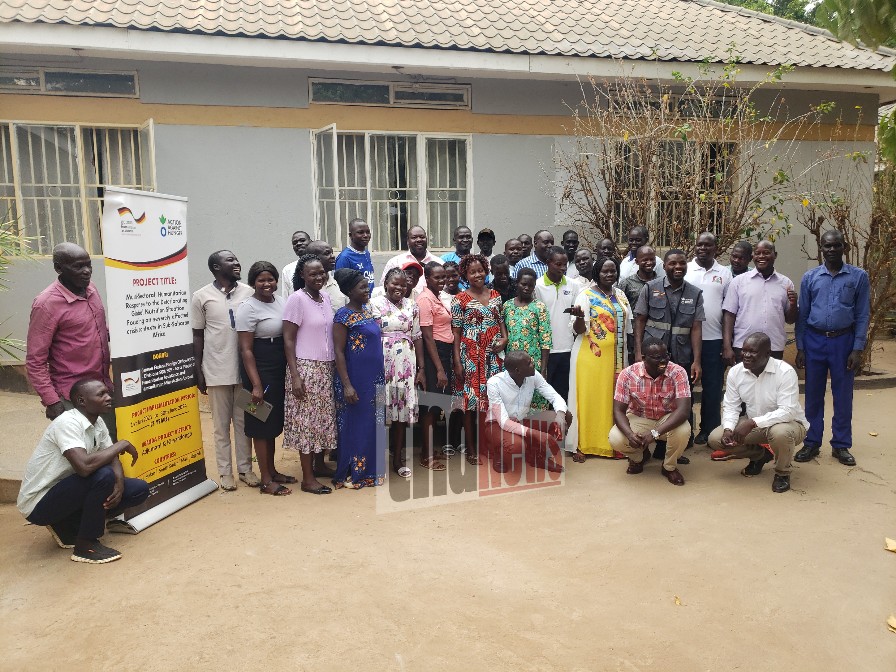
A group of trained nutrition champions—comprising both refugees and host community members in Adjumani—has launched a campaign to combat malnutrition and improve water and sanitation conditions.
According to the 2024 Uganda Food Security Report, malnutrition in refugee settlements in Adjumani stands at 7.1%.
To address this, Action Against Hunger, with funding from the German Federal Foreign Office, is implementing a multisectoral humanitarian response targeting the most affected districts, including Adjumani and Kiryandongo.
Capacity building for self-reliance
Moses Lukwago, the Action Against Hunger Program Officer for Adjumani, highlighted the impact of dwindling donor support, which has exacerbated malnutrition in refugee communities.
“We saw the need to empower local leaders so that when implementing partners eventually withdraw, communities can sustain themselves,” Lukwago explained.
Martine Obulejo, the Refugee Welfare Councillor II of Pagirinya Refugee Settlement, noted that many refugees are struggling due to food aid reductions.
“Many refugees no longer receive food assistance, yet they lack access to land for farming,” he said.
Advocacy for better nutrition and sanitation
Through this initiative, Nutrition Champions are being equipped to advocate for improved nutrition and sanitation in their communities.
Richard Edema Draciri, the Chief Administrative Officer of Adjumani, challenged them to take the lead in addressing malnutrition.
“The district’s water coverage remains low at 86%, meaning 14% of our people still consume unsafe water. You are the ones on the ground, and your voices can draw the attention of the government, donors, and partners,” Edema emphasized.
Isaac Opolot urged the champions to adopt effective advocacy tools for impactful change.
“You must actively engage leaders for social accountability through community dialogues, social media, and other strategies,” he advised.
The training covered eight key areas: leadership and management, stakeholder engagement, communication, advocacy, social mobilization, governance, social accountability, and policy advocacy.
Adrupio Iren Api, the Secretary for Finance and Administration, encouraged the champions to apply their new knowledge to mobilize communities for better nutrition.
“You have been selected for a purpose. As focal persons, go out and make a difference,” she urged.
Malnutrition in refugee settlements
From April to September 2024, refugee settlements have shown higher vulnerability to acute malnutrition compared to host communities.
Adjumani, Kampala Urban, Kiryandongo, Rhinocamp, Palorinya, and Palabek recorded Global Acute Malnutrition (GAM) prevalence rates between 6.2% and 8.3%.
In contrast, settlements such as Rwamwanja, Kyaka II, Nakivale, and Bidibidi recorded lower GAM rates ranging from 1.1% to 4.0%.
With the support of Nutrition Champions, communities in Adjumani are now better positioned to advocate for sustainable solutions to malnutrition, water, and sanitation challenges.
Discover more from tndNews, Uganda
Subscribe to get the latest posts sent to your email.