The Eastern and Southern Africa Small Scale Farmers Forum (ESAFF) Uganda has released a practical guide called “Human Pee is Liquid Gold.”
The guide advocates using human urine as an organic fertilizer and pesticide. This ground-breaking initiative is the result of extensive research into the effectiveness of urine in promoting crop growth and protecting plants.
According to Julius Engwedu, ESAFF’s field assistant-extension officer, relying on industrial fertilizers carries significant risks such as health concerns, environmental pollution, and ecosystem damage.
With the growing demand for organic farming methods, Engwedu emphasized human urine’s potential to promote agricultural sustainability and resilience.
“Human urine can be a cornerstone in agroecological processes, paving the way for resource-efficient and circular food systems. By reimagining waste as a valuable resource, we can achieve a sustainable agricultural model,” he explained.
Farmers’ experiences with urine fertilizer
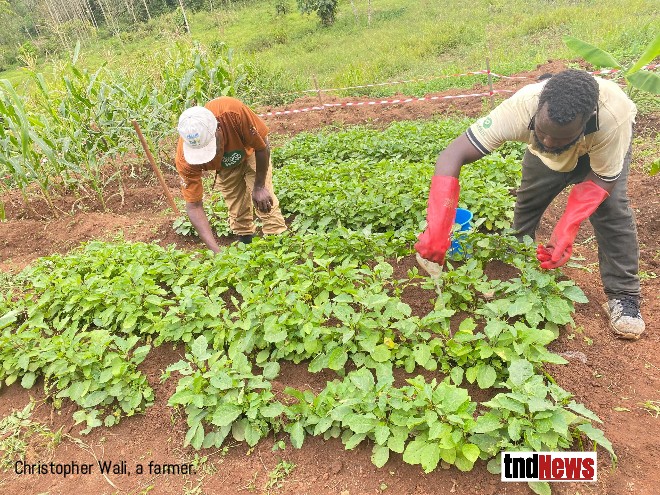
Small-scale farmers in Uganda have started adopting this method with promising results. Christopher Wali, a farmer from Mukono district, has demonstrated the effectiveness of urine on crops like maize, bananas, and nakati.
His trials revealed that urine-treated plants were healthier and more productive than untreated ones.
“We do not apply urine directly to the plants to avoid scorching. Instead, we dig small holes about 10 centimeters away from the plants, pour the urine, and cover it,” Wali explained.
Similarly, Iren Kajoba, another farmer in Mukono, noted that urine significantly boosts crop yields while reducing the dependency on expensive synthetic fertilizers. “Urine is readily available and cost-effective, making it ideal for small-scale farmers like us,” she remarked.
How to use human urine as fertilizer
Engwedu outlined the steps for safely converting human urine into a potential fertilizer and pesticide.
Collection: Collect urine in clean containers such as jerry cans or drums. Fresh urine is preferred for its higher nitrogen content.
Fermentation: Allow the urine to ferment for 2–6 weeks in a covered, shaded container to reduce pathogens and ammonia concentration. This process enhances its nutrient content and safety for plants.
Processing and storage: Filter the fermented urine and store it in sealed containers in a cool, dark place. Avoid long storage to maintain quality.
Dilution and application: Dilute the urine with water at a ratio of 1:8 or 1:10. Apply the mixture around the base of plants or spray it on leaves for pest control. Always apply during early mornings or late afternoons to prevent nutrient evaporation.
Frequency and timing: Apply every 2–4 weeks during the growing season, but stop 15–21 days before harvest to avoid odor contamination.
Monitoring: Regularly observe plant responses to adjust application frequency or concentration. Overuse may cause nutrient burns.
Safety precautions: Use urine from healthy individuals, clean collection tools thoroughly, and avoid using urine on crops close to harvest.
Expanding the practice beyond Uganda
The use of urine as a fertilizer is gaining traction in other countries, such as the Democratic Republic of Congo (DRC) and Malawi. In Shasha village in the DRC, farmers have successfully used urine to combat soil degradation and adapt to climate challenges.
The use of human urine as fertilizer and pesticide presents a cost-effective, eco-friendly alternative to synthetic agricultural inputs.
As more farmers adopt this practice, it provides a path to more sustainable agriculture, higher yields, and environmental protection.
With continued research and adoption, “liquid gold” could revolutionize small-scale farming across Africa.