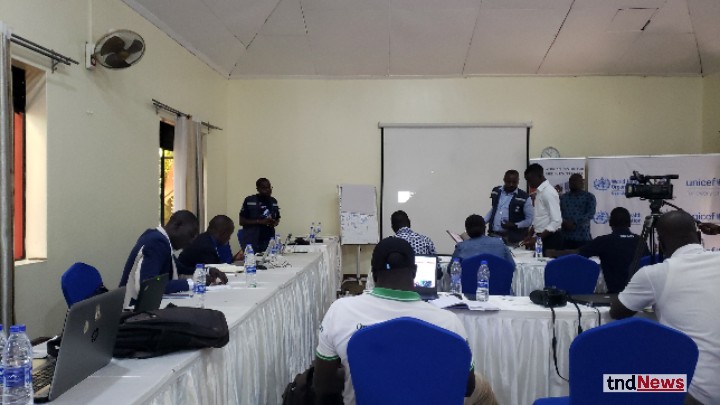
Adjumani|In a concerted effort to combat the spread of misinformation about Mpox and Marburg virus diseases, 17 journalists in West Nile received specialised training.
The training aims to provide media professionals with the skills and knowledge they need to accurately report on these critical public health issues.
Anthony Bugembe of the World Health Organization’s (WHO) Uganda Public Relations Office emphasized the value of timely and accurate reporting throughout the training.
He highlighted how journalists are pivotal in shaping public perception and understanding of health crises. Bugembe urged participants to be vigilant against misinformation, which can lead to panic and confusion among the public.
Zahara Namuli, an Africa Center for Media Excellence trainer, urged journalists to report on health issues like Mopox and Marburg.
She emphasizes the journalist’s role in society and the importance of accurate and informative reporting that contributes to public awareness and understanding of these diseases.
Namuli also emphasizes the importance of creating high-quality stories that are both informative and positively impactful.
Her training has given journalists the ability to effectively convey complicated health information to the general public, which will ultimately promote a society that is better informed and more health-conscious.
“As journalists, we should not stigmatise patients by our reporting, we should respect their rights, we should focus on objectivity, doing quality stories that are well balanced and can have an impact,” Zahara advises.
Edward Muganga, a senior public health specialist at the Ministry of Health emphasized the importance of research in effective journalism.
Muganga encouraged journalists to thoroughly verify their sources and to report in an informative manner.
This approach, according to him, not only increases the credibility of their work, but it also fosters public trust in health communications.
Stanley Anyigu, the health officer for UNICEF’s Arua Zone, reaffirmed his organization’s commitment to combating Mpox and Marburg in the subregion.
He acknowledged UNICEF and other partners’ collaborative efforts to provide resources and support for the training, emphasizing the importance of well-informed journalists in disseminating accurate information to the community.
“In fighting the Mpox, as UNICEF, we are supporting the different pillars at both national and district levels,” Anyigu said
As the threat of Mpox and Marburg continues to loom, the training of journalists in West Nile represents a proactive step towards ensuring that the public receives reliable information.
The capacity building not only empowers media professionals but also strengthens the overall response to health emergencies in the sub-region.
As the primary implementer, UNICEF collaborated with the World Health Organization (WHO), Ministry of Health, and African Center for Media Excellence (ACME) to organize the training.
Discover more from tndNews, Uganda
Subscribe to get the latest posts sent to your email.