Traders and buyers at Palenga market in Palenga town council, Tochi County, Omoro district, have raised concerns over inadequate toilet facilities, warning that poor sanitation could expose market users to diseases.
The market, which operates every Wednesday, attracts more than 3,000 traders and customers from different parts of Uganda. However, limited space and inadequate sanitation facilities remain major challenges for those who use the market.
The market dates back to the period before the conflict between the Lord’s Resistance Army (LRA) and the government forces of the National Resistance Movement (NRM) in northern Uganda.
During the conflict, the market area was converted into a military barracks, forcing traders to relocate.
The market was later moved to a site near the Kampala Highway, where its location reportedly contributed to road accidents.
The authorities subsequently approached Charles Kinyera, a native of the area, who donated two acres of land on which the market currently operates every Wednesday.
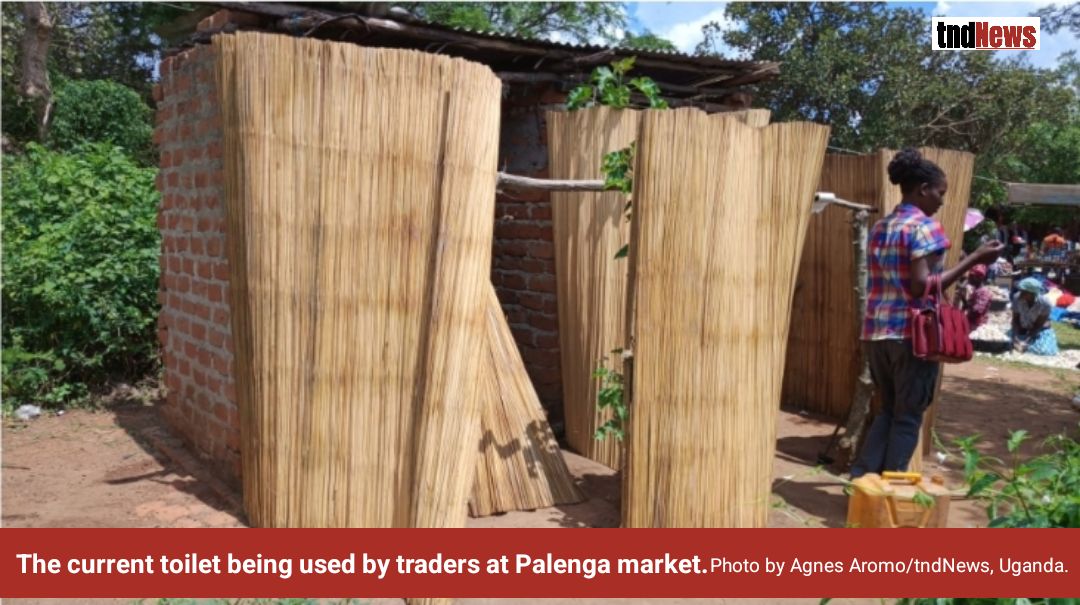
Nighty Acoyo, a clothes vendor at the market, said the existing toilet facilities is in poor condition, with holes that often-held stagnant water and urine, raising concerns about hygiene and the risk of infections, particularly among women.
“Vendors and customers are always charged shs500 to use the facilities, despite their poor condition, and the toilet is located near stalls selling fried fish, which produce a bad smell,” said Acoyo.
Acoyo further claimed that several women, including pregnant women who operate businesses in the market, had suffered from urinary tract infections (UTIs), which she attributed to the poor state of the toilets.

“I appeal to the government and market authorities to improve the market’s organisation and construct adequate sanitation facilities to help us,” she said.
Vincent Oloya, a meat seller at the market, said the available toilet facilities were previously sufficient but had become inadequate as the number of traders and customers increased.
“The market management should construct additional toilets, particularly to accommodate women who travel to the market to sell goods, since the ones we currently have are small and in poor condition,” he said.
Mike Ocwee, the market master and LCI councillor for Lamin Ayila village, said the existing toilet facilities were still usable but acknowledged the need to improve the market’s infrastructure.
“We already have plans to transform the market into a modern facility, including the construction of standard toilets capable of serving the growing number of vendors and customers in the market,” the market master said.
“In the months of July and August 2026, town council authorities introduced measures to discourage open defecation around the market, and anyone found defecating in the bush was liable to a fine of shs50,000,” Tonny Blair Okello, the chairperson of the Palenga Boda-Boda Riders Association, disclosed.
Okello said the enforcement measures were undermined by the poor condition of the available toilet facilities, and vendors and buyers continued to use the bush to relieve themselves.
“The enforcement, which has lasted two months, prompted the town council authorities to task the market tenderer with constructing additional toilets to accommodate traders and customers,” Okello said.
Charles Kinyera, the market tenderer, confirmed that the market had only one toilet facility with three stances serving both traders and customers travelling from different parts of the country.
“The town council authorities said they cannot develop a market that is built on private land, but I am planning to construct a drainage toilet system in December 2026 to improve sanitation at the market,” the market tenderer said.
Enock Ali Okello, the LCIII chairperson of Palenga town council, said the market contributes revenue to the council through collections remitted monthly.
“Plans are underway to construct more toilet facilities, provide handwashing materials, and introduce other measures to improve sanitation,” Enock said.
“However, we have also included the market plan in the council’s five-year development plan, which includes the acquisition of land and the development of a market owned by the town council rather than relying on privately owned land,” he added.
Enock Ali revealed that the proposed acquisition and development would form part of the council’s long-term efforts to improve the market’s facilities and management.
According to the market authorities, Palenga market has a registered number of more than 3,000 traders and many customers every Wednesday, making it an important centre for trade and economic activity in the area.
The market previously generated estimated revenue of between shs700,000 and shs800,000 per Wednesday, but revenue has reportedly declined to between shs600,000 and shs700,000, a reduction attributed to prolonged dry spells.
Palenga market attracts traders and buyers from across Omoro district, Gulu City, Gulu district, Lira, Mbale, Nwoya and other parts of the country.
Reporting by Aromo Agnes
Discover more from tndNews, Uganda
Subscribe to get the latest posts sent to your email.