A shs1.78 billion infrastructure project at Padibe Girls Comprehensive Secondary School in Lamwo district is expected to transform the learning environment at the school, with new classrooms, sanitation facilities, an administration block and improved facilities for girls.
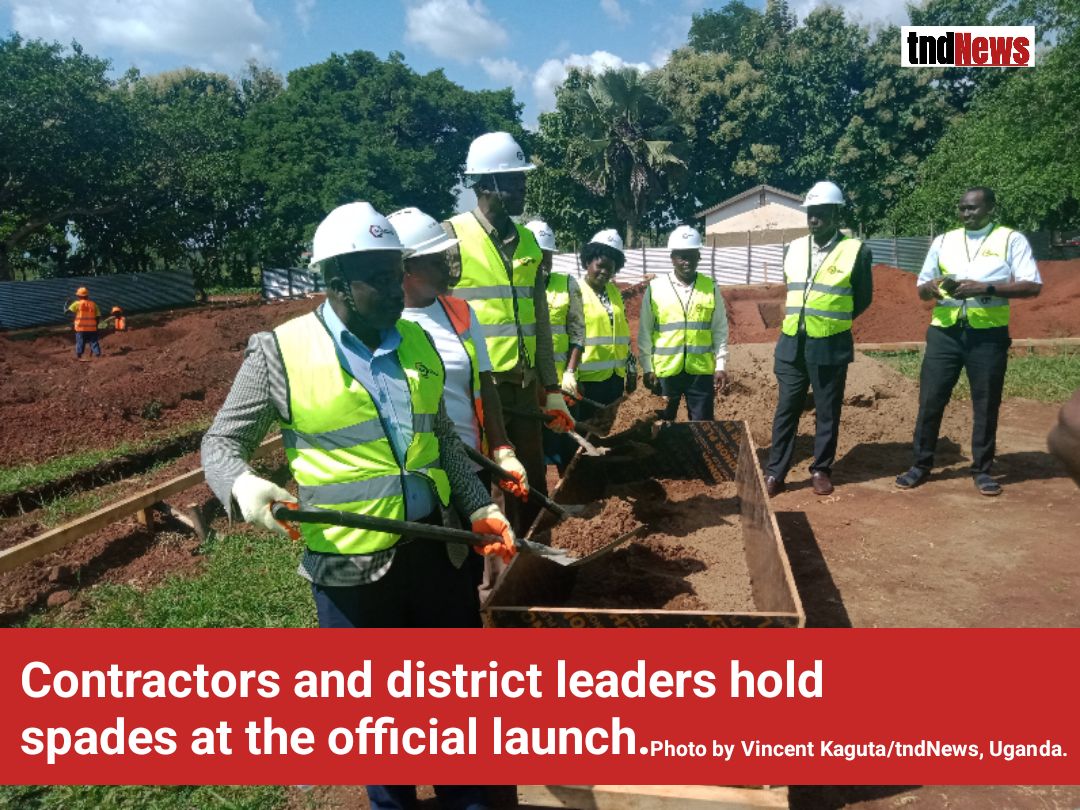
The project, being implemented under the WeTeach Project with support from Enabel and in partnership with the Ministry of Education and Sports which is funded by the European Union, officially commenced following a groundbreaking ceremony led by Lamwo Resident District Commissioner William Komakech.
The project is valued at €446,227.90, estimated at about shs1.785 billion using an exchange rate of shs4,000 to the euro. It will include an administration block, a three-classroom convertible block, a four-stance toilet and girls’ changing facilities with an incinerator. The existing science laboratory will also be renovated.
For Padibe Girls Comprehensive Secondary School, the intervention comes at a time when schools across northern Uganda continue to face pressure on infrastructure as enrolment and demand for better learning facilities increase.
The school’s deputy headteacher Jimmy Okello, says the new facilities are expected to strengthen teaching and learning, particularly through improved use of information and communication technology.
The school already has Wi-Fi connectivity provided through UNICEF in partnership with the Ministry of Education and Sports. The additional infrastructure is therefore expected to create a better environment for ICT-supported learning.
The multipurpose classroom block is also expected to support examinations and other school activities because Padibe Girls Comprehensive Secondary School serves as a district examination centre.
The project is equally expected to improve sanitation and menstrual hygiene through the provision of girls’ changing facilities and an incinerator. For learners, particularly girls, access to appropriate sanitation facilities can contribute to a safer and more supportive school environment.
Local leaders say the investment should benefit not only the school but also the wider Padibe community. Otema Wilfred, Urban chairperson of Padibe town council, views the project as an important development for the area, particularly because improved education infrastructure can have benefits beyond the school compound.
He is expected to emphasise the need for the community to support the project and ensure that the facilities are protected after completion.
In Aceba sub-county, LC5 councillor Odur Justine Peace, sees education infrastructure as part of broader local development. Her perspective can be used to highlight the importance of ensuring that young people have safe and adequate places to learn.
However, the project has also placed strong emphasis on accountability and construction supervision.
Vincent Fumi, Coordinator of the WeTeach Project at Enabel, has challenged the contractor to ensure that qualified technical personnel are physically present at the site throughout implementation.
Fumi says the project requires a resident site engineer who can supervise construction and respond quickly to technical challenges. He also raised concerns about discrepancies between the number of workers reported by the contractor and the number observed physically at the site, calling for clearer workforce records.
Ministry of Education and Sports engineer Kahala Aida has similarly emphasised the need for quality construction, safety and proper documentation.
She says the contractor must maintain quality in both materials and workmanship while protecting learners, workers and the surrounding community because construction is taking place within an operating school.
The contractor has reported that mobilisation is complete and that site offices, temporary stores and site hoarding have been established. Site preparation and clearing have also begun. Materials including concrete blocks, sand, aggregates and concrete mixes have been submitted for approval and testing.
The school Board of Governors, Oroma Godfrey, has pledged cooperation with the contractor, Enabel, government and other stakeholders throughout implementation.
The school has also introduced measures aimed at improving accountability for local workers, requiring people seeking employment on the project from surrounding communities to obtain recommendation letters from their LC1 chairpersons.
The intervention demonstrates that school infrastructure projects are not only about constructing buildings but also about ensuring that public investments are delivered to the required standards.
For Padibe Girls Comprehensive Secondary School, the success of the project will ultimately depend on whether the new facilities are completed on time, maintained properly and used to improve learning outcomes.
With the construction now underway, attention will remain on the contractor, government officials, Enabel, the school and the community to ensure that the shs1.785 billion investment delivers lasting value to learners and the wider community.
Discover more from tndNews, Uganda
Subscribe to get the latest posts sent to your email.