Across Northern Uganda, improving education is increasingly being viewed as more than putting children inside classrooms as WeTeach expands its intervention.
Communities also need schools with adequate infrastructure, qualified teachers, sanitation facilities and opportunities that allow young people to develop skills for the future.
This is the broader approach being pursued under the WeTeach Project, which is being implemented by Enabel in partnership with the Ministry of Education and Sports in selected schools in the Acholi and West Nile sub-regions.
The project supports infrastructure development and teacher capacity building, aiming to create learning environments that better respond to learners’ needs.
In Lamwo district, Padibe Girls Comprehensive Secondary School and Padibe Secondary School are among the beneficiaries of major infrastructure investment.
The schools are receiving a package of facilities including an administration block, convertible classrooms, sanitation facilities, girls’ changing facilities and an incinerator. Its existing science laboratory is also being renovated.
The intervention illustrates how education infrastructure can connect several development needs at once.
For girls, improved changing facilities and sanitation can contribute to dignity and a safer school environment. For teachers, better classrooms and administrative facilities can improve the working environment.
For learners, renovated laboratories and ICT-friendly spaces can provide opportunities to access modern learning resources.
According to Vincent Fumi Dusabe, Coordinator of the WeTeach Project, schools were selected through an assessment process that considered enrolment, classrooms, laboratories and other learning facilities.
The assessment was jointly developed by Enabel and the Ministry of Education and Sports before beneficiary schools were selected.
Four schools in Acholi and six in West Nile are benefiting from major infrastructure interventions under the relevant component of the project. The approach has also allowed interventions to respond to specific needs identified at individual schools.
Initially, the infrastructure component focused on providing two classrooms in each selected school. However, assessments of individual schools have resulted in some beneficiaries receiving additional facilities, including toilets and other essential infrastructure.
The project also places emphasis on teacher capacity building, recognising that improved buildings alone cannot guarantee better learning.
This is important for communities in northern Uganda where schools may have infrastructure but continue to face challenges related to teaching quality, learning materials and other resources.
The school has also introduced a requirement for local people seeking employment on the project to obtain recommendation letters from their LC1 chairpersons. The measure is intended to strengthen accountability and make it easier to identify workers employed from surrounding communities.
For Odur Justine, Peace Councillor Five for Aceba sub-county, the wider significance of such investments can be linked to the opportunities available to young people.
Education infrastructure provides a foundation for children to acquire knowledge and skills that can later contribute to household and community development.
The WeTeach approach also highlights the importance of environmental responsibility. At Padibe Girls Comprehensive Secondary School, the project team has emphasised the preservation of mature trees around the school while ensuring that tree roots do not interfere with the foundations of new structures.
This demonstrates that infrastructure development can be undertaken alongside consideration for the environment. But the long-term success of such projects will depend on more than construction.
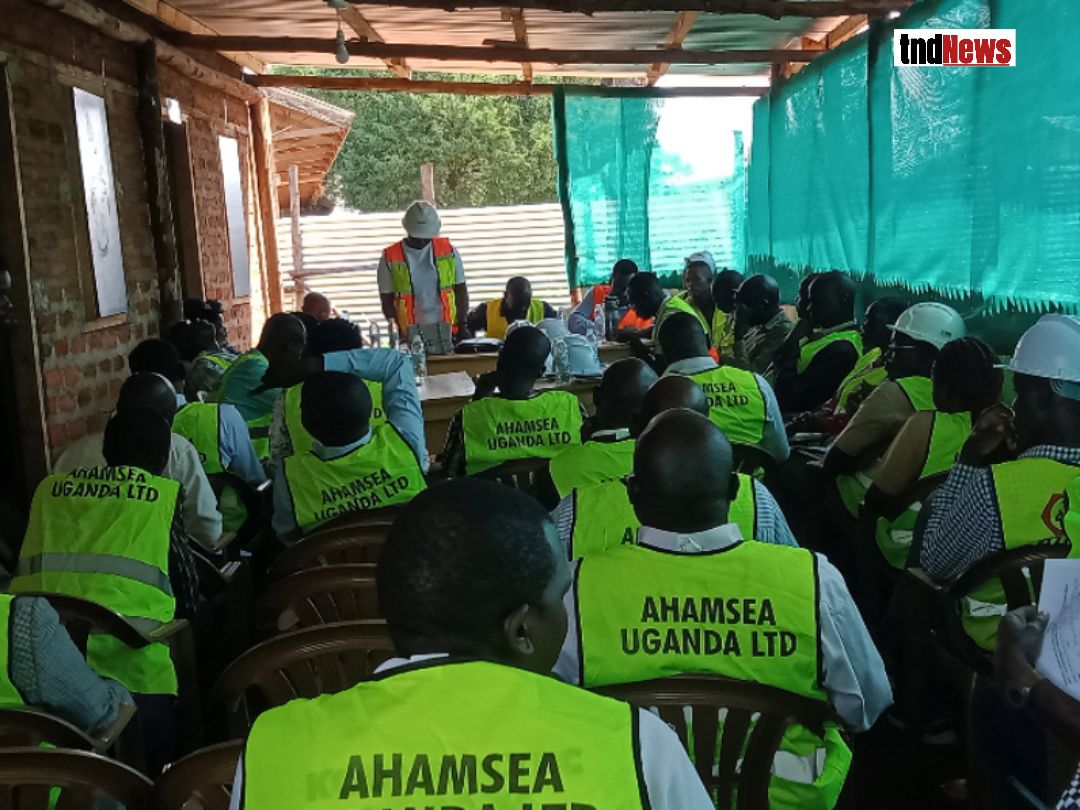
At Padibe, Enabel has challenged the contractor to ensure that qualified technical personnel remain available at the site to supervise the work.
The project team has also called for proper documentation, workforce verification, quality control and adherence to safety requirements.
These measures are important because construction taking place inside an active school can expose learners and staff to safety risks if not properly managed.
The contractor says mobilisation has been completed and site preparation is underway. Construction materials have also been submitted for testing and approval.
Ultimately, the value of the WeTeach intervention will be measured not simply by the number of classrooms, toilets or administration blocks constructed.
Its lasting impact will depend on whether the facilities improve learning, strengthen teacher performance, support girls’ welfare and create safer and more inclusive schools.
For communities in Acholi, the project therefore offers a broader lesson: investing in education infrastructure can also be an investment in human capital, local development and the future of the next generation.
Discover more from tndNews, Uganda
Subscribe to get the latest posts sent to your email.