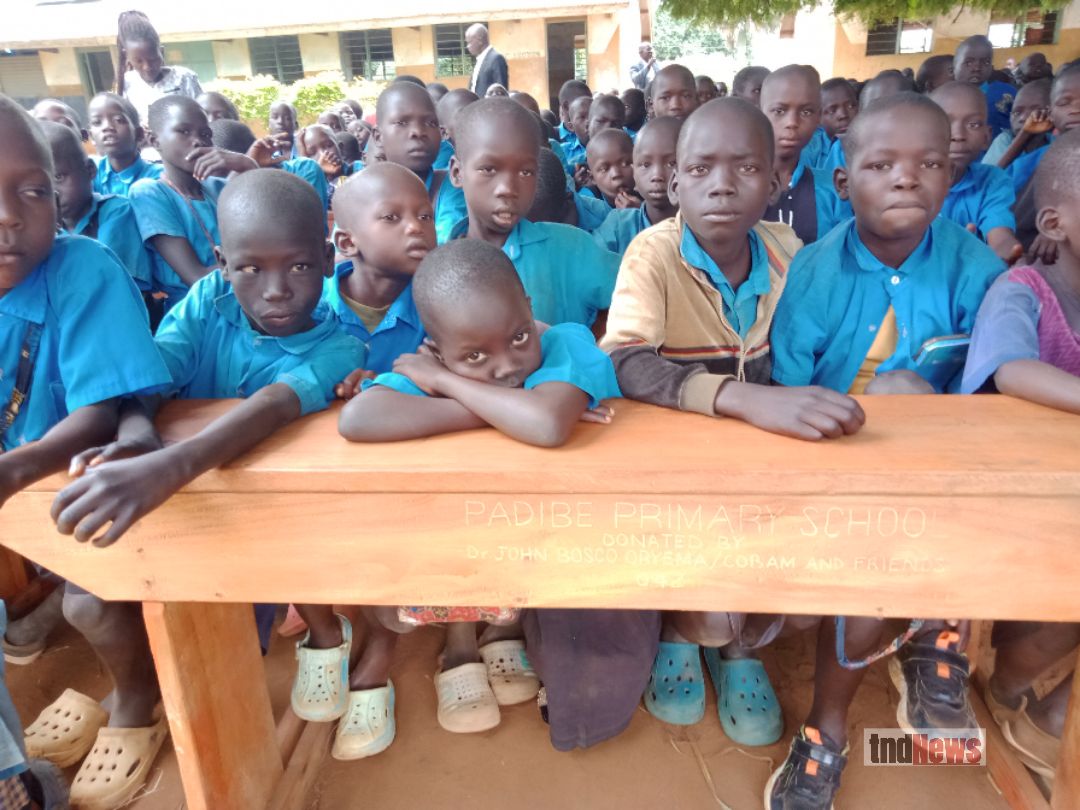
A comprehensive baseline assessment conducted between June 1 and 12, 2026, across 111 government primary schools in Kwania and Amolatar districts, has revealed alarming foundational learning deficits among 31,016 learners.
This evaluation, carried out under the UCatchUp Programme, highlights critical challenges in literacy and numeracy skills for students from Primary 3 to Primary 5, prompting an urgent call for targeted educational interventions.
The assessment underlines significant structural hurdles in both local language and English literacy. In local language proficiency, an overwhelming majority of learners struggle with basic reading skills.
Specifically, 82.2% of pupils in Amolatar and 73.4% in Kwania are below the “word level,” indicating they cannot independently read words, paragraphs, or stories.
More than half of all learners assessed remain at the absolute “Beginner” stage. Advanced reading ability is exceptionally rare, with only 2.6% of learners in Amolatar and 5.4% in Kwania reaching the “Story” level in their local languages.
Also read: Teachers commit to boost learning through supervision and engagement
English literacy metrics paint a similarly sobering picture. The majority of students are at the earliest stages of learning: 71.5% in Amolatar and 59.6% in Kwania fall within the Beginner or Letter levels.
Only a small fraction—3.0% in Amolatar and 6.5% in Kwania—are capable of comprehending full stories in English.
The evaluation of mathematical skills shows that a large portion of learners are restricted to identifying simple one-digit or two-digit numbers, without the ability to perform basic arithmetic operations.
In Amolatar, 14.7% of assessed learners are at the “Beginner” or “One-Digit” numeracy stages, closely mirrored by 14.6% in Kwania.
Higher-order numeracy skills such as subtraction and division are limited to only 13.8% of learners in Amolatar and 21.0% in Kwania.
The primary purpose of this baseline assessment is to group learners according to their actual proficiency rather than age or grade level.
This approach enables educators to implement the Teaching at the Right Level (TaRL) methodology—a proven instructional framework that focuses on rapidly building foundational skills through tailored, level-specific remedial lessons.
To address these deficits promptly, local education authorities, together with development partners, have initiated the distribution of specialised instructional reading kits to lower primary schools.
These resources are designed to support teachers in targeting the specific gaps identified in the assessment.
Education stakeholders—including parents, school management committees, and community leaders—are urged to actively support teachers as they roll out these remedial interventions.
Ensuring consistent engagement ahead of upcoming term evaluations will be critical to accelerating learning gains.
Regional education officials stress that the data serves as a localised benchmark aimed at informing strategic planning and resource allocation within Kwania and Amolatar, rather than representing a comparative ranking across other regions.
The stark literacy and numeracy gaps exposed by this baseline assessment underscore an urgent need for focused remedial education efforts.
By adopting learner-centered approaches like TaRL and mobilising community support, the Kwania and Amolatar districts aim to bridge these foundational learning divides and set their students on a path toward academic success.
Discover more from tndNews, Uganda
Subscribe to get the latest posts sent to your email.