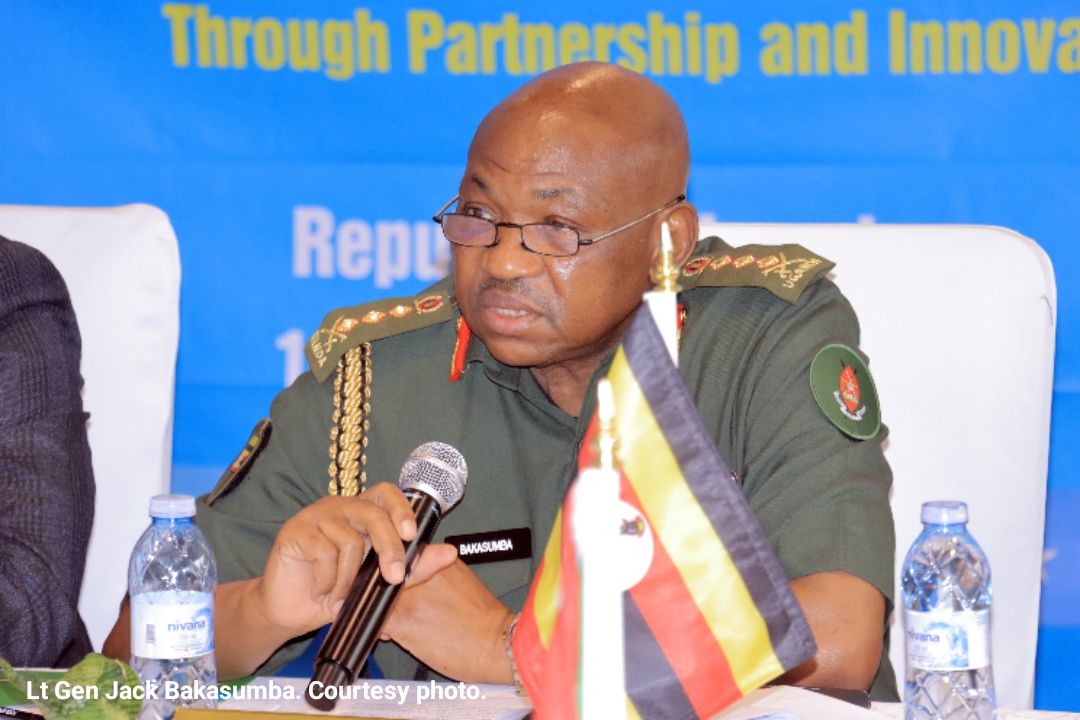
Kampala | The Uganda Peoples’ Defence Forces Chief of Joint Staff, Lieutenant General Jack Bakasumba, has challenged Eastern African states to strengthen regional security mechanisms and enhance cooperation to effectively address emerging security threats.
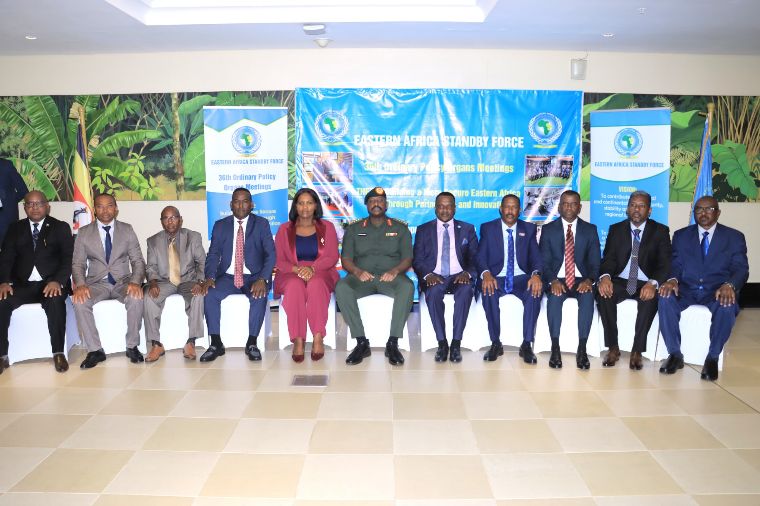
He made the call while opening the 36th Ordinary Policy Working Group meeting of the Eastern Africa Standby Force (EASF) in Kampala on Monday, where experts from member states are deliberating on key reforms aimed at strengthening the regional peace and security mechanism.
Bakasumba said the meeting comes at a time when Eastern Africa needs institutions capable of anticipating emerging security challenges while responding effectively to existing threats.
“Peace is sustained through cooperation and secured through institutions that are capable of anticipating tomorrow’s challenges while responding to today’s realities,” Lt Gen Bakasumba said.
He observed that Eastern Africa is a region of enormous potential, citing its growing economies, youthful population and expanding regional connectivity, but stressed that sustainable peace and security are critical to unlocking this potential.
“Peace and development are inseparable. Investment in regional peace and security institutions is ultimately an investment in economic transformation and the long-term resilience of our continent,” he said.
Lt Gen Bakasumba reaffirmed Uganda’s commitment to the EASF and the African Union’s peace and security agenda, urging member states to work together to build a stronger and more responsive regional security architecture.
“African solutions to African problems shouldn’t wait for anyone to come in and rescue us. We have the capabilities. We have the numbers,” he added.
Also read: Approx. 50,000 have joined UPDF in the last 5 years – says defence minister
EASF Director, Brigadier General Ronald Rwivanga, called for greater regional self-reliance as Eastern Africa faces increasingly complex security challenges amidst declining external support for peace operations.
He said African countries must prepare to shoulder greater responsibility for maintaining peace and security on the continent.
“It is important for us to build internal resilience and Africa must increasingly prepare to shoulder greater responsibility for its own peace and security,” Brig Gen Rwivanga said.
He, however, described the changing security environment not merely as a challenge but as an opportunity for the EASF to demonstrate its readiness to assume greater responsibilities.
“For EASF, this should not be viewed as a challenge alone. It should be viewed as an opportunity,” he said.
Brig Gen Rwivanga noted that the EASF has spent the past two decades building its capacity through training, exercises, force verification and interoperability. However, he stressed that operational capability alone is insufficient to guarantee an effective regional security mechanism.
“Operational readiness alone is not enough. A capable regional mechanism must also be supported by sound governance, sustainable financing and effective oversight,” he said.
Rwivanga urged delegates to approach the discussions with an open mind and keep the interests of the region at the centre of their deliberations.
“The recommendations you make over the coming days will directly influence how the EASF positions itself to remain credible, effective and sustainable in an increasingly demanding world. Let us seek consensus. Let us challenge ideas, not each other,” Rwivanga said.
The Chairperson of the Experts Working Group, Brig Gen Emmanuel Kazahura, urged experts from EASF member states to draw on their collective knowledge and experience to strengthen the regional peace and security mechanism.
He said the quality of the experts’ recommendations would directly influence decisions made by the EASF’s policy organs.
“The strength of the Eastern Africa Standby Force has always rested on the collective expertise of its member states,” Brig Gen Kazahura said.
He noted that emerging security threats are increasingly interconnected, requiring the EASF to continuously review its policies and systems to remain effective and sustainable.
The Experts Working Group brings together specialists from EASF member states to consider key reforms in areas including resource mobilisation, finance and service regulations.
Their recommendations will be forwarded to the Committee of Chiefs of Defence and Security and ultimately to the Council of Ministers for consideration.
Discover more from tndNews, Uganda
Subscribe to get the latest posts sent to your email.