At dawn, 67-year-old Acen Santa leaves her home in Madi Opei sub-county carrying a bag and a worn-out file containing land documents she has guarded for years.
The journey to the district headquarters in Lamwo takes nearly three hours by motorcycle and public transport.

She arrives shortly after 9:00 a.m., hopeful that district officials will finally help resolve a long-standing land dispute threatening her family’s livelihood.
But after waiting for hours, she is told that the responsible officer is absent. “Come back next week,” she recalls being told.
For Acen, returning home without assistance means more than disappointment. It means spending money she cannot easily afford on transport, losing a day’s work in her garden, and prolonging a conflict that has divided her family for years.
Across many rural districts in Uganda, stories like Acen’s illustrate a persistent challenge confronting decentralised governance: ensuring that public offices remain accessible, functional and responsive to the people they are meant to serve.
In Lamwo district, concerns over the efficiency and accessibility of public services have recently sparked widespread public debate, exposing deeper questions about accountability, staffing, infrastructure and the future of service delivery in rural communities.
The debate intensified after residents raised concerns on social media about the state of the district headquarters, alleging that some offices were frequently inaccessible and that service delivery was often inconsistent.
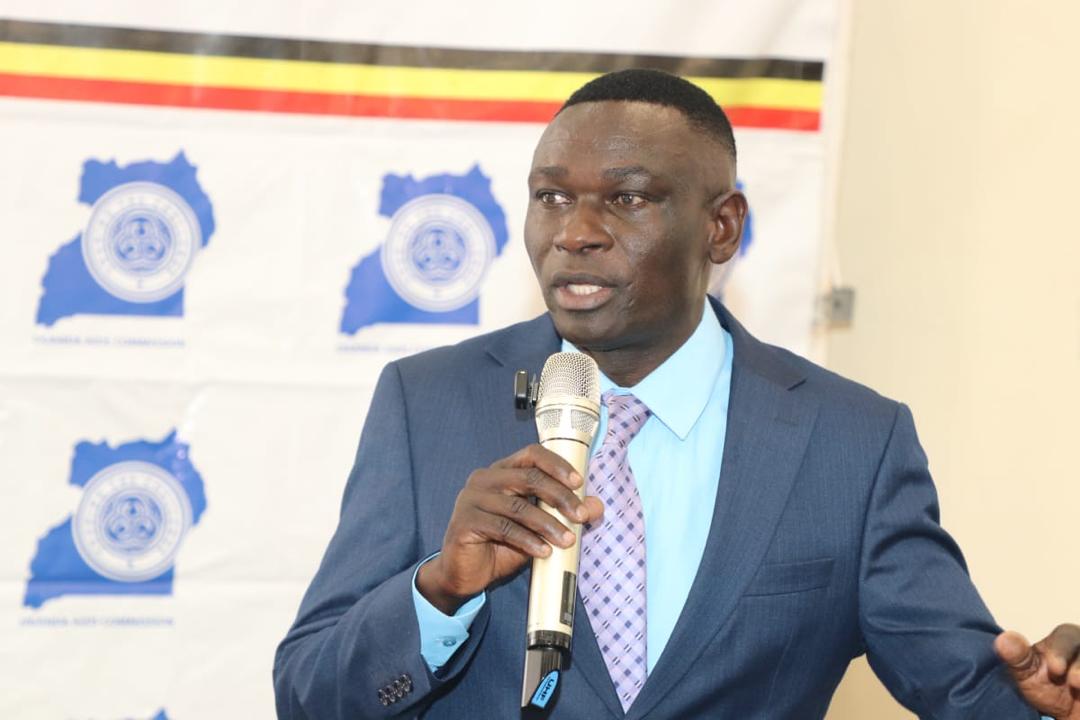
The concerns drew the attention of the Minister of State for Local Government, Barugahara Balaam Ateenyi, who announced plans to conduct a public baraza in Lamwo to assess service delivery and hear directly from residents.
“The people of Uganda deserve efficient, responsive and accountable public services,” the minister said while responding to the concerns.
He emphasised that government offices are expected to operate fully during official working hours and warned that absenteeism and neglect of duty undermine public trust in government institutions.
The planned public dialogue is expected to provide residents with an opportunity to share their experiences and contribute to efforts to improve accountability.
More than empty offices
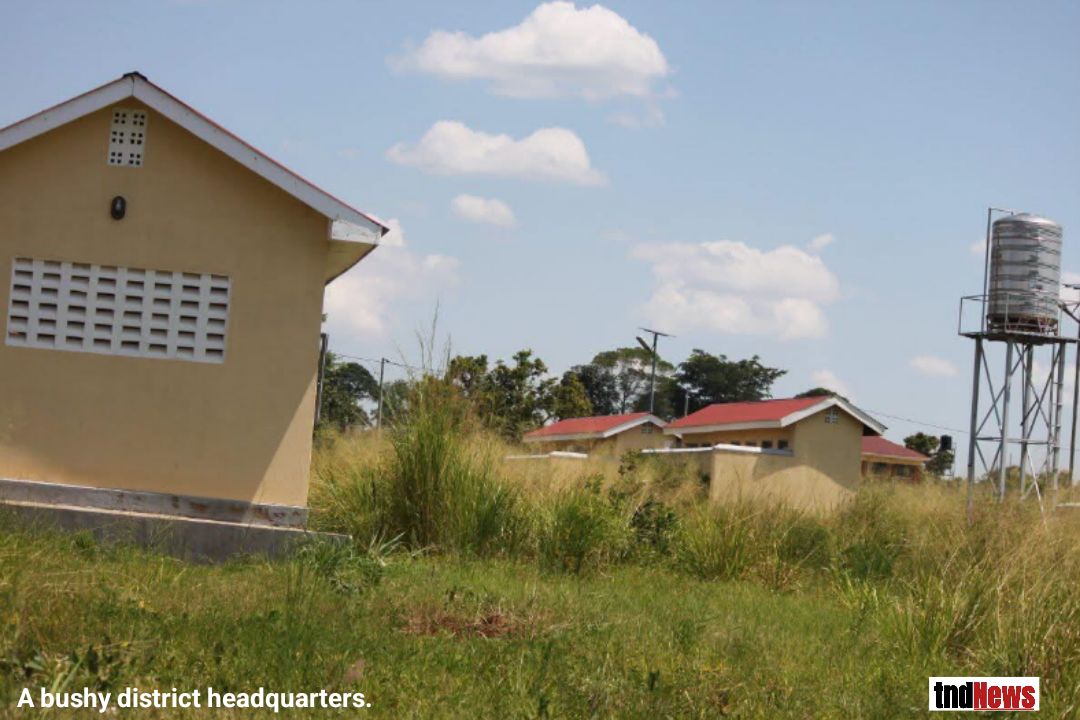
During a recent inspection of the district headquarters, Dr Mary Grace Akiror, Deputy Head of the RDC Secretariat and Anti-Corruption Unit in the Office of the President, expressed concern about the facility’s physical condition.
Parts of the compound had become overgrown with thick vegetation, creating an impression of neglect. Dr Akiror warned that poorly maintained public facilities not only present health and safety risks but also diminish public confidence in government institutions.
“When government facilities appear abandoned, citizens begin to lose faith in the very institutions established to serve them,” she noted.
She called for regular maintenance of public infrastructure, arguing that the appearance and functionality of public offices are important indicators of institutional effectiveness.
The commuting dilemma
Beneath the public criticism lies a more complex reality. Many civil servants posted to Lamwo reside in neighbouring districts, particularly Kitgum, located approximately 40 kilometres away. Every morning, dozens travel to Lamwo and return in the evening.
District officials acknowledge that the commuting culture has affected efficiency. Deputy Resident District Commissioner Vincent Mugenyi has previously described absenteeism, late reporting and early departures as significant barriers to effective service delivery.
“You cannot expect quality service delivery from officers who spend a considerable part of their day travelling,” he observed during a stakeholders’ engagement on governance and accountability.
Residents often report delays in accessing administrative services, health referrals, education support and documentation because key officers may be unavailable or arrive late. For communities located far from the district headquarters, such delays carry enormous consequences.
A farmer seeking an agricultural advisory service may lose an entire planting season. A parent pursuing school documentation for a child may have to postpone enrolment. Families seeking mediation in land disputes may watch tensions escalate as cases remain unresolved.
Why do staff not stay
District leaders argue that the problem cannot be understood solely through the lens of absenteeism.
Lamwo district chairperson Oyet Sisto Ocen says one of the biggest challenges is the shortage of decent accommodation and essential social amenities within the district.
“We recognise that commuting affects service delivery, but staff also face practical challenges,” he says. “Housing remains limited, and many officers struggle to access quality schools, healthcare and other social services for their families.”
However, district staff can stay within the district starting July 1, 2026.
Chief Administrative Officer Moses Chuna Kapolon agrees. According to Kapolon, strengthening accountability remains important, but enforcement alone cannot solve the problem.
“This is a systemic challenge linked to infrastructure deficits and limited investment in staff welfare,” he says.
District authorities are exploring long-term solutions, including encouraging private investment in affordable housing for civil servants and integrating staff accommodation into district development plans.
Emerging urban centres such as Padibe and Lamwo town councils are gradually expanding, offering some hope that more workers may eventually settle closer to their duty stations.
A national conversation
Lamwo’s experience mirrors challenges facing many newly created and rural districts across Uganda. The promise of decentralisation was simple: bring services closer to the people.
Over the years, decentralisation has increased citizen participation and expanded government presence in remote areas. Yet many districts continue to grapple with inadequate infrastructure, staffing gaps, poor supervision and limited resources.
Development experts argue that without sustained investment in public infrastructure, housing and human resource management, rural districts may struggle to fully realise the objectives of decentralisation.
The challenge is not merely administrative. It is deeply human. Every unattended office, every delayed signature and every absent officer represents a citizen whose hopes have been deferred.
For residents like Acen Santa, effective public service is not an abstract governance principle discussed in policy meetings. It is the difference between resolving a land dispute and losing ancestral property.
It is the difference between receiving timely assistance and returning home empty-handed.
As Uganda continues to strengthen local governance, the voices emerging from districts such as Lamwo serve as an important reminder that public institutions function best when they remain visible, accessible and accountable to the people they serve.
For many rural communities, the expectation is simple: when citizens walk through the gates of a public office, someone should be there to listen, respond and serve.
Discover more from tndNews, Uganda
Subscribe to get the latest posts sent to your email.