Uganda has unveiled one of its most ambitious national budgets yet, positioning the Financial Year 2026/27 as a turning point expected to usher the country into commercial oil production, accelerate industrialisation and expand household participation in the money economy.
Presenting the national budget at the Kololo Independence Grounds on Thursday, Finance Minister Henry Musasizi outlined a spending plan anchored in expanding production, increasing exports, strengthening infrastructure, and investing in human capital.
The budget arrives at a politically and economically significant moment as Uganda prepares to implement the Fourth National Development Plan (NDP IV), meets preparations for AFCON 2027 and advances toward graduation from Least Developed Country status.
The government adopted the theme: “Full Monetisation of Uganda’s Economy through Commercial Agriculture, Industrialisation, Expanding and Broadening Services, Digital Transformation and Market Access.”
The government says Uganda’s economy has remained resilient despite global economic uncertainty, geopolitical tensions and disruptions in international trade.
According to the budget speech, the economy is projected to grow by 6.4 per cent in 2025/26, up slightly from 6.3 per cent in 2024/25.
Uganda’s economy is expected to expand to approximately USD 69.3 billion (shs 250.4 trillion), while GDP per capita is projected at USD 1,420, reflecting gradual gains in national income.
The government projects stronger momentum in 2026/27, with economic growth expected to rise to 10.2 per cent, driven mainly by the anticipated commencement of oil production, increased industrial output and growth in services.
Domestic revenue collection is projected to increase from shs 35.7 trillion to shs 45.6 trillion, equivalent to approximately 15.9 per cent of GDP, supported by improved tax administration and a broader tax base.
The government further noted that domestic resources now finance more than 80 per cent of the discretionary budget, reducing dependence on external borrowing and donor funding.
However, public debt remains substantial.
The budget indicates that Uganda’s debt stock stood at USD 34.86 billion (shs 126.19 trillion) as of December 2025.
The government maintains that the debt remains sustainable because much of it is financed by productive infrastructure investments.
Agriculture and household wealth creation remain central
The government retained agriculture as the foundation of broad-based economic transformation.
The sector received shs 2.26 trillion, marking the largest allocation to agro-industrialisation in Uganda’s history. Funding will support irrigation, agricultural research, extension services, mechanisation, value addition and market access.
The budget also reaffirmed commitment to the Parish Development Model (PDM), the government’s flagship anti-poverty intervention.
According to the budget, the government has invested approximately shs 4.4 trillion over five years across 10,589 parishes, targeting the movement of households from subsistence production into commercial activity.
The government expects more than four million beneficiaries to have accessed the programme by the end of June.
Northern Uganda featured prominently among agricultural interventions, particularly through coffee expansion and support to household enterprises across several districts.
Oil, minerals and industrialisation are positioned as growth engines
The government’s economic strategy increasingly shifts from exporting raw materials toward value addition and industrial processing.
The budget allocated shs 473.51 billion toward mineral-based industrial development and oil and gas activities.
Priority interventions include operationalising the East African Crude Oil Pipeline (EACOP), expanding mineral exploration and advancing refinery development.
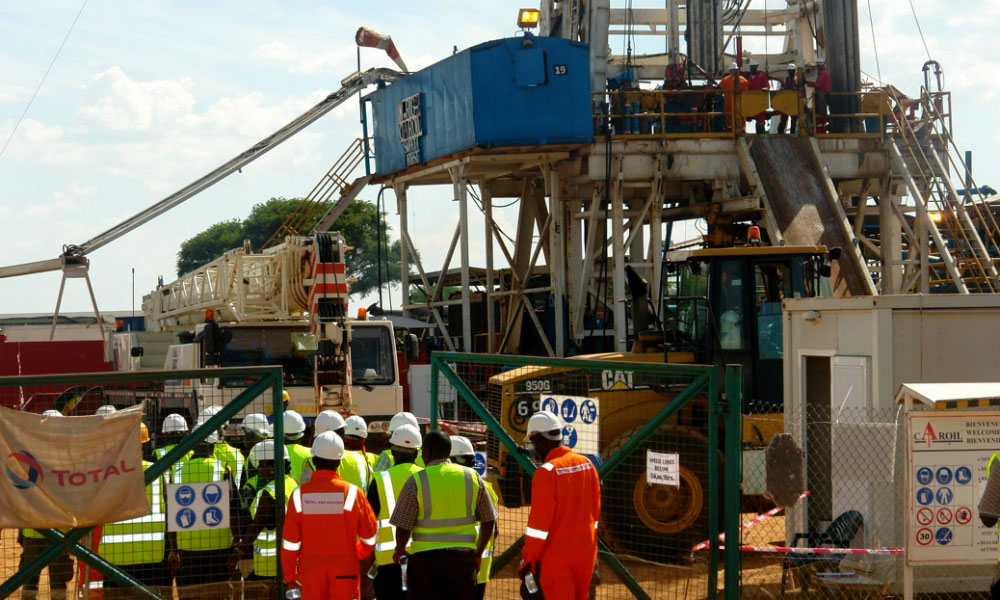
The government reported continued progress toward First Oil, noting that construction of EACOP and central processing facilities is nearing completion while drilling reached 199 wells, exceeding the minimum threshold required for production.
The government also highlighted the commissioning of a new clinker plant in Moroto, expected to reduce imports and create employment opportunities.
Science, technology and innovation take centre stage
The government identified science, technology and innovation as key drivers of Uganda’s economic transformation.
The 2026/27 budget allocates shs 1.14 trillion to science, technology, ICT and creative industries.
Priority areas include commercialisation of local innovations, expansion of digital infrastructure and increased investment in research.
More than 25,000 electric vehicles, including buses, motorcycles and bicycles, have been produced locally, with up to 40 per cent local content.
Uganda also expanded digital connectivity, with national fibre infrastructure increasing to approximately 62,941 kilometres.
Internet prices reportedly declined from USD 70 to USD 35 per Mbps, while mobile money transactions increased by 29 per cent to shs 392.7 trillion.
Infrastructure spending remains aggressive
Transport infrastructure remains among the government’s largest investment priorities.
A total of shs 8.79 trillion has been allocated to roads, railways, airports, ferries and transport connectivity.
The government announced the commencement of construction of the 273-kilometre Standard Gauge Railway from Malaba to Kampala, expected to reduce transport costs and improve cargo movement.
Kabalega International Airport has reached operational readiness stages ahead of oil production and AFCON 2027 preparations.
The government also plans to expand Uganda Airlines through the acquisition of eight additional passenger aircraft.
Health and education receive major social investment
The government says economic transformation must translate into improved living standards.
The health sector received shs 5.23 trillion to support maternal health, immunisation, medicines and specialised healthcare services.
Achievements highlighted include equipping 17 regional referral hospitals and 25 general hospitals with neonatal intensive care units, expansion of cancer treatment services and progress on specialised hospitals.
Education received shs 6.66 trillion, with emphasis on teacher welfare, STEM education and completion of sports infrastructure ahead of AFCON 2027.
The government further allocated Shs 568.65 billion for salary enhancement of primary and arts teachers.
Overall, the government committed shs 13.56 trillion directly to health, education, water and social protection programmes.
Climate and environmental protection gain more attention
The budget recognised climate change and environmental degradation as growing threats to productivity and livelihoods.
The government allocated shs 494.08 billion for environmental protection and climate adaptation interventions, including wetland restoration, forest conservation and early warning systems.
An additional shs 361.88 billion was allocated to strengthen disaster preparedness and emergency response.
The test ahead
The financial year 2026/27 budget projects optimism built around oil production, industrial growth and increased domestic investment.
However, beyond macroeconomic targets and large spending commitments, the real test will be whether ordinary Ugandans experience lower unemployment, stronger household incomes, improved public services and meaningful opportunities across both rural and urban communities.
Discover more from tndNews, Uganda
Subscribe to get the latest posts sent to your email.