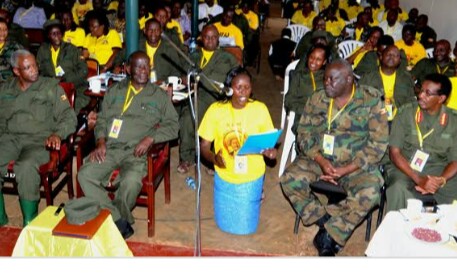
In district council chambers across Uganda; from Gulu to Mbale, Mbarara to Nakasongola, a familiar political drama unfolded. Newly elected local leaders stood before clerks, magistrates, and district officials to take their oath of office.
Some recited the words fluently. Others stumbled through the legal English, mispronouncing phrases and pausing uncertainly between clauses drafted in the language of bureaucrats and lawyers.
The reaction was often immediate: laughter from observers, ridicule on radio talk shows, and outrage from sections of the political elite. Commentators lament the “declining quality” of leadership. Critics accuse voters of electing “illiterate” leaders.
Social media filled with clips mocking councillors struggling to pronounce legal terminology. Yet beneath the comedy lies a far more serious national contradiction.
Uganda’s political system increasingly permits leaders with minimal formal education to contest for office, while simultaneously expecting them to operate within governance structures built almost entirely around complex English documentation.
Procurement laws, audit reports, financial regulations, budget frameworks, and district ordinances are all drafted in technical language that many rural leaders cannot comfortably interpret. The irony is difficult to ignore.
Government policies removed or relaxed several academic barriers for local political participation in the name of inclusivity and democracy. Political leaders celebrated this as empowering ordinary citizens and grassroots representation.
However, the same system now appears shocked that some elected representatives cannot navigate documents written in highly technical legal English.
One cannot reasonably invite every citizen into governance while designing governance itself in a language inaccessible to many participants.
The issue therefore goes beyond pronunciation during swearing-in ceremonies. It raises deeper questions about how Uganda understands democracy, participation, and leadership competence.
In many rural districts, local councillors emerge directly from communities shaped by poverty, interrupted schooling, informal labour, and limited educational opportunities.
A boda boda rider, market vendor, farmer, or fisherman may possess deep practical understanding of local problems — broken roads, absent health workers, collapsing schools, corruption in service delivery, and chronic water shortages. Such leaders often understand community suffering far more intimately than polished technocrats operating from Kampala offices.
However, once elected, these same leaders are handed procurement manuals, audit reports, and budget documents written in language that would challenge even university graduates.
They are expected to debate contracts, monitor expenditures, and oversee accountability systems they can barely interpret independently. This creates a dangerous governance gap.
Those who cannot fully read the system become dependent on those who can. Technical officers, clerks, consultants, and politically connected elites become the interpreters of power. In practice, this weakens oversight and creates fertile ground for manipulation, corruption, and elite capture of local government resources.
Ironically, Uganda’s major corruption scandals have rarely been engineered by people unable to speak fluent English. The theft of public funds, manipulation of procurement systems, and abuse of accountability structures are often executed by highly educated individuals who understand policy documents perfectly well. Fluency in English has never been equivalent to integrity.
Indeed, one of the most painful realities in Uganda’s governance history is that some of the country’s most sophisticated corruption schemes were designed in impeccable grammar, documented in polished reports, and defended in flawless legal language. This is why mocking poorly educated councillors misses the larger point.
The real failure lies not in their accents or vocabulary, but in a governance system that confuses language proficiency with leadership capacity while simultaneously refusing to invest meaningfully in civic and adult education.
If Uganda genuinely believes in grassroots democracy, then governance must become linguistically accessible. Policies, district budgets, procurement guidelines, and citizen accountability tools should be translated into major local languages including Luganda, Luo, Runyankole, Ateso, Lusoga, and others widely spoken across the country. District councils should not function as exclusive clubs for those fluent in bureaucratic English.
Equally important, political inclusion must be matched with serious investment in leadership training and adult literacy programmes. Electing ordinary citizens into office without equipping them to understand the systems they supervise merely produces symbolic participation rather than effective representation.
The country must also confront an uncomfortable political truth: lowering educational qualifications for political office may expand participation, but it also creates vulnerabilities within governance structures if not accompanied by institutional support.
Uganda cannot continue to demand sophisticated policy interpretation from leaders it deliberately recruits from educationally disadvantaged backgrounds while offering little preparation afterward.
The result is predictable. Every election cycle produces the same pattern: leaders sworn into office amid laughter over pronunciation mistakes, followed by years of weak accountability, confusion over procedures, and growing public frustration about poor service delivery.
Meanwhile, roads deteriorate, classrooms remain overcrowded, health centres lack medicine, and public resources quietly disappear through systems understood only by a small technical elite.
Ultimately, the challenge facing Uganda is not whether local councillors can perfectly pronounce legal English during swearing-in ceremonies. The real challenge is whether governance structures are designed to genuinely empower citizens or merely to create the appearance of participation while real control remains elsewhere.
A councillor may struggle to recite an oath in English yet still clearly understand that a collapsed bridge, an empty health centre, or an impassable road represents government failure.
And perhaps that practical understanding matters far more than polished pronunciation ever will.
The writer, Moses Wawah Onapa, is a senior educationist and a social commentator | Moses4christ2012@gmail.com
Discover more from tndNews, Uganda
Subscribe to get the latest posts sent to your email.