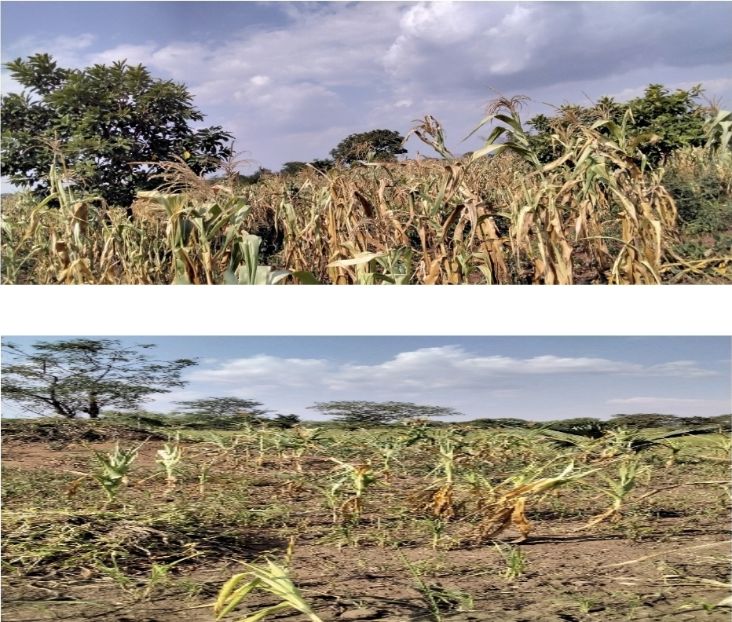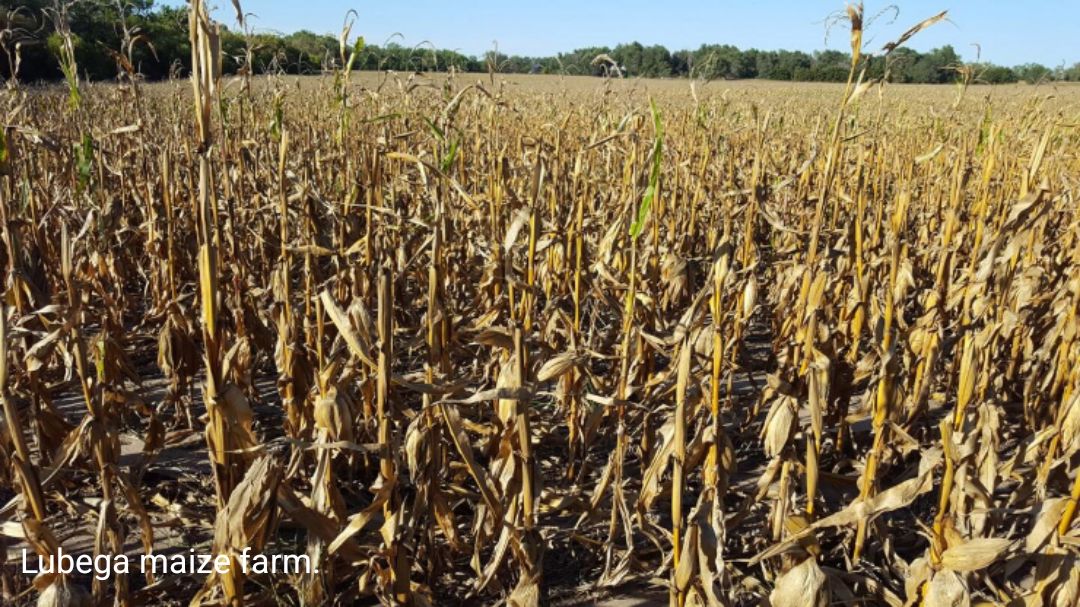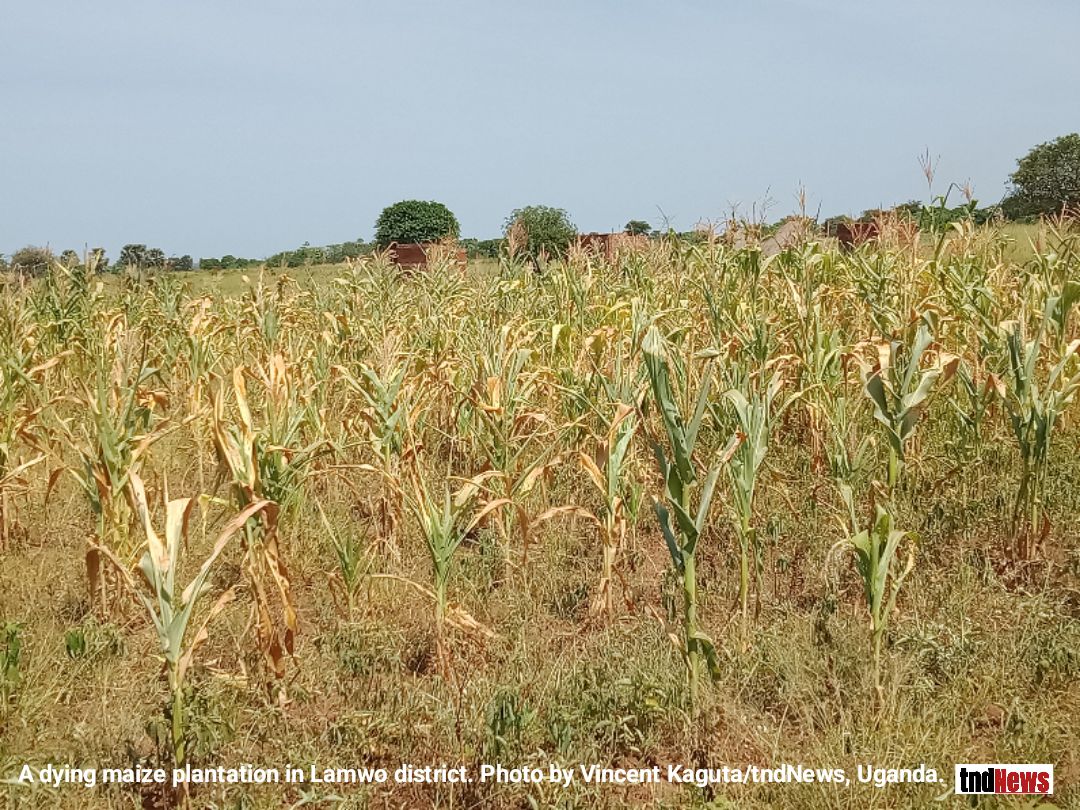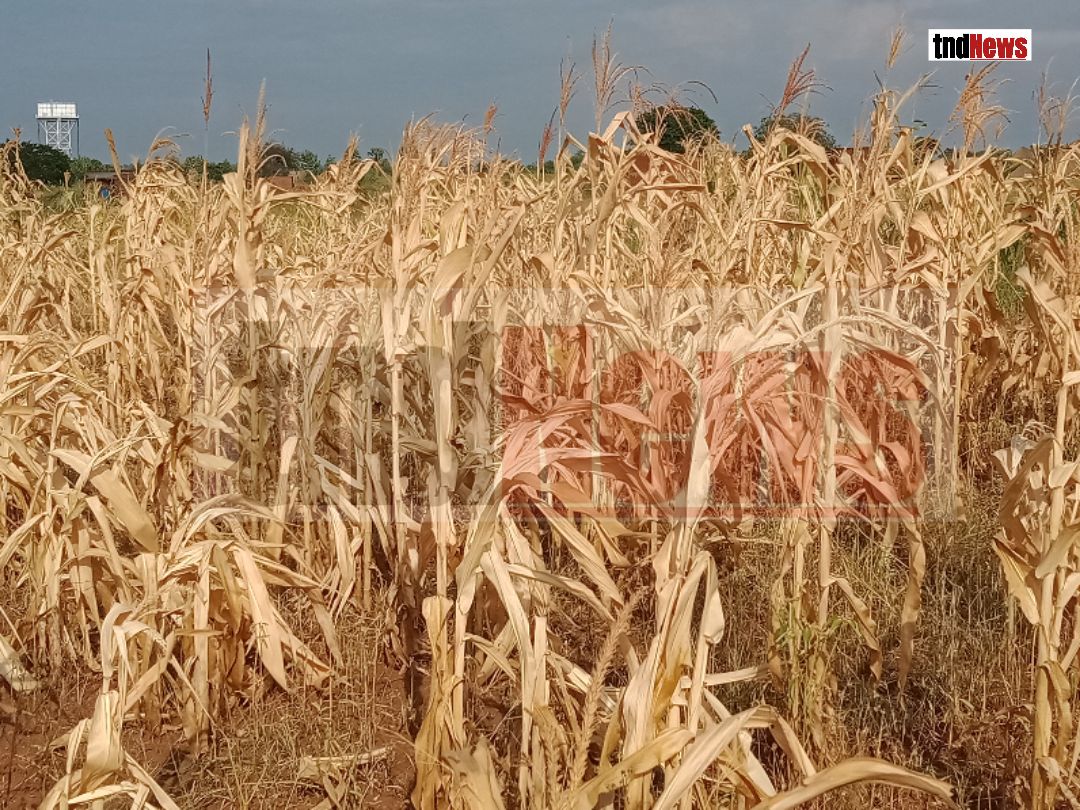
Kitgum | Anxiety is mounting among farmers in Kitgum district as a prolonged dry spell continues to devastate maize gardens, raising fears that many borrowers may struggle to repay agricultural loans obtained at the start of the planting season.
For more than a month, several parts of the district have received little or no rainfall, leaving maize crops withering under intense heat.
The worsening conditions have alarmed farming households that invested heavily in crop production, many using loans from financial institutions with hopes of securing good harvests.
With crops now drying up in the fields, many farmers fear they could lose both their expected harvests and their ability to meet loan repayment obligations.
Okello Martin, a resident of Labongo Akwang sub-county, said his family is increasingly worried after his brother, who borrowed money to invest in maize farming, watched much of his crop dry up.
“My brother secured a bank loan to cultivate more than five acres of maize this season. He was confident because previous seasons had been good, but the prolonged dry spell has destroyed nearly half of the crop,” Okello said.
“As a family, we are worried because if the harvest fails completely, repaying the loan will become very difficult. We are praying for rain and also seeking advice on whether the crop can still be saved,” he added.
Similarly, Lakica Janet, a resident of Mucwini sub-county, said her household is facing uncertainty after her husband borrowed money from a SACCO to finance maize production.
“My husband took out a loan at the beginning of the season to buy seeds and hire labour because we expected good rains. But now most of our maize has dried up. We do not know where we will get money to repay the loan if the rains do not come soon,” she said.
Lakica noted that the family had also hoped to use part of the harvest to pay school fees and meet other household needs. “We depended on this garden for everything. If we lose it, our children may not return to school next term because we have no other source of income,” she added.
Speaking on the matter, JB Akana, a staff member at Pearl Bank Kitgum, acknowledged the challenges facing farmers but emphasized that loan obligations remain in force despite the current hardships.
He advised farmers affected by the drought to immediately notify their banks and follow the established procedures for assessing crop losses and accessing possible insurance support.
According to Akana, affected farmers should first obtain an assessment report from the District Agricultural Officer indicating the extent of crop damage.
The report should then be submitted to the lending institution, which will coordinate with agricultural insurance providers to verify the losses.
“Agricultural insurance mechanisms are intended to cushion farmers against unforeseen calamities such as prolonged drought, excessive sunshine, floods, and destruction of crops by wild animals,” Akana explained.
He further cautioned farmers against harvesting or removing damaged crops before assessment teams visit their farms.
“Once a farmer reports the loss, assessment teams must first verify the extent of the damage. If crops are removed before inspection, it becomes difficult to determine the actual loss, which may affect compensation,” he said.
Akana noted that drought is not the only threat facing agricultural borrowers. Farmers living near wildlife conservation areas, particularly communities bordering Kidepo Valley National Park, frequently suffer crop destruction by wild animals, further affecting productivity and loan repayment capacity.
He encouraged farmers to fully understand the terms and conditions attached to agricultural loans, especially insurance provisions, before borrowing.
As dry conditions persist, many farmers in Kitgum are anxiously awaiting rainfall in the hope that some of their crops can still be salvaged.
Others are increasingly turning to agricultural and financial experts for guidance on how to navigate the growing crisis.
The situation underscores the vulnerability of smallholder farmers to climate-related shocks and highlights the urgent need to strengthen climate-resilient farming practices, expand irrigation, and increase awareness about agricultural insurance in rural communities.
Discover more from tndNews, Uganda
Subscribe to get the latest posts sent to your email.