Soroti, Teso | The Forum for Democratic Change (FDC) was not just a party in Teso but a movement. The Forum was a symbol of resistance, protest, and defiance against the ruling National Resistance Movement (NRM) for more than one decade.
From Soroti to Kumi, Bukedea to Ngora, opposition candidates comfortably won elections, often by wide margins. During that period, Teso became one of the most reliable opposition strongholds in the country.
However, after the 2026 parliamentary elections, that era appears to have come to an end.
Following the January 15 polls, the Teso sub-region delivered a massive vote to the NRM, stunning political observers and marking one of the most significant regional realignments in Uganda’s contemporary politics.
“Constituencies once considered untouchable by the ruling party fell decisively into NRM hands, while long-standing opposition heavyweights suffered humiliating defeats,” Teso News Network, a digital news platform reports.
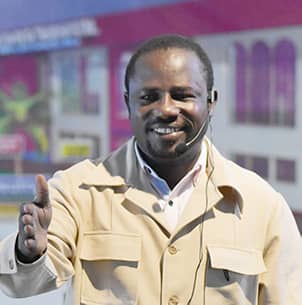
At the centre of this political earthquake stands Simon Peter Opolot Okwalinga, the re-elected Member of Parliament for Kanyum County. Revered by his supporters as “The Guardian” and feared by his rivals as a master political tactician, Opolot has been widely credited with weakening, dismantling, and ultimately collapsing the opposition’s political machinery in Teso.
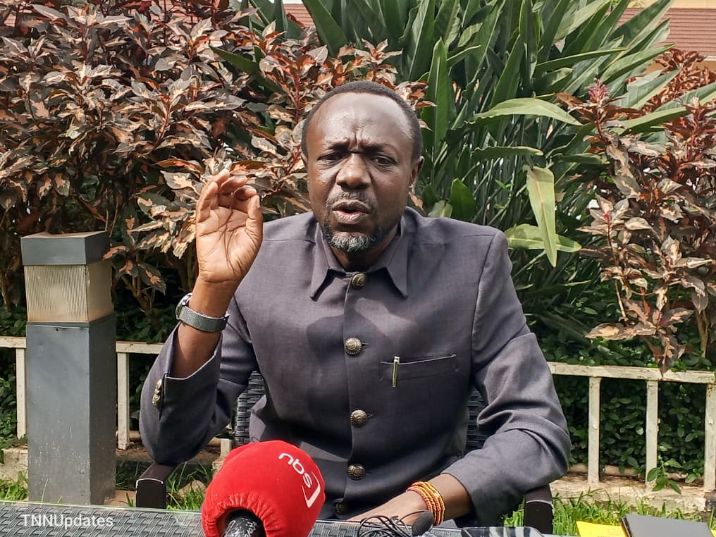
Speaking exclusively to Teso News Network recently, Opolot shared key issues and why the opposition lost in the sub-region.
To understand the scale of FDC’s loss, one must first appreciate how deeply rooted opposition politics were in Teso, he says. “For years, opposition leaders successfully mobilised voters by tapping into historical grievances: cattle rustling, insecurity, poverty, unemployment, and the scars left by insurgencies such as the Uganda People’s Army (UPA).
Opolot reveals that opposition politics in Teso gradually stopped being about solutions and became about survival through fear and misinformation.
“For a very long time, the opposition in Teso thrived on propaganda,” Opolot explains. “They rode on lies. The biggest one was that the government wanted to grab people’s land.”
He singles out FDC party President Patrick Oboi Amuriat, noting that land-related fears became the backbone of FDC mobilisation for over 15 years.
“For 15 years, he relied on that lie. But lies have a lifespan. They move fast, yes, but eventually truth catches up and dismantles them completely.”
“The land is still there. Nobody grabbed it. People started asking themselves: if the government wanted our land, why hasn’t it taken it after all these years?”
On the Kanyum battle, he said the collapse of FDC’s influence was most dramatically illustrated in Kanyum County, a constituency that became a battleground not just for votes, but for political relevance.
According to the official Return Form for Transmission of Results (Form RF), released under Section 77(1) of the Parliamentary Elections Act, Cap. 177, Opolot-Okwalinga secured an emphatic victory with 11,558 votes, far ahead of all competitors.
The Returning Officer for Kumi Electoral District, Okello Geoffrey Jensen, declared the results after tallying votes from all polling stations, officially confirming Opolot as the duly elected Member of Parliament for Kanyum County.
In a result that shocked opposition supporters, FDC president Patrick Oboi Amuriat managed only 3,441 votes, finishing a distant fourth. His performance was eclipsed not only by the NRM candidate but also by two strong independents — Orena Vincent, who polled 6,018 votes, and Kedi Saul Patrick, who garnered 4,608 votes.
Other contenders included Okanya John Kokas (Independent) with 1,697 votes, Aduba Joel (Independent) with 441 votes, Akabwai James (NUP) with 190 votes, and Orion Osman (Independent) with 131 votes.
Political analysts say the results reflected a fragmented opposition, loss of trust in traditional opposition leadership, and a growing acceptance of NRM’s development-oriented message.
The philosophy of the guardian
Central to Opolot’s leadership style is what he calls the “philosophy of the guardian.” Drawing from biblical imagery, he frames leadership as responsibility, protection, and service.
“When Adam was created, he was placed in the Garden of Eden as a guardian,” Opolot explains. “A guardian protects, provides, and puts the people at the center.”
This philosophy, he says, is what differentiated the new NRM leadership in Teso from the old opposition establishment.
“How do you gain trust?” he asks. “You make a promise and fulfill it. Make another and fulfill it again. Eventually, people trust you.”
Read the full story here.
Discover more from tndNews, Uganda
Subscribe to get the latest posts sent to your email.