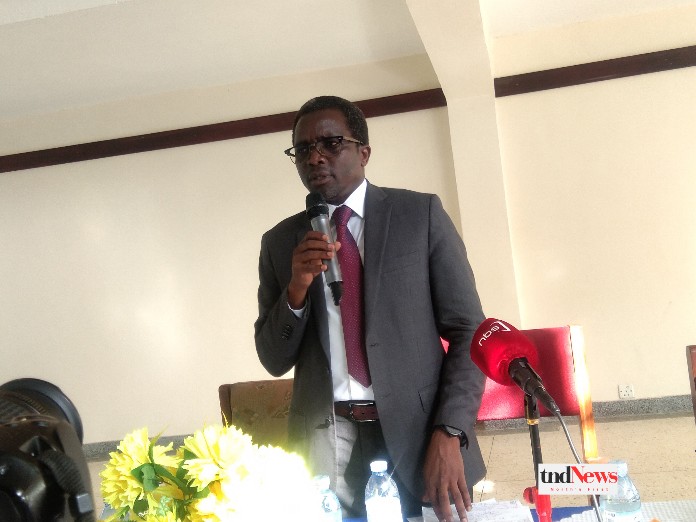
The state minister for Northern Uganda Dr. Kenneth Omona has rallied leaders in the Acholi sub-region to mobilize communities and prioritize production as a strategy to eradicate poverty.
Northern Uganda, particularly the Acholi sub-region, has been ranked by UBOS as the poorest in the country, with a poverty rate of 67%. This is attributed largely to the decades-long war that devastated the region. The Karamoja sub-region follows closely behind in poverty levels.
According to the minister, the Acholi sub-region is rich in natural resources, including fertile land, forests, mountains, and potential for tourism.
However, these resources have been underutilized. Many residents opt to rent out their land at low prices to Balalo herdsmen, a practice that has contributed to persistent poverty in the area.
Currently, Northern Uganda, especially Acholi land, faces additional challenges, including raids by Karamojong cattle rustlers, land conflicts with Balalo, and widespread commercial charcoal burning.
These issues have severely impacted community livelihoods and led to increased regional temperatures and environmental degradation.
The minister advised locals to stop selling or leasing land cheaply and instead invest in livestock farming, which he described as a “walking investment.”
He emphasized that the Acholi, Lango, and Teso sub-regions were historically known for their large cattle populations during the 1950s to 1990s, and could revive that legacy for economic empowerment.
In response, several local leaders welcomed the minister’s message, acknowledging the need to shift focus from land leasing to sustainable production.
They agreed that the region’s natural resources offer untapped opportunities that could transform local livelihoods if properly utilized.

Orach Emmanuel, a district chairperson of Nwoya, said, “The time has come for the Acholi community to rethink our economic choices. We cannot continue leasing fertile land for short-term gains. Our people must embrace agriculture and livestock farming as reliable income sources.”
Christine Aciro, a community leader from Kitgum, emphasized the importance of government support in realizing this vision.
“The minister’s advice is timely, but we need access to agricultural inputs, livestock, and technical training if we are to move forward as a region.”
Michael Lakony, the Amuru district chairperson echoed the need for stronger regulation of land leasing to Balalo and called on the government to implement policies that protect communal resources and support local initiatives aimed at production and self-reliance.
Opio Leonard Ojok, the Agago district chairperson suggested forming community-based livestock cooperatives that can pool resources and share knowledge, saying that these cooperatives would help farmers access quality breeds, veterinary services, and markets.
“We called for the revival and strengthening of agricultural extension services to provide technical support, training, and mentorship in modern farming practices and livestock management,” Opio added
He urged the government to implement a livestock restocking initiative specifically targeting vulnerable households that lost their animals during the insurgency. This would empower families to rebuild and sustain their livelihoods.
Odonga Otto, former member of Parliament for Aruu North County in Pader district, advocated for bylaws and district ordinances to regulate land transactions with Balalo and other non-residents.
“This would help prevent exploitation and encourage locals to use their land productively,” said Odonga.
Odonga, however, emphasized the need to invest in agro-processing facilities to add value to local produce. This would create jobs, reduce post-harvest losses, and increase incomes.
Okello Denis, a local council one chairperson of Kal village, said lack of roads, storage facilities, and markets was identified as a major barrier to production.
He also requested targeted infrastructure development to ease the transportation of goods and services.
Jimmy Ssegawa Ebil, the Kitgum Resident District Commissioner, stressed the importance of community education campaigns to change the mindset of dependency. He called on cultural, religious, and political figures to help champion self-reliance and productivity.
The leaders reaffirmed their commitment to working with the central government to implement these strategies, noting that sustainable development in Northern Uganda requires a united front among all stakeholders.
Acholi and Karamoja sub-regions have a long history of conflict, underdevelopment, and marginalization.
Acholi sub-region was severely affected by the Lord’s Resistance Army (LRA) insurgency from the late 1980s to the mid-2000s, which led to massive displacement, destruction of infrastructure, and disruption of agriculture and livelihoods.
While in Karamoja sub-region, the area is known for semi-nomadic pastoralism, Karamoja has faced chronic poverty, food insecurity, and sporadic insecurity due to cattle rustling and marginal government investment.
As a result, both sub-regions are among the poorest in Uganda, with Acholi’s poverty rate at 67% far above the national average.
Discover more from tndNews, Uganda
Subscribe to get the latest posts sent to your email.