By Vincent Kaguta
Despite their selfless dedication to providing essential health services to rural communities, the Village Health Teams (VHTs) in Agago West constituency, Agago district, are deeply concerned that the government has failed to recognize them as valuable members of society.
The voluntary efforts of the VHTs have bridged the gap where government health services are scarce, offering hope and relief to those in need.
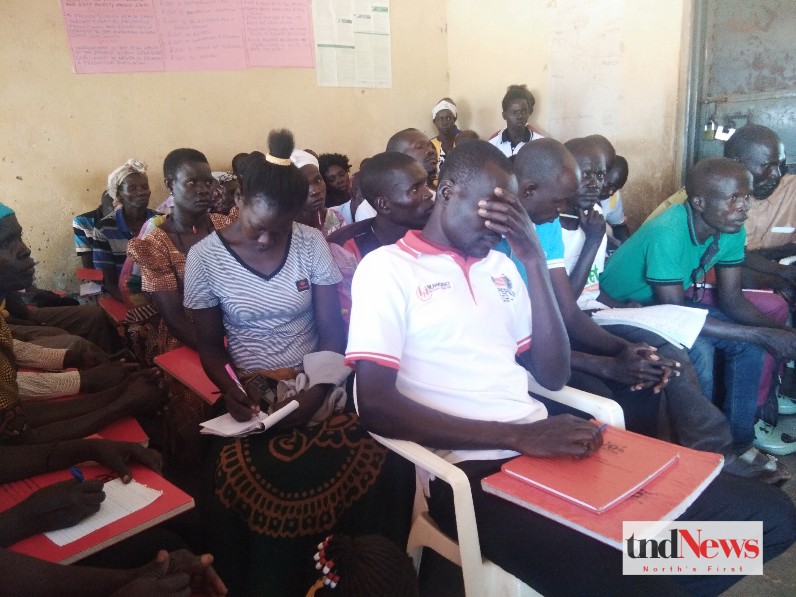
Speaking during a quarterly meeting recently, Labanya Kenneth, a VHT attached to Lamiyo Health Centre III, said their tireless commitment to improving the well-being of the rural community by providing primary health care, promoting health education, supporting vulnerable people, and connecting individuals to vital services is truly inspiring.
However, the government has failed to acknowledge their efforts, he said.
Ogwal Benson, a VHT at Omot Health Centre III in Omot sub-county, stated that, despite their contributions to saving countless lives, alleviating suffering, and strengthening community resilience, VHTs face numerous challenges that the government must address.
Ogwal cited lack of motivation, particularly in terms of facilitation, as a major problem. Despite being promised at least shs150,000 per month, VHTs in Agago district struggle to support their families, including paying school fees for their children and meeting other basic needs.
“VHTs are treated like scarecrows meant to keep birds away from crops, yet we work in the community much like the Local Council One chairpersons, who receive shs120,000 per month,” Ogwal said.
Amono Juliana, a VHT from Lamiyo village in Ojuu parish, Lamiyo sub- county, stated that aside from payment issues, VHTs in the district face other challenges, such as a lack of transportation, including bicycles and motorcycles for easy mobility while treating patients, and the need for smartphones to facilitate data collection and reporting.
Kimong Justine, another VHT from Lunyirinyiri village, attached to Lunyirinyiri Health Centre II in Lira Palwo sub-county, said that since joining the VHT in 2014, he has not attended any refresher courses, despite significant updates to monitoring protocols.

Alanyo Catherine, a VHT attached to Lunyirinyiri Health Centre II in Lira Palwo sub-county, said that as a Health Centre I, they should be provided with uniforms and protective gear, such as overalls, gloves, and bags.
She also emphasized the importance of timely delivery of drugs to facilities, noting that for the past seven months, VHTs attached to facilities have not received any medicines.
Onekgiu Daniel, Head of Peer Arum sub-county, Agago, said that implementing health promotion and basic disease prevention measures at personal, family, and community levels could help improve the situation and make significant strides toward the Millennium Development Goals.
He urged the government to provide VHTs with necessary tools, such as bicycles, gumboots, overalls, and uniforms.
Omara Emmanuel, a Health Information Assistant in Lamiyo sub-county, pointed out that Uganda, like many African countries, suffers from a severe shortage of healthcare personnel who can oversee and guide basic health interventions.
He added that community participation and empowerment are strategies that enable communities to take responsibility for their health and well-being and actively participate in managing their local health services.
“It is true that VHTs play a crucial role in fostering community participation in health, linking communities to the formal health service delivery system, and bridging the current health human resource gap especially in rural or peripheral areas where most people live. Therefore, VHTs need support in terms of transportation and protective gear,” said Omara.
Okidi M. Vincent, a retired civil servant in Pader district, stated that health is recognized as one of the fundamental pillars of human and national development. This is consistent with Uganda’s development priorities and its commitment to achieving health-related Millennium Development Goals.
The establishment and utilization of VHTs demonstrate Uganda’s commitment to the aspirations and principles of Primary Health Care and Health Systems in Africa by fostering full community involvement in health care delivery in line with Uganda’s primary health care approach.
Discover more from tndNews, Uganda
Subscribe to get the latest posts sent to your email.