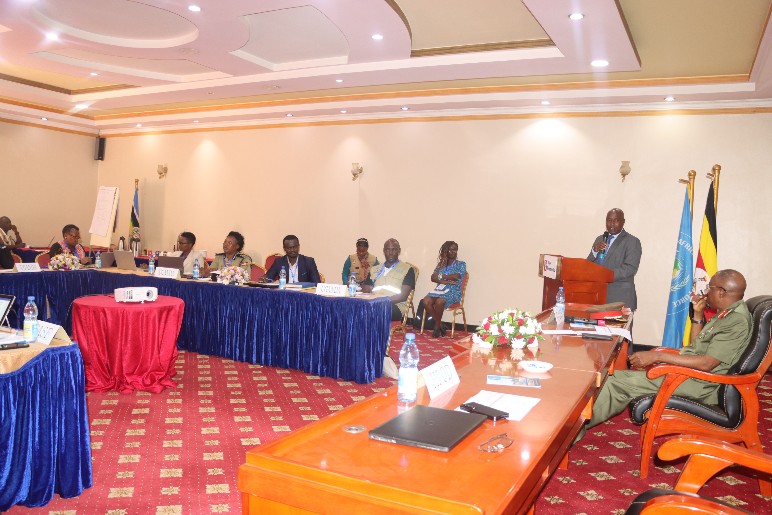
Kampala | The East African Standby Force (EASF) are convening in Uganda for a three-day conference with vital stakeholders from early warning agencies.
The conference’s aim is to enhance regional collaboration towards conflict prevention and resolution, boost situational awareness, and develop a coordinated response to emerging threats and crises, particularly within Uganda.
Taking place at Hotel African, Kampala, the meeting is a follow-up to a previous gathering held in Addis Ababa, Ethiopia.
In that Addis’ meeting, Uganda played a crucial role in establishing a collaborative framework among member states for effectively implementing early warning mechanisms.
The framework received endorsement from the region’s Policy Organs, which include the Chiefs of Defence Forces and the Ministers of Defence and Security.
At the event held at Hotel Africana, Brig Gen Richard Karemire, representing the Chief of Joint Staff, highlighted the meeting as a testament to the unified commitment of member states towards conflict prevention and fostering a culture of peacebuilding in the region.
“As you are aware, early warning systems in general aim to mitigate the risk produced by disasters. By providing advance notice, early warning systems enable individuals, communities, organisations, and States to take appropriate measures to minimise or deter dangers.
“I acknowledge the significant strides made by the EASF Department of Peace Operations in developing an integrated and functional EASF early warning response system and a collaboration framework between the early warning system and member states early warning system,” said Brig Gen Karemire.
He further emphasised the necessity of timely information sharing and the adoption of best practices in early warning systems to promote peace and reduce violence.
Brig Gen Karemire called for investment in advanced technologies to strengthen early warning capabilities, support secure information exchange, and enable rapid responses to challenges such as drought, crop failures, and famine, which can ignite conflicts.
He stressed that achieving sustainable peace in East Africa requires a collective commitment from all stakeholders and the empowerment of local communities where conflicts often arise.
A proactive approach is essential, drawing on diverse expertise and shared experiences to pre-emptively tackle challenges.
Brig Gen Domitien Kabisa, Head of Peace Support Operations at the EASF Secretariat in Nairobi, described the meeting as a pivotal step towards achieving a key goal for 2024: enhancing collaboration between the EASF early warning ststem and the systems of member states to bolster conflict prevention capabilities and enable timely responses to regional security issues.
Brig Gen Kabisa reiterated the importance of enhanced regional cooperation in improving the capacity to predict, prevent, and manage tensions and to avert violent conflicts in light of the region’s complex history of strife.
He also noted that strengthening collaboration between member states’ early warning systems would aid in identifying early indicators of violent conflict and ensure that appropriate interventions are made to mitigate the potential for such violence to escalate.
As a regional organisation, the EASF comprises ten member states: Burundi, Comoros, Djibouti, Ethiopia, Kenya, Seychelles, Rwanda, Somalia; Sudan, and Uganda.
Discover more from tndNews, Uganda
Subscribe to get the latest posts sent to your email.