Briefly: Collaborating to launch the country’s bold, new evidence-based climate resilient health system
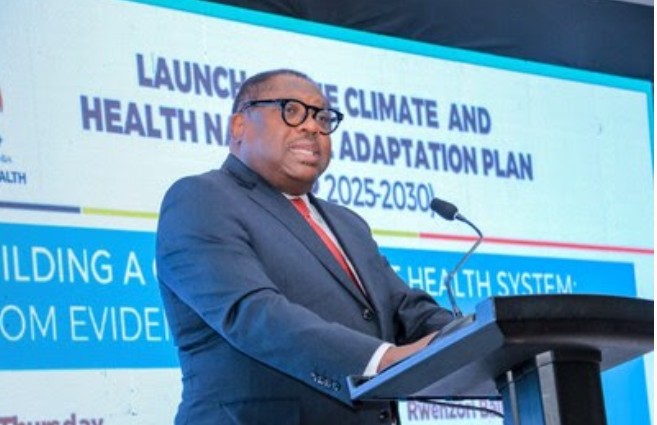
Kampala | Uganda’s Climate Change Health National Adaptation Plan (H-NAP) 2025-2030, which was launched on August 22, addresses the significant threat that climate change poses to Ugandan public health.
The Ministry of Health, with financial support from The Rockefeller Foundation and in close collaboration with the World Health Organisation (WHO), the Uganda Climate Change Department, the Ministry of Water and Environment, and other stakeholders, developed this plan to strengthen the health sector’s resilience to climate-related impacts.
Uganda is already experiencing severe climate change effects such as floods, droughts, and temperature changes, all of which contribute to health issues such as waterborne diseases, vector-borne diseases, malnutrition, and mental health problems.
This H-NAP was created to guide climate change adaptation efforts in the health sector, and it was informed by the Climate Change Vulnerability and Adaptation Assessment (VAA) carried out in 716 selected health facilities throughout Uganda.
The H-NAP outlines strategic interventions aligned with the WHO’s framework for building climate-resilient health systems. These interventions include establishing climate-smart governance structures, enhancing health workforce training, integrating climate information into health programs, and promoting innovative partnerships for resource mobilisation.
William Asiko, Vice President and head of the Rockefeller Foundation’s Africa Regional Office, said: “Climate change is now the gravest threat to the health and well-being of billions of African people. Initiatives like Uganda’s Health National Adaptation Plan show how African countries are meeting this moment by scaling the climate solutions we need and shining a beacon for the rest of the world.”
Background to climate change and health
Climate change is humanity’s most prominent health threat and contributes to environmental risks. Uganda is already experiencing the effects of climate change, characterised by floods and landslides with shorter or longer rains, harsher droughts, and warming up in different parts of the country.
Droughts affect the availability of safe and adequate water supply for domestic consumption, and floods contaminate water sources with disease-causing pollutants, which can result in water-related diseases such as typhoid and cholera.
Heavy rainfall results in the proliferation of stagnant water, increasing the breeding of vectors, such as mosquitoes, which raises the prevalence of vector-borne diseases, such as malaria.
The burden of emerging and re-emerging diseases, such as the Ebola outbreak, is attributed to the changes in temperature and precipitation patterns.
Climate change also impacts health infrastructure by destroying hospitals and health facilities and disrupting food production and distribution, leading to malnutrition as well as causing mental health effects among others.
Building a climate resilient health system through collaborative action
The H-NAP proposes a range of short-term and long-term interventions across ten components: climate-transformative leadership and governance, climate-smart health workforce, integrated risk monitoring, and sustainable financing among others.
Specific actions include developing guidelines for mainstreaming climate and health, training health workers, enhancing disease surveillance systems, and revising infrastructure standards for climate-proofing.
As the theme of the launch spells out, the success of the H-NAP relies on strong collaboration between government ministries, health agencies, civil society organisations, and the private sector, ensuring a coordinated and effective response to climate change.
About The Rockefeller Foundation
The Rockefeller Foundation is a pioneering philanthropy built on collaborative partnerships at the frontiers of science, technology, and innovation that enable individuals, families, and communities to flourish.
The Foundation make big bets to promote the well-being of humanity. Today, we are focused on advancing human opportunity and reversing the climate crisis by transforming systems in food, health, energy, and finance.
Published for PRNewswire on behalf of The Rockefeller Foundation.
Discover more from tndNews, Uganda
Subscribe to get the latest posts sent to your email.