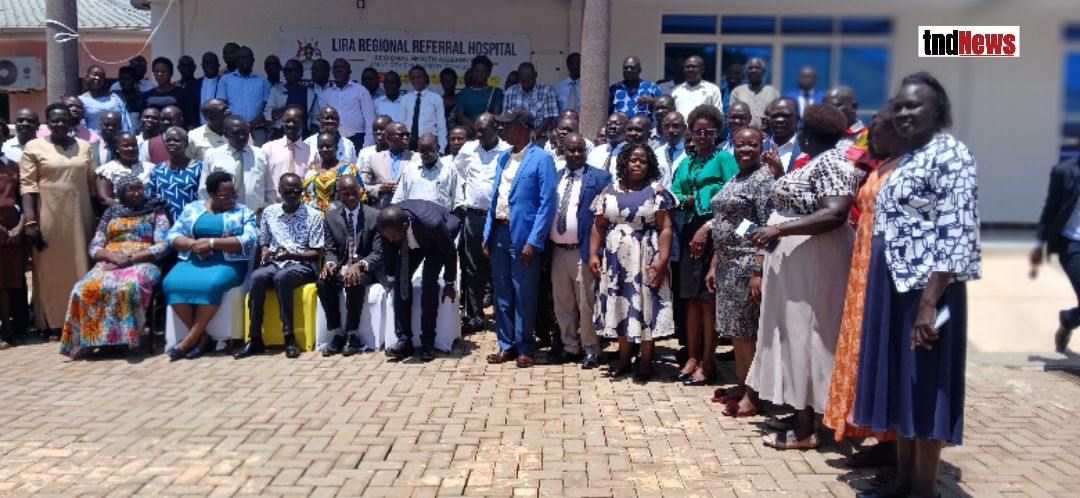
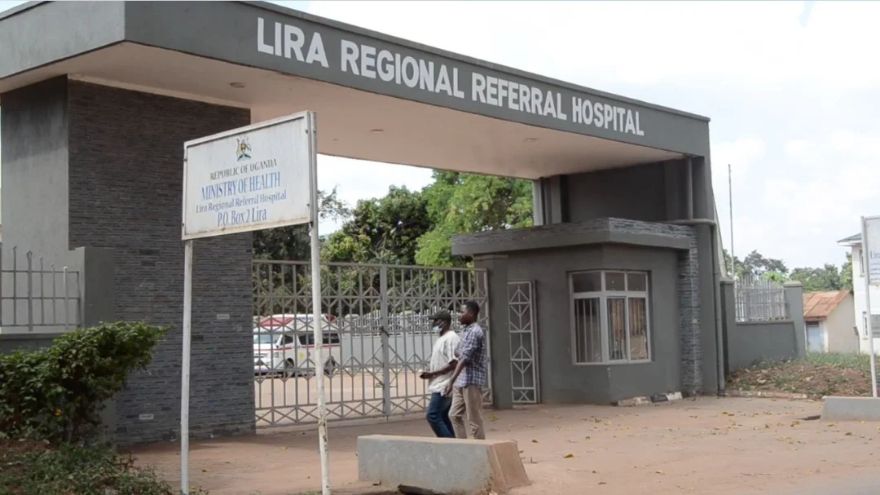
Lira | Day Two of the first Lango Regional Health Assembly is underway in Lira City, with hundreds of people from all of Lango’s districts attending.
Officials from the Ministry of Health as well as development partners are in attendance at the Assembly.
Dr. Jane Ruth Aceng Ocero, Minister of Health, officially opened the two-day event, themed “A Healthy Lango, Our Shared Role,” on Thursday.
Dr. Aceng, who also serves as the Lira City Woman MP, had earlier commissioned an ICU ambulance on Thursday to help with health referrals and emergencies in Lango.
The ambulance, one of five in the country, will be based at the Lira Regional Referral Hospital.

Dr. Aceng, who is familiar with the hospital because she previously worked there, thanked Lira RRH for organising the Assembly and other pre-assembly events such as the marathon run, radio talk shows with informative health-related talk shows, outreach programmes, and medical camps.
Also read: The components of an ICU ambulance for Lango Dr. Aceng commissioned
She stated, “I cannot thank the organisers enough for bringing together the different actors from the region to review our performance and agree on how best we can overcome the challenges we encounter.”
The Minister told the Assembly, “We have a collective responsibility to continuously work together to improve the health of our people.”
And I am happy to report that there is enough evidence that we are making great tangible progress, she added.
Dr. Aceng noted that the recently released results of the Uganda Demographic and Household Survey (UDHS) 2022 show a 50% improvement in maternal mortality ratio from 336 per 100,000 live births to 189 per 100,000.
“Tangible reductions in Neonatal, Infant and Child Mortality Rates were also registered.
“What is even more pleasing for this meeting is that for the first time since the inception of demographic and health surveys in Uganda, 35 years ago, the performance of Lango sub-region in the majority of the indicators was above national average.
“This is a result of concerted efforts by the Ministry of Health, the Local governments and the Health facilities supported by our partners and the population that such progress has been registered.”
The Lira City Woman MP emphasised that the ongoing Assembly provides us with the opportunity to critically assess the health sector’s performance, identify our achievements, and learn from the implementation of our regional goals, objectives, and targets.
“We must embrace innovations and critically look for practical solutions to our bottlenecks and dare to cross the frontiers of science and technology in order to strengthen our systems. We should endeavour to internally build local capacity, create and look for sustainable local solutions to spiral health service delivery.
“At policy level, we have deliberately invested in expansion of the health infrastructure and since I took office, I have passionately lobbied for every sub-county to have a fully functional HC III.”
Dr. Aceng had this to the people of Lango: “I promise the people of Lango that I and the NRM government with the able leadership of His excellency, the President of the Republic of Uganda, Yoweri K. Museveni will not rest until this is achieved.”
She added: “We have also become tactical in the way we manage the health facilities. We demand accountability and results in the form of outputs from our health workers.”
Health workers, she said, the government has now tagged their budgets to performance at health centre levels, adding, “We are working around the clock to see how this can be extended to General and Regional Referral Hospitals and I believe we should explore the feasibility of extending this approach to the allocation of medicines and other medical supplies.”
She stated that resources should follow results because it is a simple way to ensure accountability from our health workers and the entire health system.
In terms of operations, the Minister stated that they have increased the quality of care assessments at our facilities and have linked this to resource allocation results.
“I am happy to note that Local governments have also been very key in ensuring that basic services such as immunisation reach the population.
The use of Community Health Extension Workers (CHEWs) has been piloted in Lira City and Lira District to supervise Village Health Teams. The results were very promising, noted the Minister.
“We are now working around the clock to ensure that we quickly scale up the approach across all Districts and City Councils.
“But as we celebrate our achievements it is important to note that the country is still not on track to achieve Sustainable Development Goals and targets. We should take advantage of this important planning period when we are developing the National Development Plan IV to redirect and focus our interventions so that we can accelerate progress and ensure that we achieve the targets we set out to achieve by 2030.”
“It is imperative that we harness the synergies of multisectoral collaboration in order to address the social determinants of health.
She urged both the sub-region and the country to increase ownership, access, and use of community health, environmental health, and health promotion services.
She urged the Assembly to use the Parish Development Model approach, stating that it will allow us to rapidly expand access to services.
These services must not only be of high quality, but also comprehensive, addressing communicable and noncommunicable diseases, as well as maternal and child health at all levels.
“To achieve this, we must be more efficient in the management of the limited resources at our disposal. There should be zero tolerance to both corruption and wastage. We should not entertain incomplete infrastructure projects and now that we are rolling out Electronic Medical Records, hospitals should reduce the amount of paper use at least by 75%.”
According to Dr. Aceng, the Assembly is also an opportunity to highlight the key bottlenecks and challenges facing the Lango sub-region, as well as jointly propose solutions.

The key bottomlencks and challenges, she highlighted them to include:
- High perinatal mortality rate.
- High teenage pregnancy rate.
- Poor viral load HIV suppression in children and adolescents.
- Increase in NCD prevalence, and;
- Climate change.
Lira Regional Referral Hopsital, all the Local governments in the region, the country’s development partners, CSOs and the community, the Minister applauded for supporting the Ministry of Health in the execution of its constitutional mandate of ensuring a healthy population.
“It is now my pleasure to declare this Assembly officially open and wish you fruitful deliberations.”
Dr. Nathan Onyachi, Director of Lira Regional Referral Hospital, stated on Thursday that the Assembly will assist them in providing accountability for what they have been doing for the people of Lango.
“We will also share the performance of the hospital and the regional health service,” he stated.
Dr. Onyachi also noted that the Assembly will receive feedback and have talk back from the participants to identify problems together and find solutions together.

“We are also here to create partnerships, to create friends who are going to help us solve the problems that we have in the delivery of health services.”
Discover more from tndNews, Uganda
Subscribe to get the latest posts sent to your email.