Quick notes:
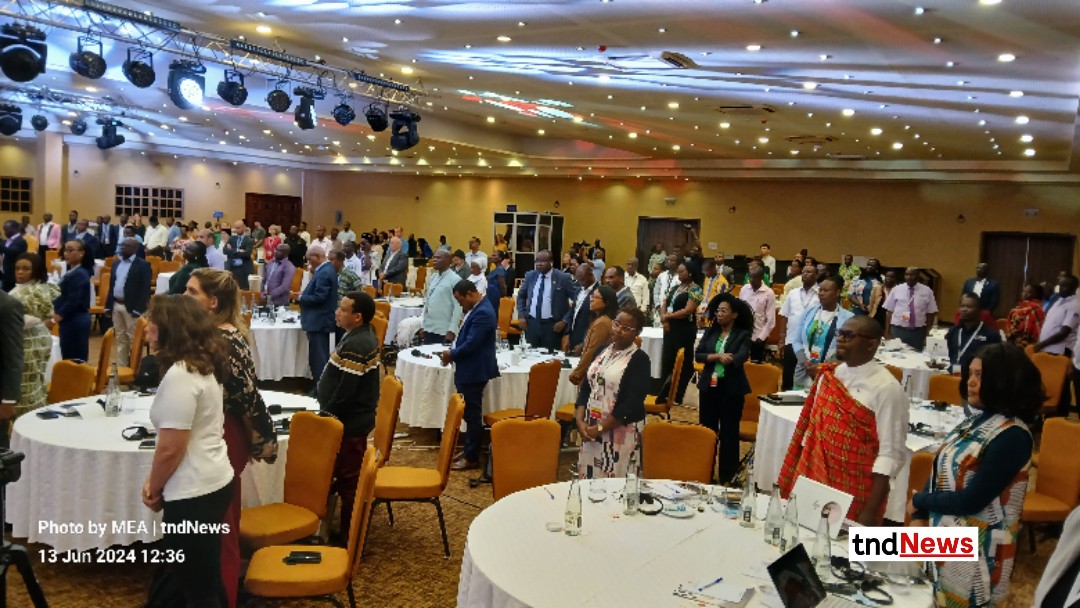
- The Learning Week, held at Speke Resort Munyonyo in Kampala, focused on promoting successful partnerships between government and civil society in land governance. It lasted one week.
- The event brought together delegates from over 35 countries who first had field trips to Butaleja and Dokolo districts to learn and share knowledge with local communities, local governments, and land sector stakeholders.
- On the closing day, delegates discussed collaborative climate smart land use planning, partnership successes and failures, validation of the Global Review Report, gender transformative approaches, and land data and accountability, among other topics.
- Local and international organising organisations include Land and Equity Movement in Uganda (LEMU), National Land Coalition of Uganda, International Land Coalition, Africa Afrique, CIFOR, World Agroforestry, LandCollaborative, Netherlands Enterprise Agency, and the Government of Uganda through the Ministry of Lands, Housing, and Urban Development.
On June 13, Uganda’s Prime Minister, Robinah Nabbanja, officially closed the week-long global land conference, calling on delegates to promote the importance of multi-stakeholder collaboration in advancing sustainable and equitable land tenure and governance.
Nabbanja also advocated for land rights documentation, faster land registrations, land market reforms, and a reduction in land-related corruption across countries.
The discussions would continue after she closed. Delegates were divided into groups and discussed a variety of topics to generate “key takeaways.” One finding from one of the groups was that people are at the centre of the planning processes, from land use to climate change.
One group focused on Sierra Leone, Burkina Faso, Madagascar, and Chad. Their key takeaway was that partnerships must be multisectoral and inclusive. They agreed that the latter should be involved throughout the process, from the start to the end of implementation and evaluation.
Other key takeaways included the importance of trust, maintaining clear roles and responsibilities among stakeholders, and expanding partnerships beyond civil society and governments. It needs to be inclusive and in a broader sense with traditional chiefs, private sector, among others taking a part.
In Colombia, for example, the majority of the land is owned by “a few privileged” versus the government and the indigenous community. Members of the communities, particularly those of African descent, are facing challenges. There is a financing challenge in Colombia, and alternative means, such as traditional funding sources, have been considered.
In Liberia, key takeaways included civil society’s involvement in all aspects of land tenure in the country, as well as civil society’s anticipation of the challenges Liberia has faced for years as a result of the war. They are currently embarking on a land tenure reform.
Also read: LEMU lauds the level of coordination and cooperation in Uganda’s land sector
In Tanzania, World Bank funds are only available to the State but it is difficult for organisations and civil society to access them, which has slowed programme implementation. Delegates cited a case study in Ngorongoro, where the government is evicting pastoralist communities from their ancestral home, where the government intends to invest.
In Ngorongoro, delegates saw a financing challenge and civil society’s inability to act, though collaboration and partnership have also helped them move forward as mediation continues. Delegates learned the best ways to finance land governance and rights in the face of ongoing challenges.
During their knowledge and experience sharing session, a different group of delegates also came to the consensus that countries and development partners should pay attention to the implementation of data subjects’ free-prior consent.
Also read: “Our Land, Our Future”: LEMU’s message for World Environment Day
This means that the people from whom data will be collected, the communities on which they will conduct research, and the people whose data will be used should all be informed. The delegates agreed that this process should come first, and that consent should be obtained.
 Delegates and organising committee members with the Prime Minister.
The above, according to delegates, fall under the categories of “who owns data,” “who has access to this data,” and “issues surrounding who has autonomy over the same data.” Another concern was addressing the challenge of frequently updating land data in respective countries.
Furthermore, ensuring the sustainability of multi-actor partnerships or platforms, and the discussions focused primarily on aspects of sustainability, such as the relevance of this process and how the partnership meets a mutual need and benefit for partners. For example, how can civil society implement something that the government simply cannot do due to technical or financial constraints.
Also read:LEMU’s land rights intervention has slowed related crimes in Dokolo
In order to keep members motivated, actors must prioritise aspects of inclusiveness and collectivity, as well as effective communication. Funding – where multi-stakeholder partnerships require flexible funding, funds must be available to multiple partnerships rather than just one.
Another takeaway was that better coordination is required, and national governments must support these processes. Delegates agree that having relevant government institutions on board is not always sufficient; the budget must also be available. Land stakeholders stated that we need a budget prioritised by governments in the countries where they work.
Dr. Theresa Auma, Executive Director of LEMU, moderated the session during which delegates shared their “key takeaways.” She reiterated Thursday that the keywords remain “partnerships.”
“So, the keyword is partnerships running out throughout the week – that is what brought us here and what we are taking away from here,” she said.
Discover more from tndNews, Uganda
Subscribe to get the latest posts sent to your email.