By Ishaa Otto Amiza
Oyam—10, August 2021: To reclaim my lost Parliamentary seat for Oyam South, I offered myself in the last [concluded] general elections held in February 2021.
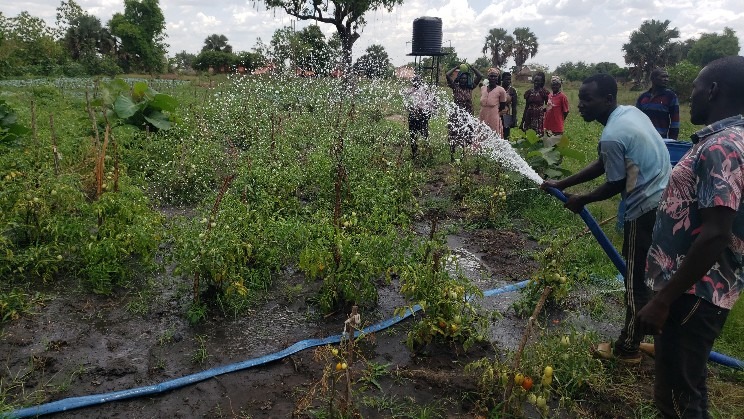
During campaigns, my primary subject was the enhancement of agriculture through the use and adoption of irrigation technology to promote farming throughout the year in the face of the unstable rainy (weather) conditions arising from climate change.
I told the voters that, once re- elected, my focus was to implore the government to invest heavily in water for production using irrigation technology in order to increase an annual agricultural productivity. In the same vein, having studied the weather phenomenon for some few years, my view then was that the government needed to fast track and deliberately promote and build the capacity of community to adopt the use, operations and management of irrigation facilities.
Traversing through Oyam district and the entire Northern region, my impression was that the river tributaries (Tochi, Okole, etc,) and swamps that could be used to establish small scale irrigation schemes/ dams.
On a rather good note, the NRM government had for sometime around 2016 invested multi-billion shillings to revamp the old existing irrigation schemes that show Doho, Okile, Kibimba, Olweny rice schemes revamped. Under the same arrangement, the construction of new irrigation schemes like Tochi Irrigation Scheme in Oyam also began besides some ignorant politicians at the time, including the current MP of Oyam South who mobilized the community to reject the project in the guise that government was using the project to grab people’s land.
Whereas I am a known critic of the NRM and its governance policies, this time, knowing the importance attached to irrigation, it went ahead to promote [the need] to establish irrigation technology in Oyam and the entire country.
I was further encouraged by the emphasis of President Museveni to promote small scale irrigation technology using simple “drip bottle” irrigation technology, which to me was a good idea but not well nurtured to suit the dire need for irrigation technology.
ALSO READ:
- UNAA: Recollecting mess, corruption and leadership defect from 2019
- Dr. Dan Okello drags Museveni to Ethiopia for breaching Maputo Protocol
- How do we get out of this socio-economic and political quagmire?
On this note, President Museveni had showed the most desired political will and showed the commitment to promote irrigation technology in the country. This was a noble idea. As a practicing water engineer, who had taken personal initiative to promote irrigation technology by conducting research on the use, operations and management of existing and new irrigation schemes in northern Uganda, it was something to be interested in.
My wide research on the use, operations and management of irrigation technology was later shared with the Ministry of Water and Environment’s department of water for production. My suggestion was for the same ministry to engage a private agency to enhance capacity building of community to adopt the use, operations and management of irrigation technology.
This research prompted the Ministry of Water and Environment to sign a Memorandum of Understanding (MOU) with Water for Life- Uganda (my company) to conduct “capacity building on the use, operations and management of irrigation technology to the community beneficiary of northern Uganda”.
Whereas upon signing the MOU, the project never took off, because of political sabotage and conflict of interests among some officials of the Ministry of Water and Environment at the time, it remained a serious subject to implore government to ensure the enhancement of the capacity of the wider community to adopt irrigation technology.
Meanwhile, after losing elections in February 2021, I continued to evaluate the use and adoption of irrigation technology to avert the adverse effect of climate change, which has caused unstable weather pattern affecting agricultural farming.
It’s known that, unlike in the past, the two major rainy seasons are no longer reliable. This year alone, the first rain that used to be around March and April was never available, and the dry spell has continued to flourish until the second season that falls between June to August.
Looking at Lango sub-region, there is a likelihood of a terrible famine and looming poverty resulting from no rains, leaving farmers with nothing to eat. Interestingly, besides all these happenings in the face of political leaders, there is little debate about the need to adopt the use of irrigation technology as an alternative to promote agricultural productivity.
The simple initiatives that were introduced by President Museveni also went in abeyance, leaving farmers with no option but to continue waiting for rains from God.
This year’s weather situation should have informed our leaders and common people to admit that the effect of climate change will continue to affect rainfall and hence agriculture, and therefore a known remedy needs to be adopted by both the government and the common population .
My emphasis to government since 2015 has been to promote irrigation technology among communities using simple technology and to build the capacity of communities to adopt the use, operations and management of existing irrigation facilities. Without government focusing on irrigation technology, agricultural productivity will go down and farmers will become vulnerable to famine and poverty.
I hope the NRM government, and particularly, President Museveni and members of Parliament, embark on the use and adoption of irrigation technology as an alternative means for farming.
The author is former MP for Oyam County South/ UPC Secretary General & Executive Director of Water for Life – Uganda.
Discover more from tndNews, Uganda
Subscribe to get the latest posts sent to your email.