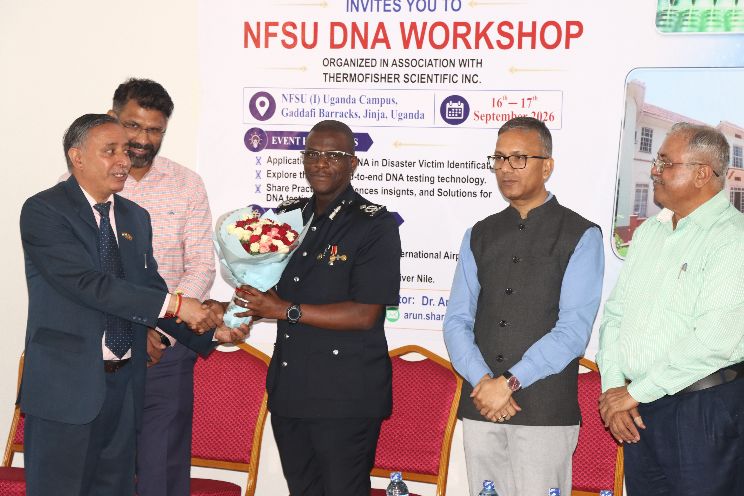
Uganda has taken a major step in forensic science (FS) with the development of rapid DNA testing capacity. This innovation will mark a milestone in disaster victim identification and criminal investigations.
The breakthrough was unveiled during the pioneer graduation events of the National Forensic Sciences University (India), Uganda Campus, in partnership with ThermoFisher Scientific HID.
The university hosted a two-day rapid DNA workshop from 16–17 September 2026, the first of its kind in Africa, where test results are delivered in real time.
Alongside the DNA workshop, the University staged a Cyber Security and Digital Forensics competition, dubbed ‘Capture the Flag’ to highlight student expertise in tackling modern digital threats.
The Director of the National Forensic Sciences University, Air Commodore K.R. Thaakar, said the advancement of forensic science is aimed at establishing the truth through scientific evidence.
“DNA has become a global standard. Whether it is paternity disputes, sexual assault cases, or murder investigations, in every situation we are looking for the truth,” said Thaakar.
The Director of Forensic Science in the Uganda Police Force, Assistant Commissioner of Police Andrew Mubiru, said the training was important because DNA evidence can help investigators identify possible offenders where credible eyewitness evidence is unavailable.
“In many instances an offence can be committed without credible eyewitnesses. In that case you have to rely on scientific techniques. DNA analysis is key in linking suspects to crime scenes, especially in cases of rape, defilement, and murder,” ACP Mubiru said.
He noted that the techniques are vital in strengthening prosecutions and ensuring justice in courts of law.
ACP Mubiru added that the training benefits not only Ugandan students but also participants from across East Africa, including members of the police and Uganda Peoples’ Defence Forces (UPDF).
Discover more from tndNews, Uganda
Subscribe to get the latest posts sent to your email.