The management of Ngetta Zonal Agricultural Research and Development Institute (ZARDI) has appealed to the government to increase funding for research activities, infrastructure improvements, and essential facilities.
According to Dr. Alfred Kumakech, the Research Director, the institute requires shs1.5 to shs2 billion to effectively support its research operations, including the acquisition of more transport vehicles, equipment, and infrastructure to better serve farmers across the region.
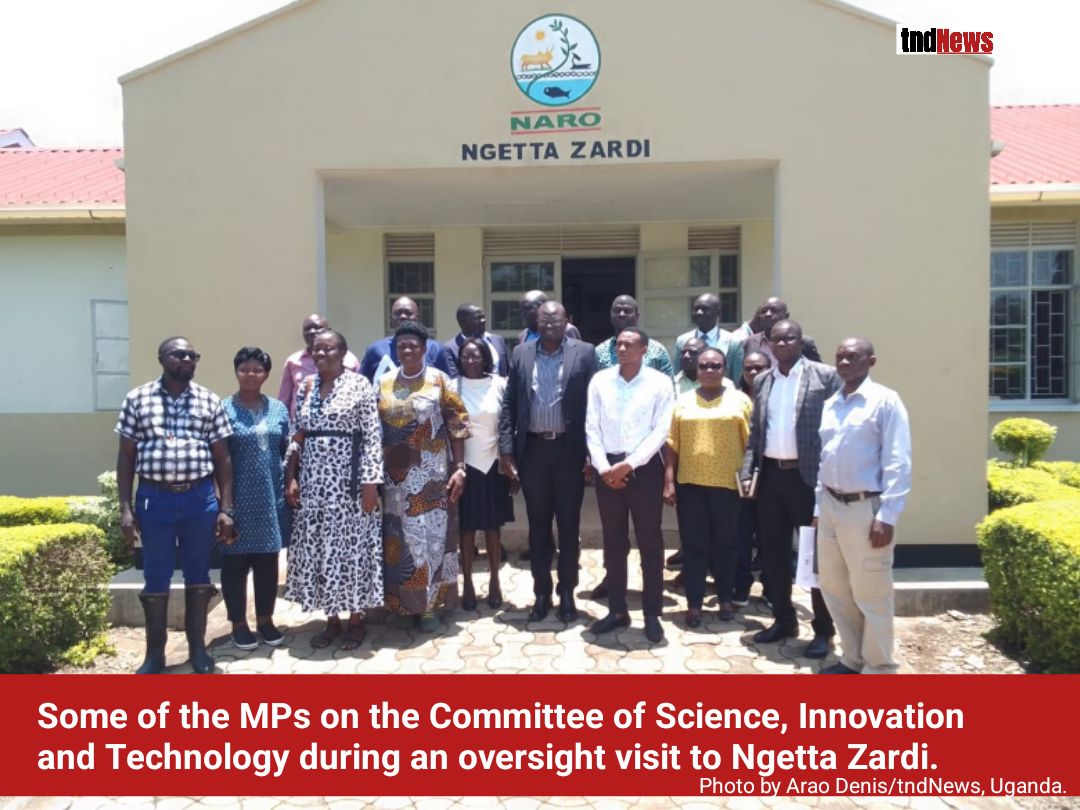
Dr. Kumakech made these remarks on Tuesday, September 8, 2026, while presenting the institution’s achievements and challenges before the Parliamentary Committee on Science, Technology, and Innovation.
Also read: Impacts of agrochemicals on soils in Lango sub-region
Dr. Kumakech noted that Ngetta ZARDI is one of 16 research centers across the country operating under the mandate of the National Agricultural Research Organisation (NARO).
During his presentation, the Director stated that Ngetta ZARDI is aligned with the National Development Plan IV, NARO’s strategic plan, and other relevant ministry policies.
Over the years, with support from the government and development partners, the institute has generated innovations and communication strategies to reach farming communities through various channels.

These include technology showcasing events and different pathways for disseminating agricultural knowledge. He emphasised the need to focus on genetics and livestock management, particularly given the changing climate conditions.
Komakech Simon Peter, Chair of the Anniversary Committee at Ngetta ZARDI, informed the parliamentary committee about the institute’s pressing challenges. These include a lack of transport for technical staff to train farmers across the Lango and Acholi sub-regions.
He noted that many farmers require training on land protection, proper planting techniques for crops such as soybeans and maize, and other essential agricultural practices.
Also read: Here is how Lango health officers shared their challenges at the Lira regional health assembly
Beyond transport issues, Komakech highlighted additional concerns including fuel shortages, which hinder the adoption of new technologies and limit outreach to farmers.
He also pointed out that many districts lack extension workers with expertise in agriculture, animal husbandry, and fisheries to collaborate with the institute and organize farmer training sessions.
Staffing shortages at the research institute remain a critical problem that requires urgent government intervention, he told the MPs.
Committee chairperson Dr. Samuel Opio Acuti, who doubles as MP for Kole North, stated that for new technologies and innovations to reach local communities, extension workers in both the Lango and Acholi sub-regions must be adequately trained.
He emphasised that innovations should be expanded and deepened at the grassroots level, similar to the Parish Development Model (PDM) approach, which ensures that even those in remote areas benefit directly.

Dr. Opio Acuti also noted that their committee report will address the challenges of tractor shortages and the lack of government vehicles needed to transport technical staff across the 17 districts and two cities.
Currently, the institute has only one vehicle, which cannot effectively serve all these areas.
Wellborn Ottobert Odiya, MP for Aruu North County in Pader district, raised concerns about the recurring issues with cassava varieties. He observed that farmers continue to plant the same cassava cuttings, leading to vulnerability.
He urged the technical team to develop projections indicating how long current varieties can sustain farmers before new ones are needed. This proactive approach, he argued, would prevent the institute from always reacting to crop diseases and ensure new varieties are ready when needed.
Mujuni Maari Asensio, MP for Isingiro South in Isingiro district, appreciated the Director’s transparency in his submission. However, he tasked the research institute to explain the mechanisms in place to ensure that new seed technologies perform well in the second season as they do in the first.
He noted that in many areas, farmers experienced complete crop failure in the second season after successful harvests in the first season.
Sirast Brahan Ezama, MP for Aringa County in Yumbe district, described the presentation at Ngetta ZARDI as highly expressive. However, he expressed concern about how widely the technologies would reach local communities.
He noted that based on the report, Ngetta is now in a position to provide positive and practical solutions to the community.
Josephine Pedun, Woman MP for Ngora district, focused on commercialization. She questioned what plans Ngetta ZARDI has to commercialise its products nationwide, rather than limiting them to the Lango and Acholi sub-regions.
She noted that commercialisation would also generate revenue for the institute’s products.
Khainza Shiuma Agnes, Woman MP for Bududa district in the Bugisu sub-region, observed that while innovations have long remained at the research institute, translating them into practical field applications has been challenging.
She called for not only improved crop varieties but also improved livestock breeds to be introduced to farmers. She lamented that more funding is required to help the institute perform well so that farmers can benefit from these new varieties and innovations.
Discover more from tndNews, Uganda
Subscribe to get the latest posts sent to your email.