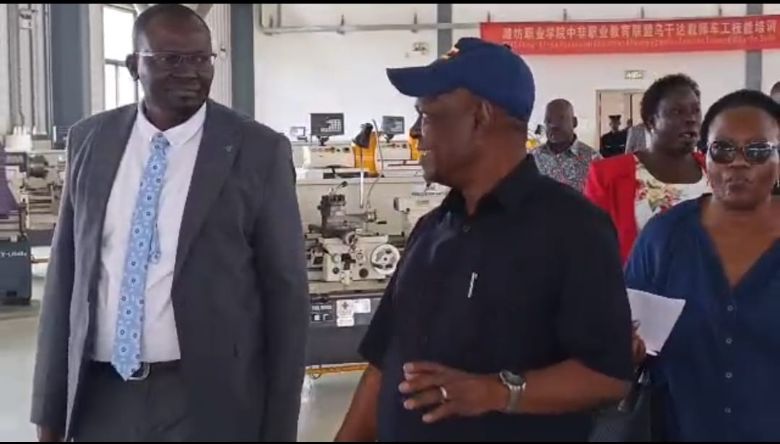
Members of Parliament on the Committee of Science, Technology, and Innovation are calling for an increase in the utilisation of local innovations to address country challenges and drive economic growth.
The call was made on Tuesday, September 1, 2026, following a committee visit to research and innovation facilities at the Uganda Industrial Research Institute (UIRI).
Their visit aimed to assess the progress and impact of government-funded research programmes and investments.
During the tour, legislators were shown a range of developed prototypes, including robots designed to detect diseases in agricultural settings, community-based technologies for drought monitoring, prepaid water meters, soil moisture sensors, and automated railway crossing barriers.
Addressing the committee, UIRI Executive Director Prof. Charles Kwesiga acknowledged the institute’s significant milestones in research and innovation.
However, he stressed that to expand its research, innovation, and technology transfer programmes, the institute urgently requires approximately shs81 billion, alongside additional skilled personnel.
The committee chairperson, Dr. Samuel Opio Acuti and MP for Kole North, said that while the committee was impressed by the technologies on display, a major bottleneck remains: moving innovations from the prototype stage to full commercialisation.
“We have witnessed that they are not able to scale up and commercialise these products because of a lack of funds,” Dr. Acuti noted.
He pointed out that while considerable government funding supports prototype development, there is insufficient financing to transform these innovations into market-ready commercial products.
Also read: Amolatar elders perform rain rituals as drought worsens
Dr. Acuti further suggested that some of the technologies could already be adopted by government institutions, creating an immediate ready market for locally developed innovations.
He cited prepaid water meters, which could be procured by the National Water and Sewerage Corporation, and automated railway barriers, which could be adopted by the Uganda Railways Corporation.
He added that the visit clearly demonstrated that Uganda possesses significant research capacity and a pool of highly qualified scientists, many of whom are already developing technologies capable of addressing challenges in agriculture, health, and other sectors.
Prof. Frank N. Mwine informed the committee that the government has made substantial investments in research equipment and facilities at Makerere University, including equipment supporting biomarker research and diagnostic studies.
He appealed to Parliament and the government to address the funding challenges so that scientists can conduct their research effectively and within scheduled timelines.
Prof. Mwine also noted that while some research outputs hold strong commercialisation potential, researchers must first secure the necessary intellectual property protections—such as patents—before disclosing details of certain technologies.
In concluding the visit, the committee underscored that Uganda’s ambition to achieve significant economic growth will require greater investment in science, technology, and innovation, which they described as key enablers of the country’s development targets.
“We shall present these findings before the floor of Parliament to inform our recommendations on how the government can strengthen funding for research, innovation, technology transfer, and the commercialisation of locally developed products,” the committee noted.
To support our work/journalism, DONATE HERE.
Discover more from tndNews, Uganda
Subscribe to get the latest posts sent to your email.