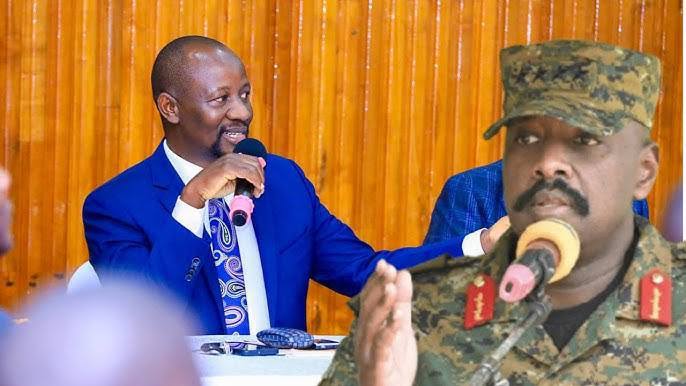
Former Kira Municipality Member of Parliament Ibrahim Ssemujju Nganda has explained why he left Uganda, saying he decided to take a break from what he described as persistent threats and fears of possible arrest.
Ssemujju, who is also the Secretary General of the opposition People’s Front for Freedom (PFF), said he is not planning to return to Uganda soon because he fears being arrested and becoming a “guest of the military basement.”
The former legislator said his decision to leave the country was influenced by what he described as continuous threats against him and the arrest of several opposition figures.
Speaking in an interview with NMG-Uganda via Zoom, Ssemujju said the detention of opposition personalities including Dr Kizza Besigye, Erias Lukwago and Muwanga Kivumbi increased his fears about his own safety.
“There were constant threats from the CDF that I’m next (to be arrested)… and I needed to take a break from these threats,” Ssemujju said.
He explained that remaining in Uganda under such circumstances would either force him into silence or expose him to possible detention.
“I’m out, and I think I will be making better contributions from where I am instead of returning and either keeping quiet or being taken to the basement,” he said.

Ssemujju did not reveal his current country of residence but said he chose to remain outside Uganda despite being separated from his family.
He said his decision was not an easy one but was necessary because he believed he could continue contributing to political discussions while away from the country.
The former MP’s departure adds him to a growing list of opposition politicians and government critics who have left Uganda amid concerns over their safety and political environment.
Other Ugandans who have previously gone into exile include National Unity Platform leader Robert Kyagulanyi Ssentamu, popularly known as Bobi Wine, writer Kakwenza Rukirabashaija, lawyer Eron Kiiza, academic Stella Nyanzi and Uganda Federal Alliance president Robert Kayingo.
Ssemujju said the increasing number of opposition figures leaving the country reflects what he described as a shrinking political space and challenges facing multiparty democracy.
“I think competitive politics in Uganda has ended. I only hope that those in power can step back and rescue the country by returning to the democratic and constitutional path,” he said.
He also claimed that some opposition members who remain in Uganda have been forced into silence because of fear and intimidation.
“Some have not fled, but they are supposed to be under their bed or can’t even utter a word because of the fear and terror that have engulfed our country,” he said.
Ssemujju questioned the effectiveness of political parties in a situation where opposition leaders are allegedly arrested, detained or forced to leave the country.
He argued that political organisations face serious challenges when leaders and presidential contenders cannot freely operate or participate in political activities.
“Political parties are meaningless because if you have a president of another party kidnapped, in the case of Erias Lukwago, and the main presidential competitor in the recent election is also away, really that’s where we are,” he said.
However, the ruling National Resistance Movement (NRM) dismissed claims that Uganda’s political space is shrinking, saying opposition members still enjoy freedoms to express their views.

NRM spokesperson Emmanuel Dombo said opposition politicians have continued criticizing government leaders while operating within Uganda, arguing that claims of political persecution are not new.
He encouraged opposition leaders with concerns to use existing dialogue platforms such as the Inter-Party Organisation for Dialogue (IPOD) to address political disagreements.
“When the NUP decided to join the IPOD, to us this is something positive, and through the IPOD forum, they should keep raising up those matters,” Dombo said.
Meanwhile, human rights activists have raised concerns over the safety of people holding alternative political views, with Foundation for Human Rights Initiative (FHRI) executive director Dr Livingstone Sewanyana saying recent events have created fear among some Ugandans.
He said allegations of abductions, disappearances and mistreatment of opposition supporters have contributed to a sense of insecurity among some sections of society.

Sewanyana called on the government to reassure citizens that they are safe and free to express different political opinions.
He warned that continued concerns over human rights could contribute to more Ugandans leaving the country for political reasons, adding that protecting citizens’ freedoms remains important for national stability.
Discover more from tndNews, Uganda
Subscribe to get the latest posts sent to your email.