Nalubwoyo, Amolatar | Crop farming in Amolatar district in the Lango sub-region of Uganda depends entirely on the timing and quality of the rainy seasons experienced there, especially for the rural small-holder farmers.
Smallholdings make up about three-quarters of all farms in Amolatar district, a pattern mirroring that of the entire sub-Saharan Africa; directly employing the adult working population – with nearly half being women.
Geographically situated in the water catchment area of Lake Kyoga, the rainfall pattern effectively supported this pattern of crop production for its youthful population to thrive.
However, recent manifestations of climate change in the Lango sub-region, with hot and dry weather conditions, have jeopardised this natural dependence on rainfed agriculture for food production or lifting households out of poverty.
Rainfall suddenly withdraws two months after planting food crops, effectively converting expected seasons of bountiful precipitation to even hotter and drier months for most rural farmers who provide for and feed their families through small-scale farming.
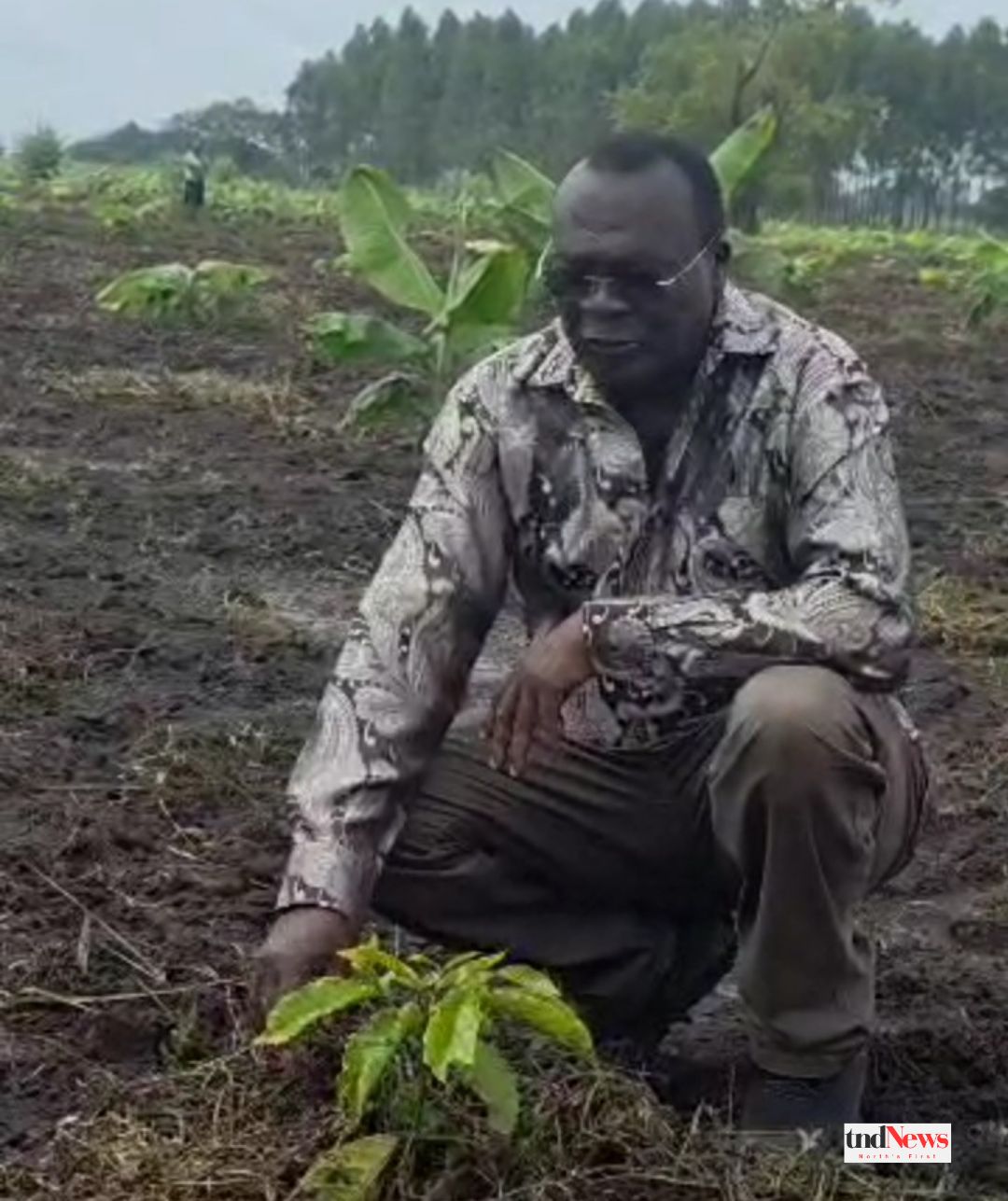
Beans, sorghum, cassava, and maize are especially vulnerable to the rising temperatures of the district. They soon wither or suffer stunting, which drastically reduces the yields per acre.
Many farmers stare starvation in the face when they look at the failing, pale, drying maize field.
Such weather vulnerability has increased over the last decade, as climate change becomes more evident each passing year, according to what farmers there have described.
One village, Camurasa ‘B’ in Nalubwoyo sub-county, has especially borne the brunt of the pounding sun heat due to its soil’s poor water retention ability, cracks testifying to the painful experiences of farmers often visible in the soil during the worst of the now more frequent seasons.
This socio-economic hardship triggered an array of localised crop diversification solutions among the population in the district.
Samsom Odic, an accountant living in the area, is leading the front line of livestock farming. He turned his attention to effectively balancing the ledger of nature by venturing into goat breeding.
The determination of the father of two children has resulted in the setting up of Samrach Mixed Farm, a climate-smart agribusiness enterprise supporting other small-holder farmers to also adapt and survive.
“Livestock keeping runs in our family line, as I learned this from my father,” Samson shares, his voice reflecting a deep-seated passion he picked up as a child.

Small browsers, big profits
The book of accounts at the farm is stashed with impacts as climate change threatens to push the traditional large ruminants’ cattle rearing out of Amolatar district with shrinking pastures, loss of water and increased disputes over grazing land driven by the rising population growth rate.
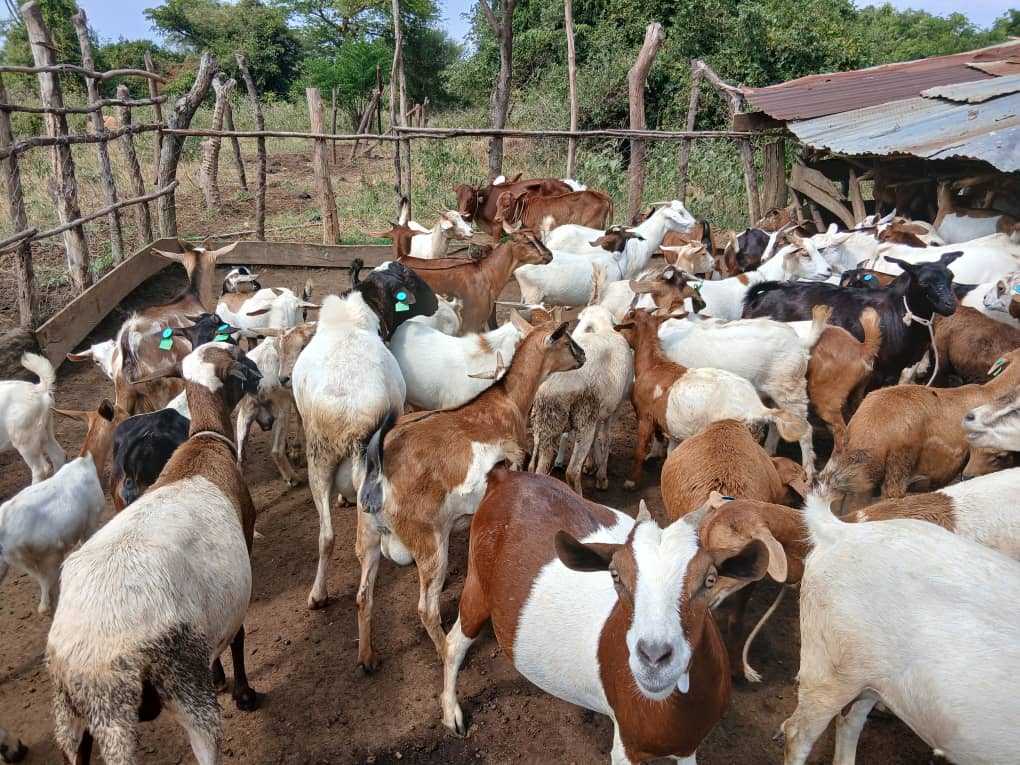
Odic says, “cattle keeping has become prohibitively expensive and resource intensive.” The goats’ hardiness makes them browser nature’s ultimate survivalists, capable of converting scanty Camurasa ‘B’ village’s Savannah grassland to money for the accountant’s pockets.
With better housing, they also resist heavy rains, presenting with signature waterlogging in the area. The high multiplication rates bring extra bonuses to low-income households since they have shorter maturity periods compared to cows.
There is a steady income chart showing progressive cash flow since 2021, when Odic first sold just 17 goats. In 2022, 40 goats were sold, while 2023 and 2024 saw 56 and 70 goats sold, respectively.
By 2025, he said he had sold up to 85 goats at an average market cost price of shs200,000 for kids, while the mature adults went for between shs250,000 and shs400,000 depending on their body weights.
Samrach is home to a thriving herd of the small-bodied domestic Mubende breeds. They naturally graze on pastures within his 3-acre piece of land, with feed intake supplemented with essential minerals supplied by a commercial agent.
“From a land-management perspective, goats are a gentle choice unlike the heavy cattle whose grazing habits degrade the soil and stress water resources,” Odic explains.
From the goats, Odic teaches other farmers how to produce high-quality organic manure to feed their crop gardens amidst declining soil fertility.
The financial dividends of Samrach Mixed Farm speak for themselves. Since 2021, Samson’s sales book has shown steady, impressive growth.
Business is already encouraging as Samrach Mixed Farm achieves an average revenue of shs16,000,000 a year.
Success, however, does not come without friction with project neighbours. In Nalubwoyo sub-county, land use has become a burning issue for frantic farmers searching for solutions to climate change.
Managing a growing herd in a crowded ecosystem requires strict discipline. To prevent overgrazing and maintain an ecological balance, Samson enforces a strict population cap on his farm to conserve his land’s holding capacity.
Magnetic impact
The breeding management practice has magnetised other small-holder farmers to learn at the feet of Samson Odic, whose farm now serves as the centre of excellence for health and environmental management.
Samson watches his herd closely for common tropical livestock afflictions like Foot and Mouth Disease (FMD), bloat, internal and external parasites, and pregnancy toxaemia. The farm employs two workers.
Their sights are firmly set on the export market.
The project has already laid a strong climate-smart food system “brick by brick, brick by brick” by keeping in constant touch with government agricultural extension workers, who occasionally visit them.
Samson’s initiative has also gained the recognition of Wiigot, a digital-farmer-to-service provider portal operated by an accessible commercial agent supported by Climate Smart Jobs (CSJ), an agribusiness project in Northern Uganda.
The portal provides the much-needed market information, veterinary knowledge, and financial literacy to farmers in the district and the region at large, and Samson is a smallholder farmer under the initiative.
Okello Dulson Samuel, the Focal Point Person for the Climate Smart Agricultural Transformation Project and the acting Principal Entomologist of Amolatar district, says the initiative is building climate resilience across the district, “community by community.”
According to Okello, the emergence of goat breeding centres will buttress the fading traditional crop farming, which has become a risky gamble for smallholder farmers in the area.
Those thriving are being supported by commercial agents to access improved seeds alongside other farm inputs like fertilisers.
Goats breeding centre
The shift towards climate-resilient assets like goats must be backstopped by a strong network of quality inputs for pest management, genetic improvement and care.
Under the CSJ, farmers like Odic are empowered to access quality goats’ semen through crossbreeding the Mubende goats with the more agile South African Boer Goats.
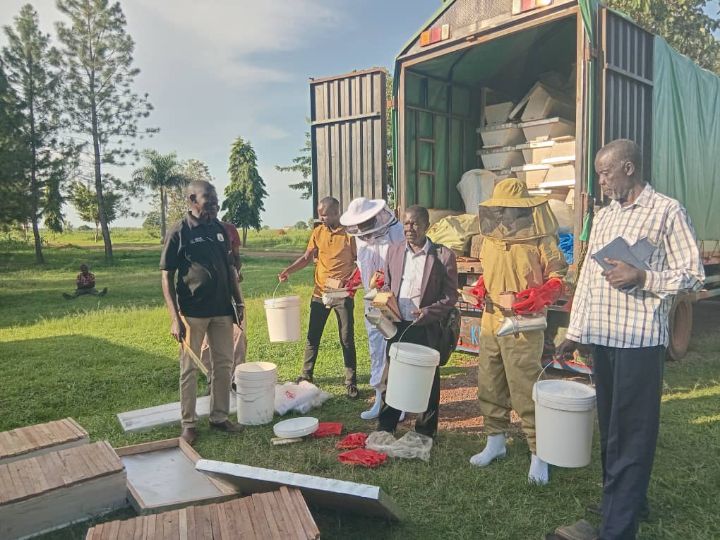
The breeding centres set up across Northern Uganda get technical support from the Climate Smart Jobs.
An interested farmer accesses the boers by taking his or her local goats to the centre for better management.
The female goat is first quarantined for disease monitoring in isolation sections of the breeding centres for a few weeks towards its heat periods. It is then exposed to contact with the male Boer capable of serving up to 50 local [Mubende] goats in each mating period.
The goal of crossbreeding is to produce climate resilient offsprings capable of growing faster even in adverse climate conditions, with desired traits such as high fertility, disease and pest resistance, better body weights and adaptation abilities to tolerate heat and extreme drought periods.
Collectively, the traits result in increased household income for the farmer.
“A single boer can bring more than shs1,500,000 million to a farmer, and as they crossbreed, more kids are produced on the farm w, which translates to more money for the farmer,” Lincoln Nyakudanga, a livestock Consultant with Climate Smart Jobs, stated.
According to Nyakudanga, Northern Uganda’s climate is highly favourable to goat breeding due to its vast availability of adequate pasture and low pest infestations.
For benefiting farmers, CSJ and the individual smallholder farmers or Farmer Group Enterprises together constructed shelters and procured Boer goats.
CSJ has continuously provided capacity building and technical support to the smallholder farmers and farmer group enterprises. The farmer groups then take care of looking after the goats, including renting the services of the Boer goats.
Although the impacts of climate change may fall disproportionately on the shoulders of smallholder farmers who contributed the least to greenhouse gas emissions back in sub-Saharan Africa, there is much reason for hope as they get more resourceful and resilient through shared information and technologies for adaptation.
When blended with mitigation measures such as environmental restoration through tree planting, smallholder farmers in Amolatar are certainly thinking global and acting local.
Discover more from tndNews, Uganda
Subscribe to get the latest posts sent to your email.